
The Forgotten 1982 Honda That Invented Ducati’s V4 Superbike Formula
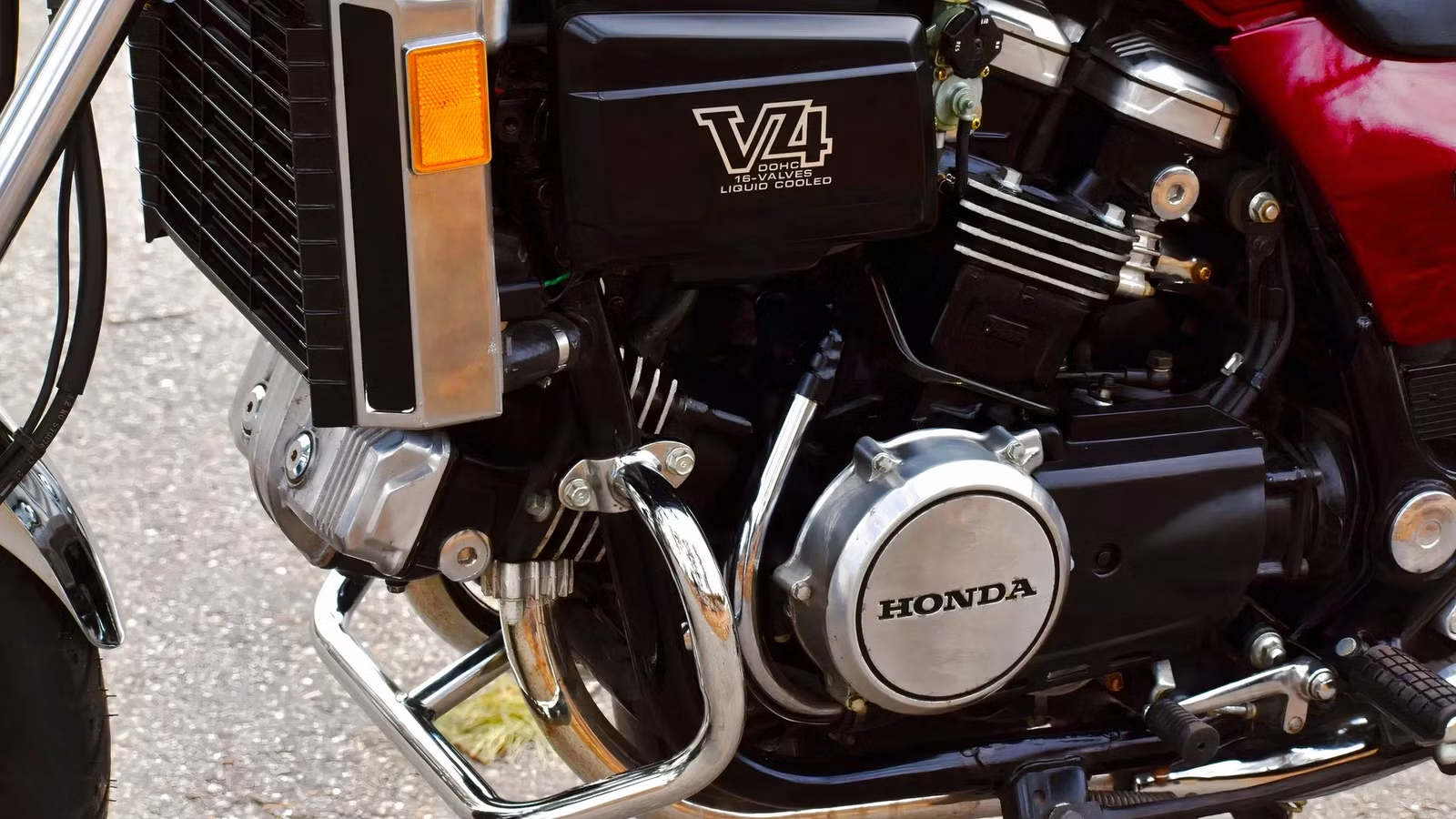
Although Ducati is the manufacturer best-known for using V4 engines today, other brands have also dabbled in the formula over time. Of course, we’ve currently got the Aprilia RSV4 killing the superbike game alongside Ducati’s mighty Panigale V4 and V4 R, but flipping back through the pages of history will reveal many more candidates worth mentioning. Yamaha had the legendary VMAX power cruiser running from 1985 all the way up until 2020, and Honda gave us the ultra-limited RC213V-S race replica in 2015. Honda definitely warrants a closer look, because its history with V4s is far longer than Ducati’s.
Honda’s Complex Relationship With V4 Bikes

Long before the RC213V-S brought MotoGP performance to the street — with a totally reasonable price of $184k, might I add — Honda was deeply involved in V4 engine development with its WSBK homologation specials. The first of them was the VFR750R, commonly referred to as the RC30 and regarded as one of the most desirable classic Japanese superbikes money can buy. It was followed by the RVF750R (RC45) a bit later on, and then there was Honda’s other V4 beast not related to World Superbike racing. That would be none other than the NR750 launched in 1992, an engineering masterclass boasting things like oval pistons, eight valves per cylinder and a radical look which famously inspired Massimo Tamburini’s design of the Ducati 916.
 79 autotech
The Superbike That Disappeared Before Anyone Noticed
It was built to dethrone Ducati in WSBK racing and succeeded, only to be killed by rule changes and vanish from the racetrack faster than it arrived.
Going Even Further Down Memory Lane

To find the beginning of Honda’s V4 ambitions, we’ll have to go all the way back to the early eighties. The iconic VF750F Interceptor greets us along the way, introduced in 1983 or more than 20 years before Ducati gave us the limited-edition Desmosedici RR. Honda made use of a liquid-cooled 748cc motor on the Interceptor, boasting 10.5:1 compression, sixteen valves paired with dual overhead cams, and a peak output of 86 horsepower at 10,000 rpm. That wasn’t the first instance in which a version of that engine (dubbed V45) appeared on a Honda production bike, however, because a couple of different models came out with it a little earlier than the VF750F. And those were the ones to kickstart the brand’s incursion into V4 territory.
Honda Once Created A V8 Engine With Only Four Cylinders
It was a weird engineering solution to a problem that plagued Honda for years.
The Magna And Sabre Were Different Sides Of The Same Coin

In 1982, Honda debuted its very first V4 production motorcycles — the VF750S Sabre and VF750C Magna. They shared the same 748cc V45 powerplant (5.5 inches narrower than the CB750F’s inline-four) with relatively small differences from one model to the other, but each bike was developed for a very specific riding style. On the one hand, the Magna was a cruiser with around 80 ponies in its stable, regarded by some as the world’s first attempt at a muscle cruiser. The Sabre, by contrast, was more of a standard all-rounder with a sportier architecture, boxier looks, and monoshock rear suspension. Both machines were capable of quarter-mile runs in the low 12-second range according to period Cycle World tests.
V45 Engine Specifications
|
Type |
90-Degree V4 |
|
Cooling |
Liquid-Cooled |
|
Valvetrain |
DOHC, 4 Valves Per Cylinder |
|
Compression Ratio |
10.5:1 |
|
Horsepower |
~80 HP |
Essentially, the decision weighed on how you wanted to make use of that sweet liquid-cooled V4, because it delivered plenty of excitement in both flavors. Those seeking a sportier ride would have opted for the Sabre, whereas cruiser fans had the equally enticing Magna right up their alley. The latter’s anti-dive forks were taller and slightly beefier than the Sabre’s, and other differences could be spotted down in the unsprung sector. While early VF750Cs came with star-spoked wheels, the VF750S featured a distinctive design with three pairs of twin spokes and an extra inch in diameter at the back. The front brakes were individually tailored to each model, but both bikes came with traditional rear drums.
And unlike the Pro-Link rear suspension setup found on the Sabre, its cruiser cousin sat on twin preload-adjustable shock absorbers with piggyback reservoirs. Moreover, it should go without saying that the two models saw pretty much no overlap when it came to the cosmetic side of things, and their ergonomics were made to suit each riding style independently. But as great as these early race-derived V4s from Honda might’ve been, they certainly weren’t without their issues. One in particular was known as “chocolate cams,” and it dealt quite a significant (yet not catastrophic) blow to the VF750’s reputation. As you’ve likely guessed, we’re not talking about camshafts coated in chocolate here.
The Honda Cruiser That Made Harley-Davidson Sweat In The 1980s
Harley-Davidson may rule the cruiser segment, but its not uncontested. In the ’80s, Honda made the giant bleed.
Addressing The Infamous “Chocolate Cam” Issue

Simply put, the term refers to excessive cam wear caused by inadequate top-end oil flow, inferior material quality and improper line-boring of the cam journals. This was a pretty major headache for VF owners during the early days, but it didn’t come as a result of the V4 engine layout itself. By 1984, Honda had gotten the problem fixed for the most part, and a permanent solution came in the form of gear-driven camshafts for the 1986-model VFR750F Interceptor. The company’s V4 lineup underwent serious expansion in the years leading up to that updated model, with the VF750F’s launch in ‘83 and other iterations of the Magna and Sabre featuring various engine capacities. It’s worth taking a quick look at some of them before wrapping up, to gain a better understanding of how things evolved.
The Rare Japanese Motorcycle Gen-Z Riders Probably Don’t Recognize
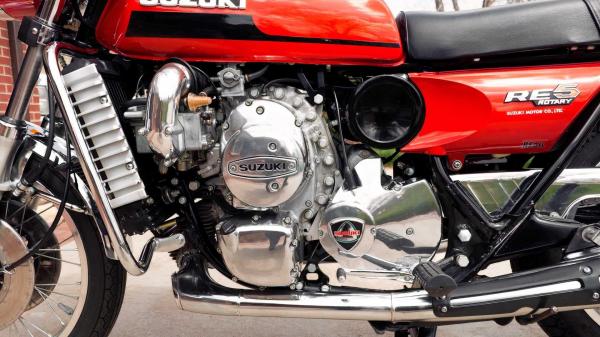
A rare Japanese motorcycle featured an experimental engine that challenged the basic idea of what a bike motor should be.
The VF750’s Evolution And Legacy

Honda came up with the VF700S and VF700C in 1984, a couple of 699cc versions created to dodge U.S. tariffs on foreign motorcycles over 700cc. Then there were the bigger VF1100s also known as V65s, again offered in both Magna and Sabre configurations with a big old 1,098cc powerplant bringing them to life. And, eventually, we arrive back at the iconic VFR750R homologation bike mentioned earlier on, yet the influence of Honda’s old-school V4s extended far beyond its own lineup. In part, they can even be credited with laying the blueprint for the great V4 machines we have today, having walked so that modern specimens from Ducati and Aprilia can run.
Because without those early VF750s serving as proof of concept, other manufacturers might’ve also refrained from going down that route. Perhaps the brutal Yamaha VMAX would have never existed, and there’s no telling how much longer it may have taken for the V4 layout to finally be popularized on a large scale. Thankfully, Honda was willing to take the risk before anyone else, and decades ahead of Italian brands, demonstrating that such machines did in fact make commercial sense. That being said, though, it’s ironic how the Japanese firm has basically abandoned V4s on its production motorcycles today, all while Ducati and Aprilia are charging serious cash for their models. Perhaps it’s time for Honda to revisit the V4 formula.
Sources: Cycle World, National Motorcycle Museum, Bring a Trailer, Carole Nash, Bennetts, Old Bike Barn, Honda

Related posts

Latest Post



No Comments