
Audi’s Sleeper Sedan Hides A Gallardo-Related V10 Behind A Plain A6 Body
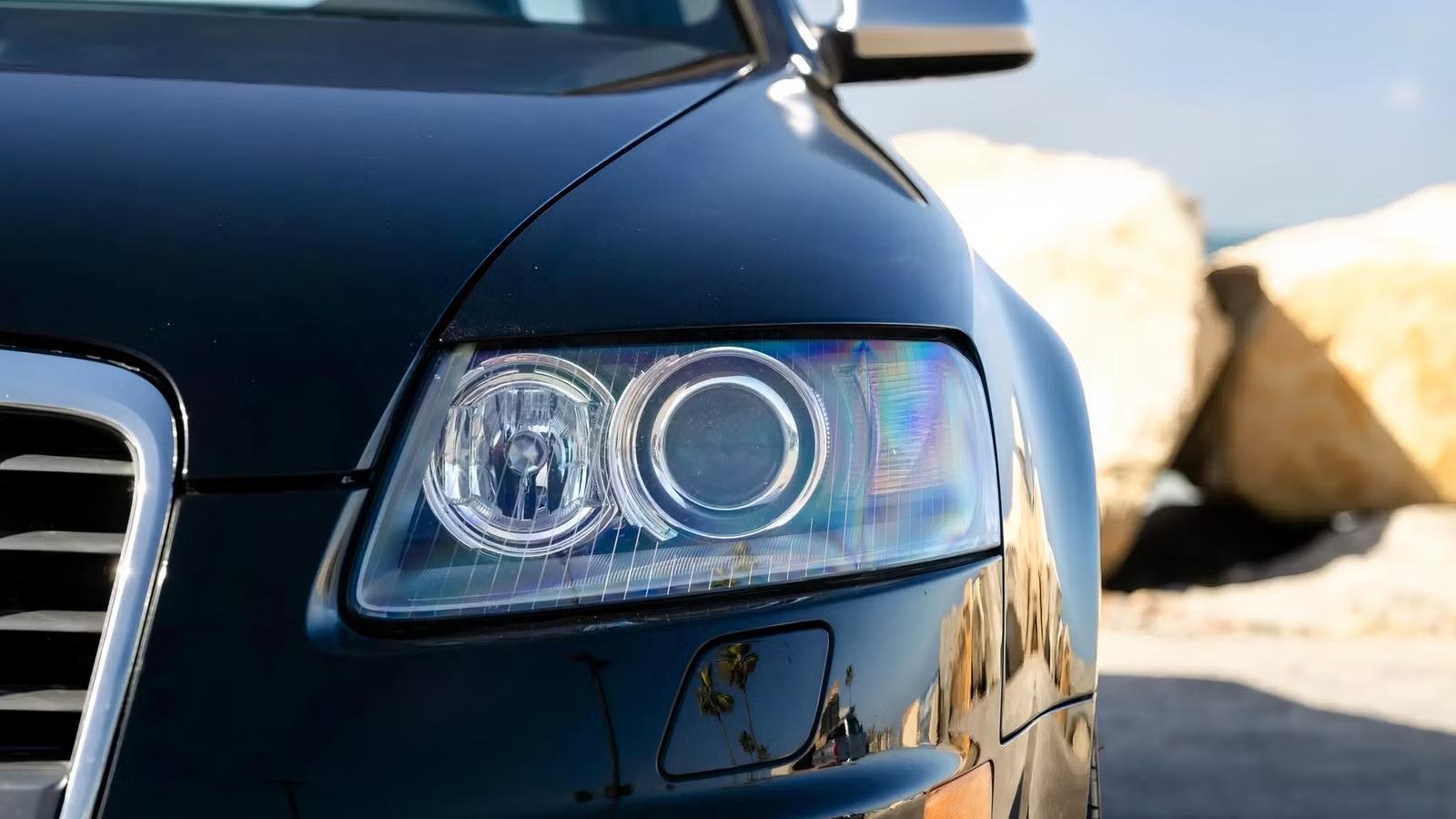
Sleepers by their very definition are not supposed to be noticed. Unlike a space age supercar or rowdy muscle car, the sleeper generally combines an exotic engine with a plain-looking sedan body and plenty of practicality. This combination of lowkey performance and catching out far more ostentatious machines at the lights makes sleepers irresistible for many. Audi is one of the masters of under-the-radar performance, often blending Teutonic understatement with face-melting power. But in the 2000s, the Ingolstadt firm made one of the most outlandish Sleeper Cars yet.
Audi Pioneered The Super Sleeper

A lot of people forget that Audi was a fairly ordinary company up until the ’80s. Prior to this, the carmaker was far more aligned with Volkswagen, so wanted a way to put itself on the map as an independent maker of pioneering cars. The answer came in the Ur-Quattro, unveiled in 1980, a four-wheel-drive turbocharged rally car for the road. While we are much more used to sleepers being sedans, in many ways the original Quattro was a sleeper. This was a car that was based on a boxy coupe, but with the cross-country performance to put unwieldy supercars to shame.
Audi ran with the idea of unlikely performance in the ’90s with the RS2, a Porsche-developed 315 hp wagon that could accelerate to 30 mph faster than a McLaren F1. Seeing that customers liked these undercover assassin machines, Audi developed the RS badge into a brand, with a range of sleeper sedans and Avant wagons that continues today. But there is one that stands out for both its incredible powertrain and its utterly inconspicuous looks.
The C6 S6 Hides A V10 Behind A Plain-Suit Exterior


When it was launched at the 2006 North American International Auto Show in Detroit, you would be forgiven for walking straight past the C6 S6 sitting on the Audi stand. But this car was a massive statement. Audi even warned the S6 could mean that “America’s enduring devotion to the V8 engine may falter” thanks to the new V10 FSI engine under the hood. You may think the RS6 of this period was even wilder, and you’d be right, but that car couldn’t be missed thanks to its bazooka tailpipes and box arch extensions. The S6, on the other hand, looked pretty much like any rep-spec A6, apart from the slightly flared front wheel arches, aluminum-look door mirrors, and subtle ellipsoidal exhaust tailpipes.
The S6 Shares Its Engine Architecture With Lamborghini

Despite its innocuous looks, the S6 had something that would stop any barroom debate dead in its tracks. That 5.2-liter V10 was developed with technical input from Lamborghini. In fact, it wasn’t just a case of Sant’Agata engineers popping by to share an espresso; the engine used the Gallardo supercar’s 5.0-liter unit as its foundation. The new 5.2-liter V10 FSI engine used a 90 mm cylinder spacing, requiring a unique cylinder block, rather than the 88 mm bore spacing in the Lambo.
Audi also used a different crankshaft and less exotic materials due to the fact that the S6 wouldn’t be revving as high as the Gallardo. The S6 had 435 horsepower in the USA, along with 398 lb-ft of torque, channeled to all corners via Quattro all-wheel-drive. That results in a sprint to 60 mph in just 4.8 seconds, which would have been enough to outrun Ford’s then-new S197 Mustang GT.
Should You Run A Mile Or Grab An S6 While You Can?

The Audi S6 is an absolute bargain right now — we’ll get onto that in a moment — but the question is, should you actually buy one? Fast Audis, especially the RS models, tend to have a reputation for being eye-wateringly expensive to fix if anything goes wrong. This turns out to be not entirely true, at least not when it comes to the C6 S6. The forum topic of reliability at Audiworld.com is literally filled with people who say that they use an S6 as their daily driver, with excellent reliability. Two things stand out: gas mileage, and the fact that repairs, when needed, aren’t particularly cheap. That means that many owners recommend standard A6s if you want to not go quite as fast but spend less on gas bills, or buy the best S6 you can and keep some money for standard maintenance.
Repairpal says that the Annual Repair Cost for a 2007 S6 is $950, compared to $768 for an A6. That V10 will be a lot more complex, however, and there will be a lot to watch out for. The Secondary Air Injection (SAI) system causes rattling on startup, for example, which owners often mistake for a catastrophic timing chain failure. Owners need to keep an eye on anything that could be terminal as a Lambo-derived V10 is going to be a lot harder to fix or replace than a 3.2-liter VAG V6.
Audi S6s Are One Of The Cheapest Ways To Get A Supercar Engine

Considering a C6 Audi S6, which was sold between 2006 and 2011, has an average price of just $10,354 (Classic.com), there really isn’t any cheaper way to get a legit supercar-derived engine in a sedan. There are cars even cheaper than that average on the market too, with examples selling in the $8K range at places like Bring a Trailer. But don’t be tempted by a car like this just because it’s cheap — if you buy a bad one, the repairs will quickly overtake the savings on the selling price. Do your homework and buy the best S6 you can — then you will have the keys to a Lambo-derived sedan that people will only notice when you trounce them at the drag strip.
Sources: Classic.com; Repairpal; Audiworld.com

Related posts




Latest Post



No Comments