
This Is The Cheapest Way To Own A Japanese V4 Motorcycle
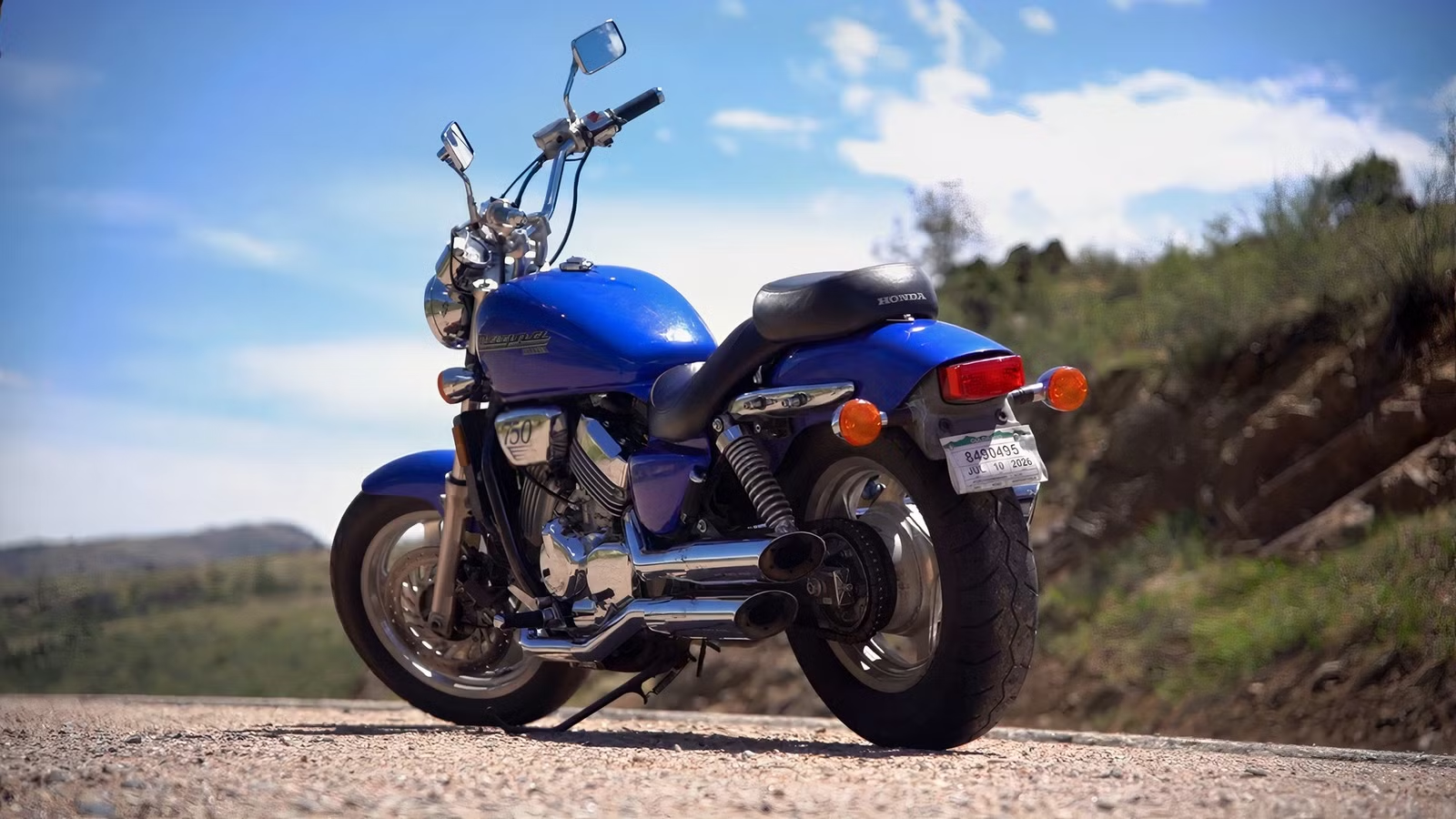
V4 motorcycles have always felt a little extra special. Honda built legends around the same configuration, while modern ones like the Aprilia RSV4 have turned it into something very exotic. Unfortunately, that usually means paying a hefty price. But hidden in the used market is an old cruiser that has the character, smoothness, and performance of a proper V4 for a remarkably lower price tag.
Why V4 Motorcycles Are So Special

There are easier ways to build a motorcycle engine. Parallel twins are compact and inexpensive, while inline-fours have powered Japanese performance bikes for decades. A V4, in comparison, is considerably more complicated but has its own advantages. The layout is relatively compact for a four-pot motor, naturally smooth, and capable of being useful across the rev range.
Then there’s the staccato. A V4 doesn’t quite have the uniform scream of an inline-four or the slower pulse of a V-twin. Instead, it produces a deeper, more complicated exhaust note.
Honda understood the appeal better than almost anyone. It spent decades developing V4 motorcycles, including the VF750F Interceptor and VFR750F, before the configuration became closely associated with some of its most sophisticated machines. But Honda didn’t reserve it just for sport bikes.

Honda’s Unusual Experiment With Performance Cruisers

Cruisers normally are simpler motorcycles with a low seat, relaxed ergonomics, lots of chrome, and usually a large, rumbling V-twin. Honda occasionally ignored that rule completely.
The first Magna arrived in the early 1980s, using a V4. The concept was closer to a muscle motorcycle than a traditional cruiser: take comfortable bodywork and combine it with an engine that was rev-happy.
Honda returned to its OG idea in the 1990s when cruiser sales were gaining momentum again. Rather than trying to imitate an American V-twin, Honda went back to one of its own strongest assets and borrowed heavily from one of its best sport-touring motorcycles.
Meet The Honda Magna 750: A Cruiser With A Sport bike Heart

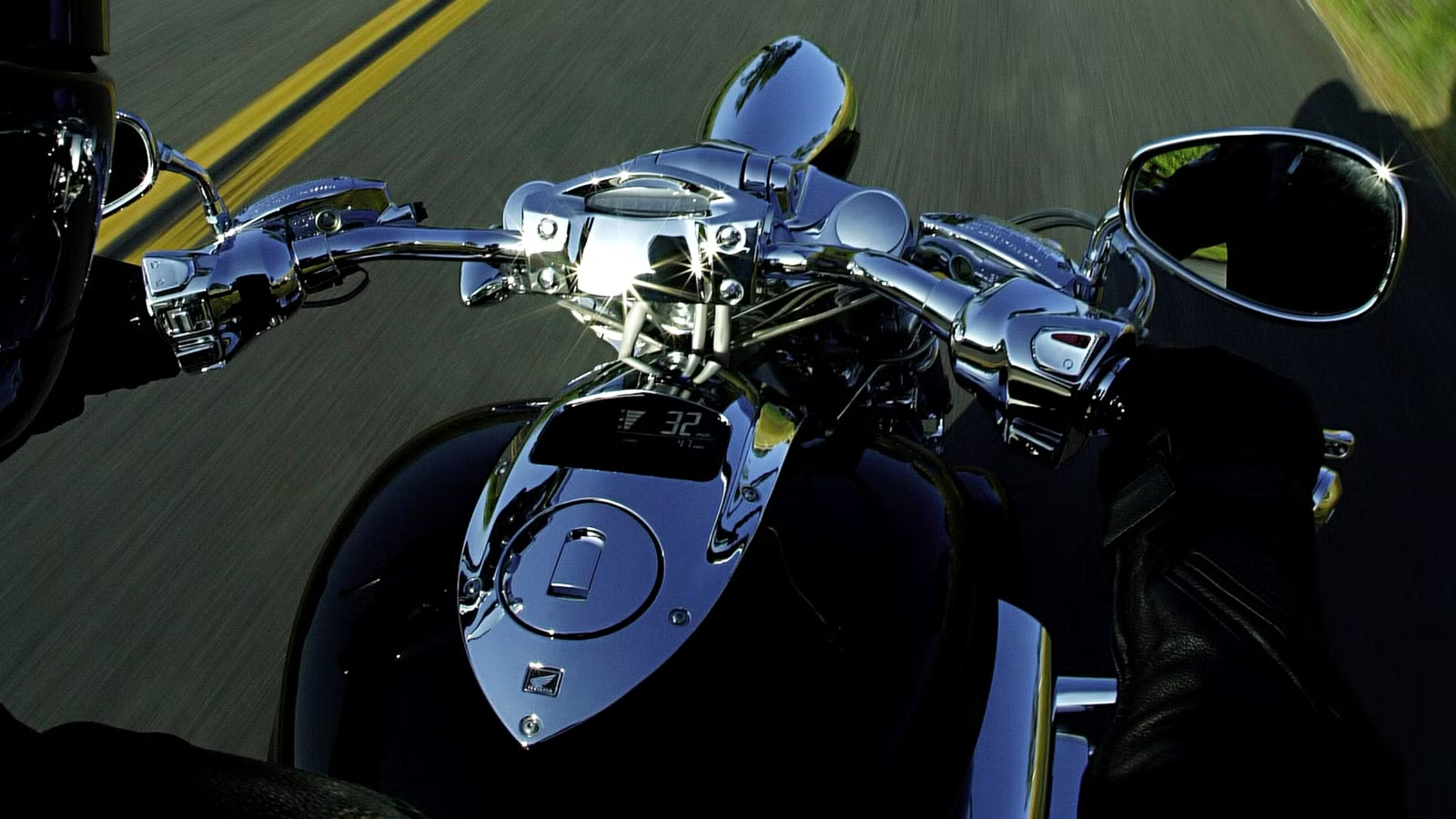
The third-generation Honda Magna 750 arrived as an early 1994 model and remained in production through 2003. At its center sat a 748 cc, liquid-cooled, 90-degree V4 based on the engine used in the VFR750F. But Honda didn’t simply lift the VFR motor and bolt it into a cruiser frame.
The crankshaft was changed, the carburetors became smaller, the six-speed gearbox made way for a five-speed, and the VFR’s gear-driven cams were replaced with chain-driven ones. With it came stronger mid-range performance and lower production costs rather than outright performance. Honda also gave it large cooling fins, polished covers, and a four-into-four exhaust. Put everything together, and it looked like a cruiser, but only until you opened the throttle.
A V4 Cruiser That’s Surprisingly Quick

This is how the Magna is different from ordinary cruisers. The engine willingly climbs toward its 9,750-rpm redline instead of delivering one big lump of torque and then running out of it early. When tested, it covered a quarter-mile at 109 mph in 12.31 seconds, along with a reported 129 mph top speed.
Those numbers are hardly shocking today, but remember what you’re dealing with: a 90s cruiser with a 28-inch (710 mm) seat, dual rear shocks, a single front disc brake, and a rear drum. The Magna has an unusual personality. You can comfortably cruise around town, but when the road opened, the engine felt far more eager. That makes it an early example of Japanese performance cruiser that manufacturers would continue experimenting with for decades.
How Much Does A Used Honda Magna 750 Cost?

Here’s where the Magna becomes particularly interesting. Current US listings show third-generation Magnas appearing around the $2,000 to $4,000 mark with reasonable regularity. There are outliers, though. Very clean, low-mileage examples can fetch around $5,000-$6,000, while rough bikes can fall below $2,000.
Compare that idea with today’s V4 superbikes, where the motor is generally paired to exotic hardware and equally exotic pricing, and the old Magna starts looking very tempting.
You don’t get modern electronics, sophisticated suspension, or sharp handling. What you’re buying is a pure mechanical experience: four cylinders arranged in a V, an entertaining power band, and a soundtrack you won’t find in most affordable cruisers.
What To Know Before Buying A Used Magna 750

Cheap motorcycles can become expensive very quickly, and every third-generation Magna is now more than 20 years old. The charging system deserves attention first. Owners regularly report regulator/rectifier failures, so checking voltage and inspecting connectors before buying is necessary. Then there are the four carburetors. A good Magna should run smoothly, but cleaning, rebuilding, and tuning four carburetors buried inside a V4 isn’t an easy job.
Age matters too. Check coolant hoses, seals, brake assembly, tires, chain, and sprockets, and ask when the valve clearances were last inspected. Some original Honda parts have also become harder to source.
The good news here is that the 1994–2003 machine avoids some of the camshaft concerns associated with Honda’s earliest 1980s V4s. Buying on condition and maintenance history still matters far more than negotiating for the lowest asking price.
The Affordable Japanese V4 That Deserves More Attention

The Honda Magna 750 is quite an odd motorcycle, and that’s exactly why it’s interesting. It looks like a cruiser, is low enough to be approachable, and handles ordinary riding without any drama. Yet tucked inside is a VFR-derived V4 capable of revving past 9,000 rpm and putting out a genuinely entertaining performance.
For roughly $2,000-$4000, few used motorcycles offer that combo. It may lack the reputation and aggressive performance of Honda’s exotic V4s, but that’s almost the point. If what you really want is the engine, the sound, and the character rather than the badge or superbike hardware, the forgotten Magna might be one of the cheapest tickets to the Japanese V4 club.

Related posts


Latest Post


No Comments