
10 Naturally Aspirated V12s Gearheads Will Genuinely Mourn
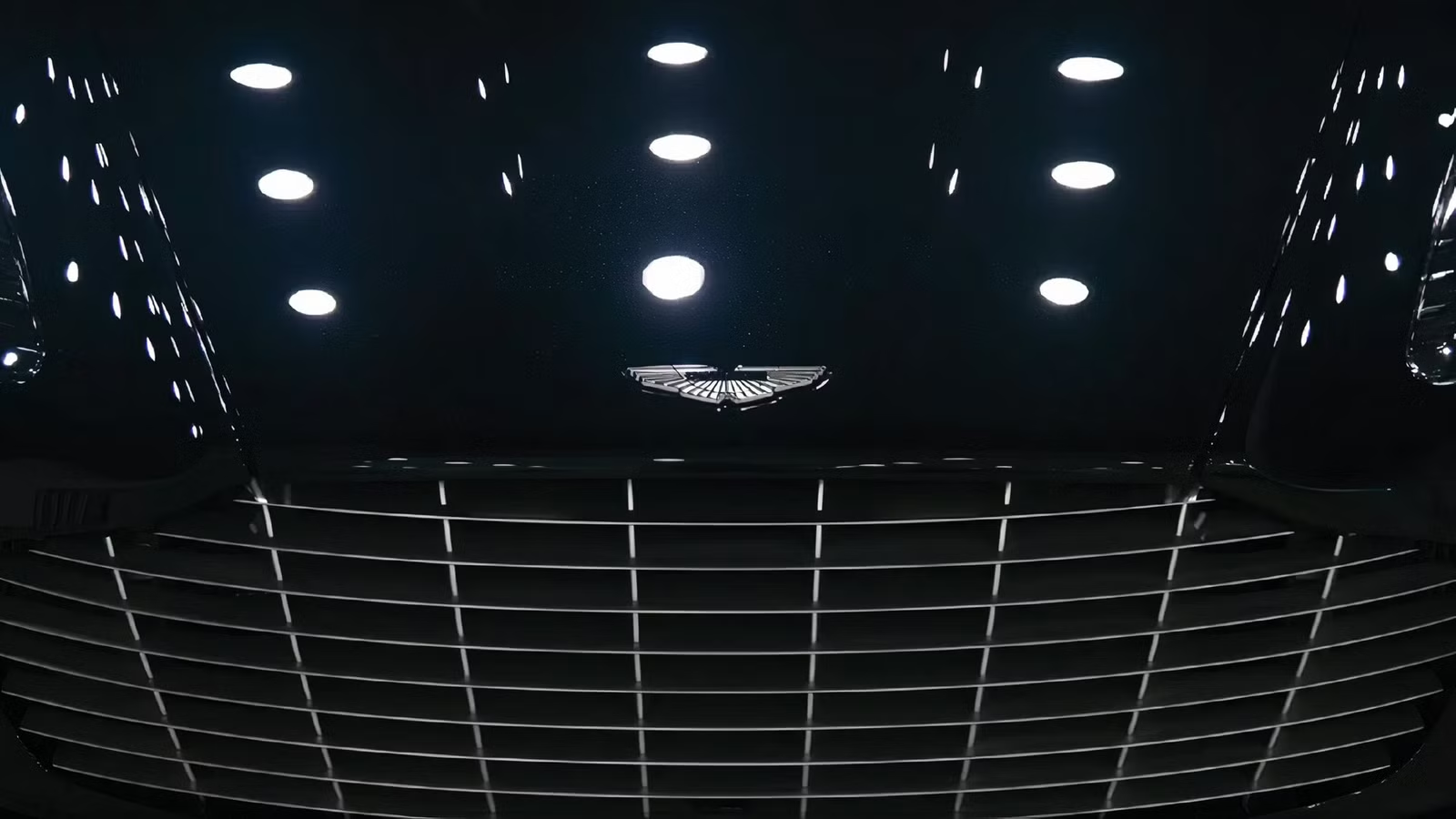
The V12 engine may not be around for too long. We may be watching the final days of the violent, free-breathing, naturally aspirated, twelve-cylinder engine. For decades, the naturally aspirated V12 was the absolute pinnacle of internal combustion. This was the most exciting and exotic engine you could get in most flagship supercars and even some older high-end luxury cars.

It wasn’t just an engine; it was a mechanical symphony, an unapologetic declaration of engineering excess. It didn’t need turbos or hybrid setups to prove its point. The point was made at 9,000 RPM, where the exhaust note turned from a guttural growl into a spine-tingling metallic scream. But the modern automotive landscape has no room for purists. Tightening emissions laws, corporate fleet averages, and the relentless march toward electrification are pushing these pure giants out. But before they’re all gone, let’s take a look back at ten of the greatest naturally aspirated V12 engines to ever burn gasoline.
10
Toyota 1GZ-FE
5.0-liter V12
We start off with Toyota. Yes, Toyota, which makes ultra-reliable cars, made a vehicle with a V12 sold mainly in Japan from 1997 to 2017. This engine was built not for lap times, but for smooth effortless power and silence. The 1GZ-FE was created for a single car: the second-generation Toyota Century, Japan’s ultimate flagship chauffeur luxury cruiser. Engineers designed this 5.0-liter giant with massive redundancy. It had two ECUs, meaning each bank of six cylinders could operate completely independently. If one side suffered a catastrophic failure while carrying a high-ranking dignitary or a member of the Imperial House, the car would keep moving smoothly on the other bank without a single hiccup.

On paper, it made a gentlemen’s agreement-limited 276 hp, although some say it made closer to 300 hp. It didn’t scream; it hummed with the precision of a Swiss watch. The 1GZ-FE was an over-engineered engine that did its job exceptionally well. Some have made it out of Japan and even had equal-length headers put on them, and boy, can they scream. This shows the lengths Toyota went to in order to make sure the engine was whisper-quiet. Toyota replaced the old-school V12 Century with a V8 hybrid setup that was cleaner, more efficient, and entirely devoid of mechanical soul.
9
Aston Martin AM11
5.9-liter V12

The AM11 and its closely related variants formed the backbone of Aston Martin’s modern golden era. Found in everything from the DB9 to the brutal DBS, Vanquish and V12 Vantage, this 5.9-liter powerhouse gave the British marque its distinct, thunderous voice. This engine defined Aston Martin flagship models from 2004–2020, with the most powerful version making 592 hp. This engine had a deep, operatic exhaust note that transformed into a ferocious mechanical wail as it approached its redline. Put on some equal-length headers, and it will scream like an old-school F1 car.
It was a heavy, glorious engine that defined the old-school GT experience. You didn’t just drive a V12-powered Aston; you had an experience with it. Aston Martin eventually retired the atmospheric 5.9-liter unit in favor of a smaller-displacement 5.2-liter twin-turbo V12 and AMG-sourced twin-turbo V8s for more power, low-end torque, and compliance with modern emissions standards.
8
BMW S70/2
6.1-liter V12

If you ask any serious collector to name the greatest engine ever built, the BMW S70/2 will always be in the conversation. Developed by BMW M division wizard Paul Rosche for Gordon Murray’s legendary McLaren F1, this 6.1-liter V12 remains a high-water mark for naturally aspirated performance. Murray wanted a compact, high-revving engine that could reliably push past 600 horsepower without the lag or heat of turbochargers.
BMW delivered a masterpiece that used individual throttle bodies, variable valve timing (VANOS), and dry-sump lubrication. To protect the carbon-fiber engine bay from the immense heat generated by this monster, McLaren lined the engine compartment with 16 grams of pure 24-karat gold leaf. The McLaren F1 didn’t just win Le Mans on its first try; it propelled a road car to 240.1 mph—a record for naturally aspirated production cars that stands to this day. It was a true racing unicorn built without financial compromise. Once the production run of the F1 ended, the sheer cost and extreme nature of the S70/2 meant it could never transition into a standard BMW production car.
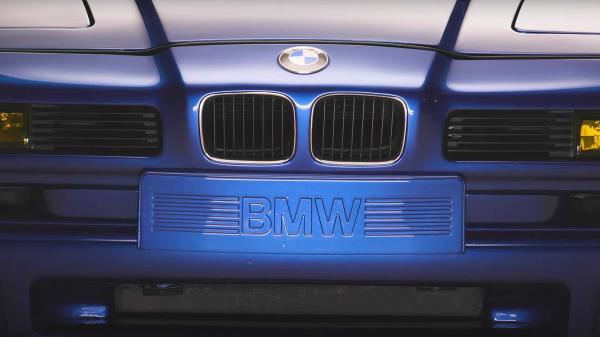
This Rare V12 BMW Prices Rise As Patient Buyers Quietly Make Moves
The rare V12 BMW that has been hiding in plain sight is finally commanding the collector prices it always deserved.
7
Ferrari F140C
6.0-liter V12

The Ferrari F140 engine family is legendary, but the F140C variant found in the 599 GTB Fiorano holds a special place in the hearts of the Tifosi. It was directly derived from the architecture used in the brutal Enzo hypercar, packaged into a front-engine, rear-wheel-drive grand tourer. The F140C brought true racing performance to a car you could theoretically drive across Europe.
It screamed to an 8,400 RPM redline and made 612 horsepower with a razor-sharp throttle response. If you were lucky enough to find one equipped with the ultra-rare 6-speed gated manual transmission, it was the ultimate purist combination. The evolution of this engine was found in the 599 GTO making 661 hp before the V12 became bigger in subsequent generations.
The sound of an F140C shifting at full throttle under a highway overpass is something a modern turbocharged sports car simply cannot replicate. The F140C evolved into larger, higher-output variants, but the era of the uncomplicated, purely mechanical front-engine V12 grand tourer effectively ended as complex aero-dynamics and digital chassis controls took over. It was also the last V12 Ferrari you could get with a manual.
6
Ferrari F140HC
6.5-liter V12

The F140C started the lineage of V12 Ferraris, but the F140HC might be the end of the mid-engine V12 Ferrari. This is the most powerful version of the Ferrari F140 family found in the limited-edition Ferrari Daytona SP3. This engine makes 829 hp from a 6.5-liter V12 with no hybrid setup like the LaFerrari and no turbos like the new Ferrari F80. Mounted in the middle of a carbon-fiber monocoque chassis, the Daytona SP3 screams all the way to a dizzying 9,500 RPM.
Driving one is a visceral experience that vibrates directly through your spine that only a lucky few high-profile Ferrari clients will be able to enjoy. The Daytona SP3 is a limited-run, retrospective masterpiece that demanded an engine like this to fulfill its mission. Ferrari’s primary mid-engine platform has already transitioned to hybridized V6 and V8 twin turbo engines. With no idea if Ferrari will ever make a car like this again, this leaves the F140HC as the definitive final chapter for a pure mid-engine V12 Ferrari.
5
Cosworth RA V12
6.5-liter V12

When Adrian Newey set out to design the Aston Martin Valkyrie, he didn’t want a modified road car engine. He wanted something that felt and sounded like a 1990s Formula 1 car. He turned to Cosworth, and they delivered a bespoke V12. The Cosworth RA is a 6.5-liter masterpiece that revs to an ear-shattering 11,100 RPM. To keep it light, almost every major component—including the block, heads, and pistons—was machined from solid billets of advanced alloys, resulting in a total engine weight of just 206 kilograms (454 lbs). It acts as a fully stressed structural member of the car’s chassis, meaning the rear suspension bolts directly to the engine block, and you feel all the vibrations.
Generating 1,000 horsepower completely on its own, it is the most power-dense naturally aspirated production engine ever created. At full chat, it produces a high-pitched ear-splitting wail that requires ear protection inside the cabin. The Valkyrie was a limited edition car and with final models delivered in 2025, this engine has reached the end of the road since it was made specifically for this car.
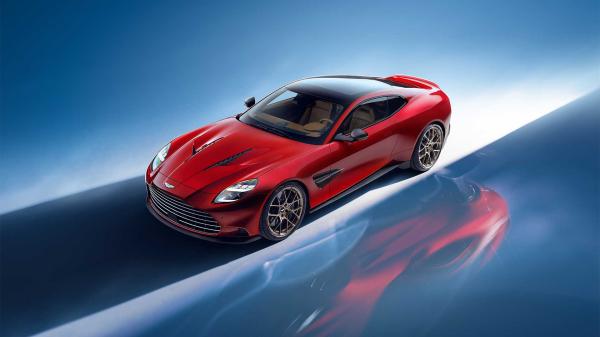
The New Vanquish Gets The Most Powerful V12 Engine, And Is The Fastest Aston Martin Ever
A stunning return of the iconic nameplate boasting the most powerful V12 engine in Aston Martin’s history.
4
Lamborghini L539
6.5-liter V12

When Lamborghini launched the Aventador, they didn’t just update their old V12—they built a brand-new one from scratch. The L539 was only the second clean-sheet V12 design in the company’s entire history, replacing the original Bizzarrini-designed engine that had been continuously updated since the 1960s and still produces one of the best pure V12 sounds.
This fast-revving 6.5-liter powerhouse perfectly captures the old-school, aggressive ethos of Lamborghini. In its final iteration in the Aventador Ultimae, it produced 770 horsepower and wasn’t subtle. The Aventador shifted with a violent, neck-snapping kick through the single-clutch gearbox, spitting flames out of the exhaust on downshifts. It was a loud, obnoxious, and utterly magnificent engine—the perfect heart for a car that looked like a stealth fighter. The Aventador’s successor, the Revuelto, keeps a V12 but with a hybrid setup and DCT transmission that takes out the raw feeling of the Aventador.
3
Mercedes-AMG M120
6.0-7.3-liter V12

Before AMG became integrated with Mercedes, they were mad scientists building automotive monsters. The M120 6.0-liter V12 was their hammer of choice during the 1990s, famously found in the land-yacht SL600 and S600 models. The stock M120 was a smooth, torque-rich engine built to cruise the Autobahn at 155 mph all day without breaking a sweat. They made around 400 hp and 420 lb-ft of torque, but AMG saw more potential. They bored it out to a massive 7.0 and 7.3 liters for the SL70 and CL70 models, and even the ultra-rare SL73 AMG, making up to 518 hp.
Mercedes retired the naturally aspirated M120 family to make way for the twin-turbocharged M275 V12, trading the crisp throttle response for massive, forced-induction torque. The M120 was so incredibly reliable and smooth that it caught the eye of a certain boutique Italian supercar builder named Horacio Pagani, which leads us directly to our next engine.
2
Mercedes M297
6.9-7.3-liter V12

Horacio Pagani didn’t just want a fast engine for his masterpiece, the Zonda; he wanted an engine that sounded like an acoustic instrument. Mercedes-AMG obliged by evolving the M120 architecture into the bespoke M297 family. This engine was first seen in the Mercedes CLK-GTR as a 6.9-liter V12 making 622 hp and 539 lb-ft of torque.
The Zonda got this engine, with early cars receiving the original 6.9-liter V12 and later cars receiving the 7.3-liter V12. The most powerful road-going version of this engine was found in the Zonda HP Barchetta, which was a masterpiece of a machine. The stock engine sounds crisp and clean but with a custom, equal-length exhaust system, the M297 produces what many consider the single greatest sound in automotive history—a crisp, high-frequency F1 shriek that can be heard from miles away.
In the final, track-only Zonda R, it was turned into a high-revving, unrestricted monster. It proved that an engine could be a piece of fine art, both visually and acoustically. Pagani was forced to move to twin-turbocharged AMG V12s for the Huayra and subsequent models because the giant, NA V12 could no longer pass global emissions and noise standards.
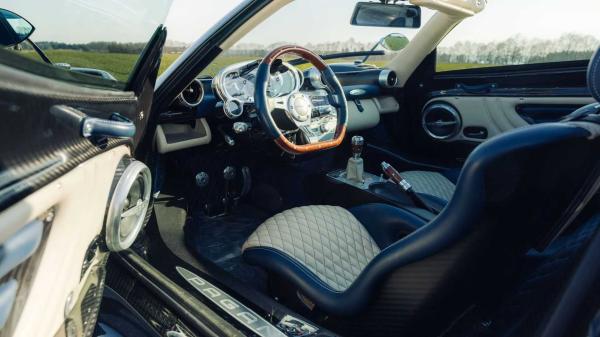
This $14 Million Hypercar Is One Of The Most Expensive Manual Cars Ever
This particular hypercar is a unique commission — a one-off in the fullest sense.
1
Aston Martin AM77
7.3-liter V12

Before the Valkyrie’s Cosworth scream or the Vulcan’s track-only fury, Aston Martin decided to build the ultimate expression of their traditional front-engine grand tourer. The result was the AM77, a 7.3-liter masterpiece designed exclusively for the ultra-exclusive Aston Martin One-77 and later revived for the one-of-one Victor. Aston Martin didn’t start from scratch here; instead, they handed their existing 5.9-liter block over to the legendary race engineers at Cosworth. They managed to shave off 15 percent of the engine’s total weight while turning it into the most powerful naturally aspirated production engine in the world at the time of its release, with 750 hp and 553 lb-ft of torque.
The AM77 is an absolute brute of an engine that doesn’t rely on high-RPM trickery alone; its massive displacement provides a wall of torque right in the mid-range. When Aston Martin dropped this same 7.3-liter V12 into the one-off, retro-styled Victor, Cosworth massaged it even further to unleash 836 horsepower—and paired it directly to a six-speed manual transmission. The AM77 was never intended for mass production, with only 77 units made for the One-77 and a single unit for the Victor. Its massive displacement and old-school engineering meant it could never comply with tightening modern emission regulations.
Sources: Mercedes-AMG, Aston Martin, Pagani, Cosworth, Lamborghini, Ferrari.

Related posts


Latest Post


No Comments