
The Mazda Rotary Engine That Outlives Its Reputation With The Right Maintenance
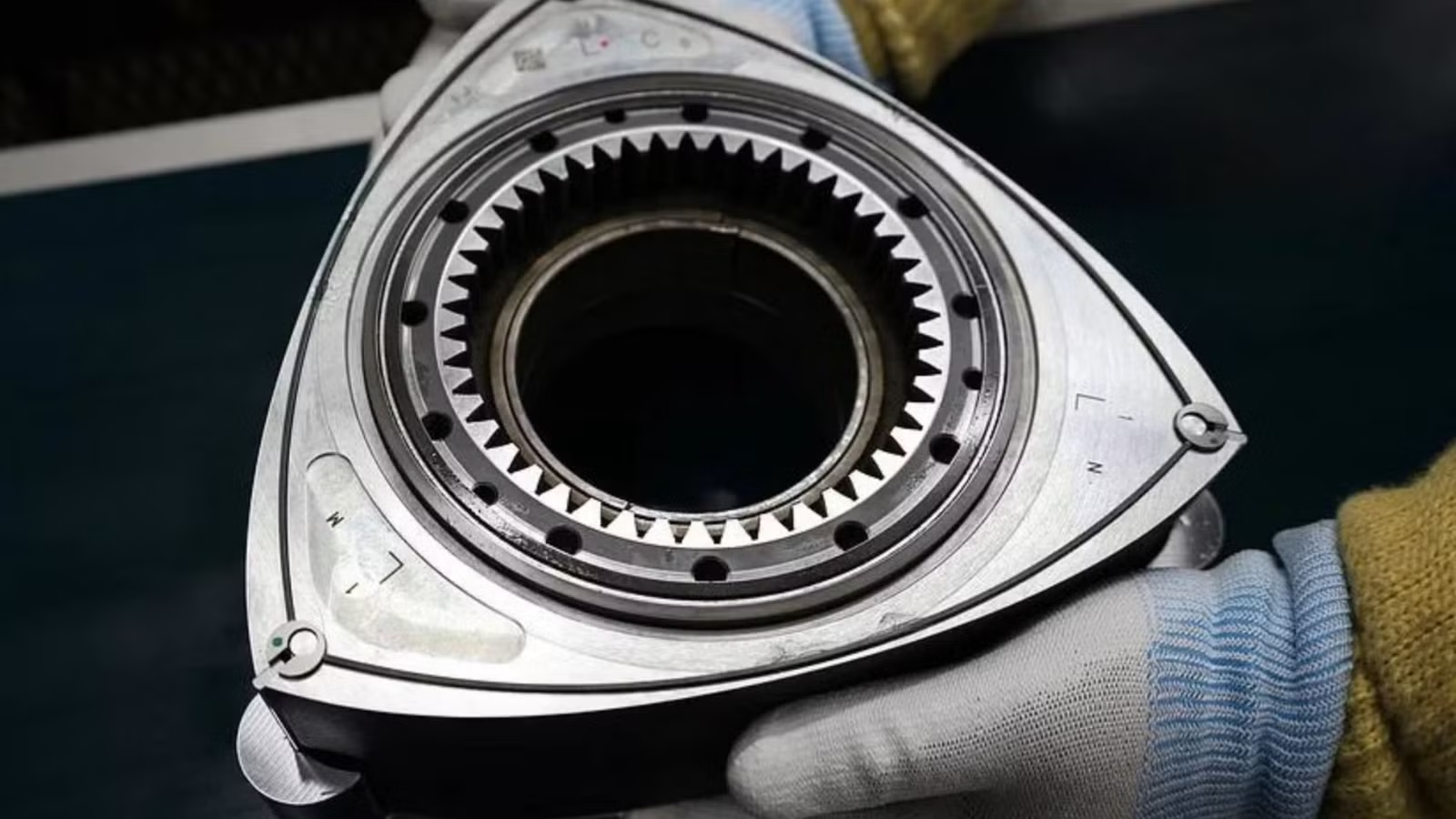
On paper, the Wankel engine represents pure mechanical elegance with its fewer moving parts, buttery power delivery, and a high-revving exhaust note that you either love or hate. Yet the near-universal consensus is that these spinning Dorito engines are ticking financial time bombs, inherently destined to smash the apex seals into the rotor housings before ever reaching six figures on the odometer.

Mazda wasn’t the only manufacturer to try this powertrain. Citroën and even AutoVAZ, the Sovietmaker of the Lada, even took a try at making the rotary work. However, a closer look at the forensic data reveals that the rotary’s reputation problem was largely an owner-behavior problem, not an outright failure of basic design. While a standard commuter car can survive years of passive neglect, cheap filters, and short grocery runs, the rotary demands a completely different level of vehicle ownership. When subjected to a hyper-disciplined maintenance routine, specific generations of this engine are surprisingly solid.
To understand the rotary engine is to understand a machine that breaks all the conventional rules of the automotive world. When Mazda brought the Wankel design to the mass market, they swapped out heavy pistons, connecting rods, and complex valvetrains for a brilliant geometric concept: a triangular rotor spinning inside an epitrochoid housing. This layout delivers power smoothly because every rotation of the rotor represents three combustion strokes, creating an incredibly power-dense package that loves to spin all the way up to its redline.

Because a rotary operates with entirely different thermal profiles and lubrication requirements than a standard piston engine, applying standard automotive care to a Wankel is a recipe for catastrophic failure. When a car is marketed to the general public but requires the precise care of a racing machine, a legendary reputation for unreliability is almost guaranteed.
The 100,000-Mile Illusion: Why The Renesis Standard Distorted The Narrative

While the 13B-MSP Renesis platform that came with the RX-8 was innovative for its time and produced a lot of horsepower for an NA, the Renesis engine famously hits a hard structural limit between 80,000 and 100,000 miles. Even when meticulously pampered by its owners, compression loss eventually forces a comprehensive rebuild.
Using the modern Renesis as the benchmark for all rotaries, however, creates a blind spot. Because its side exhaust port configuration was designed to eliminate valve overlap and meet strict emissions targets, the Renesis engine routes scorching exhaust gases through the delicate side irons. This design choice traps immense heat right next to the side seals and oil rings, while relying on thinner, shallower 1.2-mm apex seals. It was a motor structurally limited by its strict emissions layout.
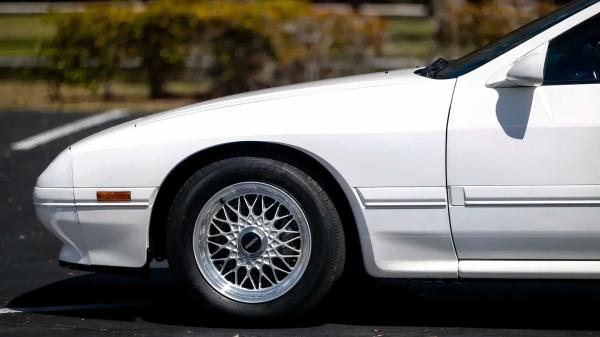
The 80s Sports Car That Time Forgot But Drivers Never Will
The 1980s were ruled by European sports cars, but one Japanese machine quietly delivered a timeless driving experience.
The FC 13B Case Study: Why The Second-Gen RX-7 Is The True Survivor

To find a rotary engine capable of outliving its fragile reputation, we have to look past the modern era and step back into the late 1980s. The second-generation Mazda RX-7, known to enthusiasts as the FC platform, housed an iteration of the 13B that was unlike its high-strung descendants. This era of the 13B was over-engineered for thermal resilience and structural longevity.
The mechanical distinction between the FC’s 13B and later iterations comes down to simplicity. The FC 13B was engineered before the complex twin-turbo setup of the REW 13B found in the third-generation FD platform, and before modern emissions regulations forced Mazda to compromise on internal thermal management. Instead of routing exhaust through the side plates, the FC vents exhaust gases straight out through the outer housing walls, keeping combustion heat localized and moving it quickly out of the block. Furthermore, the FC era features robust 2.0-mm cast-iron apex seals, thinner than those of the 12A engine that came before, but not as thin as the Renesis.
The Forensic Playbook: How Enthusiasts Keep The FC Alive

Achieving extreme mileage on an FC 13B is never an accident; it is the result of an unyielding will to keep something alive. Because the rotary engine injects oil directly into the combustion chamber by design to lubricate the moving apex seals, owners must actively manage the engine’s internal environment. This creates a fascinating subculture of preventative maintenance tasks that would seem utterly absurd to a typical commuter.
The OMP Deficiency And The Art Of The Premix

The first line of defense for any high-mileage 13B is addressing the limitations of the factory Oil Metering Pump, or OMP. This mechanical pump is designed to draw oil from the engine crankcase and inject it into the housings to lubricate the apex seals as they sweep across the metal surfaces. However, as these mechanical pumps age, the factory system struggles to distribute a perfectly uniform film of oil across the entire width of the seal.
To solve this deficiency, enthusiasts adopt the art of “premixing.” At every single fill-up at the gas pump, owners pour a precise ratio of clean-burning, two-stroke marine oil directly into the fuel tank—typically half an ounce of oil per gallon of gasoline. Others who wish to go one step further will delete the OMP entirely and mix one ounce per gallon to prevent used engine oil from entering the combustion chamber.
Thermal Demands: The 3,000-Mile Mineral Oil Change And Ignition

The second part of rotary survival involves an uncompromising stance on oil type and electrical health. While modern piston engines thrive on high-tech synthetic oils, the high-mileage playbook for an FC 13B demands high-quality, conventional mineral oil (unless the OMP has been deleted). Synthetic oil leaves hard ash deposits inside the combustion chamber when it is combusted. These deposits pack into the seal grooves, causing them to stick and ruin compression, whereas conventional mineral oil burns away cleanly, leaving the internal surfaces pristine.
Alongside the 3,000-mile oil change, an owner must watch the ignition clock with absolute precision. Rotary ignition components work twice as hard as those in a four-stroke piston engine because they fire on every single rotation of the eccentric shaft. Because of this intense workload, expert sources often debate the ideal lifespan of the spark plugs, with recommended intervals ranging anywhere from a conservative 10,000 miles up to 24,000 miles. While some documentation suggests the higher limit is achievable, adhering to the more conservative 10,000-mile end of the spectrum is the safer bet for most owners, helping to prevent fouling and guarantee optimal combustion.
|
Maintenance Component |
Target Replacement Interval |
|---|---|
|
Conventional Mineral Oil Change |
3,000 Miles |
|
Spark Plug Inspection & Swap |
10,000 to 15,000 Miles |
|
Ignition Coils and Wires |
30,000 Miles |
Beyond the plugs, factory ignition coils and plug wires are highly susceptible to degradation as they approach the 30,000-mile mark. While not a hard failure threshold, this mileage represents a critical window where performance can begin to fall off. If the ignition spark weakens, the engine suffers from incomplete combustion, leaving unburnt raw fuel behind to wash away the critical lubricating oil film on the housing walls—potentially triggering rapid, compounding seal wear.
The “Italian Tune-Up” As Essential Preventive Maintenance

Perhaps the most counterintuitive element of keeping an FC 13B alive is how the car must be driven. In a standard piston-engine car, babying the throttle, short-shifting, and keeping the engine at low RPMs is seen as the ultimate way to preserve its lifespan. In the world of the Wankel, that exact driving style is a slow death sentence. Low exhaust velocities and gentle commuter driving allow soft carbon deposits to build up rapidly inside the rotor pockets and around the apex seal springs.
To prevent this, regular high-RPM driving—affectionately known as the “Italian Tune-Up”—is literal mechanical medicine. Enthusiasts make it a point to run the engine to its full redline under heavy load on a regular basis. The immense heat generated by a hard acceleration run burns off soft carbon, while the intense centrifugal force flings the apex seals outward, clearing away debris from the spring tracks and keeping the seals moving freely within their slots.
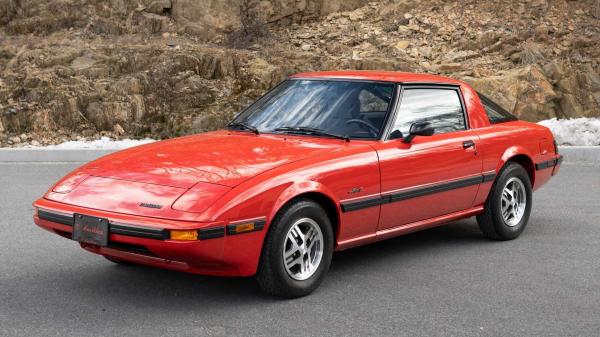
Gorgeous 1982 Mazda RX-7 Catches Fire, Firefighters Suspect Lithium-Ion Battery As Cause
The fire started in the garage, but the owners were able to push the classic car into the road.
How The MX-30 Automates The Playbook

The hard-won lessons learned by decades of high-mileage 13B owners are not just nostalgic trivia; they serve as a foundational blueprint for Mazda’s modern engineering projects. In a move that surprised the automotive industry, Mazda officially reinstated its dedicated Rotary Engine Development Group, assembling a team of 36 specialized engineers to evolve Wankel technology for a carbon-neutral future. Their mission was to adapt the rotary’s unique packaging advantages—namely its ultra-compact footprint and high power-to-weight ratio—for the electrified era.
This engineering revival has culminated in the modern Mazda MX-30 e-SKYACTIV R-EV, a plug-in hybrid that utilizes a brand-new, single-rotor Wankel engine as an onboard power generator. While purists initially wondered how a rotary could survive the demands of a modern hybrid platform, the layout represents a brilliant engineering redemption arc. By fundamentally changing the engine’s job description, Mazda has quietly engineered out the exact human errors that plagued the high-mileage rotaries of the past.
Engineering Out The Human Element: The Controlled Operating Environment

This operational setup completely re-engineers the operating environment of the engine. In an old FC RX-7, a driver could easily abuse the engine by shutting it off while cold, lugging it through low-RPM traffic, or using it for short, freezing-cold city errands that promote carbon accumulation. In the MX-30, the digital engine management system takes complete control away from human error, automating the entire enthusiast survival playbook.
|
Engineering Metric |
Legacy 13B Engine |
Modern 8C Range Extender |
|---|---|---|
|
Fuel Delivery |
Port Injection (Pre-Housing) |
Direct Injection (In-Chamber) |
|
Operating Speeds |
Highly Variable (0-9,000 RPM) |
Fixed, Optimized Constant RPM |
|
Primary Failure Mode |
Carbon Seizure / Starvation |
Controlled Linear Physical Wear |
|
Maintenance Requirement |
3,000-Mile Manual Care / Mix |
Standard Digital EV Scheduling |
Whenever the 8C engine fires up, the computer locks it into a highly efficient, thermally optimized RPM range, utilizing modern direct injection to ensure clean, complete combustion with zero fuel pooling. Because the engine runs at a constant, calculated load, it reaches its ideal operating temperature within seconds and stays there. The car’s computer essentially delivers a flawless, factory-controlled “Italian tune-up” every single time the generator activates, completely eliminating the carbon buildup that cut down previous generations.
The Japanese V-6 Engine So Reliable, The Automaker Still Hasn’t Replaced It
This longstanding six-cylinder powerhouse remains a foundation of the American automotive landscape.
The Wankel Finds New Life… Almost

In a strange twist of fate, the range-extended MX-30 fell out of production in 2026. This leaves us, once again, without a modern rotary on showroom floors. While it might be logical to assume it met its demise for the same reasons past rotaries failed, most accounts indicate that the vehicle was simply too small and had a tiny pure-electric range compared to other, more budget-friendly options in the segment.
Does this mean that Mazda is finished with the rotary once and for all? Far from it. Official corporate announcements from Hiroshima indicate that the end of the MX-30 R-EV is a pivot point rather than a permanent retirement of the Wankel. Mazda’s leadership actively frames the rotary engine not as an obsolete artifact, but as a core technology for its carbon-neutral future. The visual direction of this engineering effort was unveiled with the Mazda Iconic SP concept. However, only time will tell whether this will pay off in the end for Mazda. The SP concept has been teased for a while now and still has no official release date, which leaves the future of the production-spec sports car firmly up in the air. In the end, we will probably never see something quite like a 13B produced for the road again, so if you are lucky enough to have one, it is probably a very good idea to adhere to a tight maintenance schedule.
Source: Mazda, Autoblog, Essex Rotary Specialists, Rotary Resurrection

Related posts




Latest Post




No Comments