
Kawasaki’s Rotary-Valve 250 Scrambler Out-Muscled Piston-Port Rivals, Then Vanished By 1972
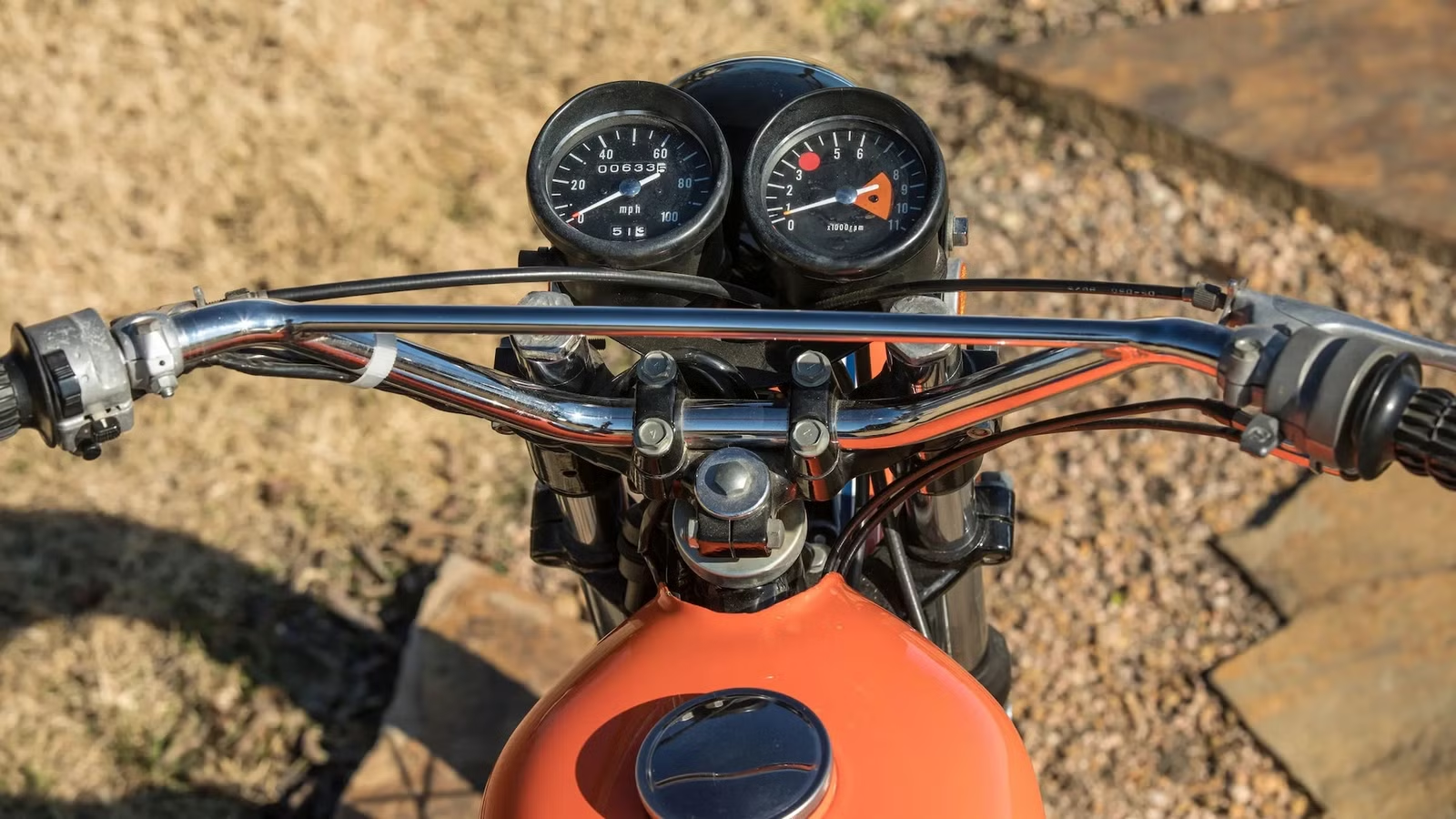
Kawasaki are known for producing some of the fastest motorcycles on the planet these days, but back in the 70s they were better known for building high-performance two-strokes. They were obsessed with two-stroke technology back then, and were most certainly not alone. If you wanted to be competitive in any form of racing, on or off-road, you simply needed a two-stroke platform to work from.
Two-Stroke Performance Potential

When compared to a similar sized four-stroke engine, a two-stroke engine has the potential to make approximately twice as much power. With almost all of that power high up in the rev range, torque is sacrificed, but when it came to class racing that mattered little. As such, two-stroke bikes dominated top-level motorsport for decades, and while the performance potential was always there, longevity wasn’t always their strength.
Reliability was more or less inversely proportional to performance, which means many of the high-performance bikes were seen as disposable items. Off-road bikes from this era would have been used up, and the vast majority of the rebuilt bikes you see pop up for sale from the 70s and 80s will have often been cobbled together from several donors. Which means finding this single model year 250 is akin to finding a needle in a haystack.
The Kawasaki F8 Bison 250 Is A Rare Beast
Price Range: $5,000 – $10,000


If you do happen upon one of these “needles”, they won’t necessarily cost all that much. Just because something is rare, doesn’t necessarily mean that it is valuable, even in restored condition, the Bison 250 will only set you back around the $5k mark. Survivors will cost more, but that is the case for any scrambler from this era when riding off-road really exploded in popularity.
The Bison 250 was only produced in 1971, which is understandable when you look at how fast things were moving back then. Even though it came out with a couple of innovative features, including rotary valve induction and a Hatta fork, Kawasaki had a 175 and a 350 (known as the Bighorn) which both had the same features.
So, if you wanted a simple, affordable trail bike, the 175 made more sense, and if you were after something more performance oriented, then the 350 was there. The 250cc middle child was subsequently replaced with a more conventional (for the time) piston-port model the year after.
The Bison Made More Power Than The Competition
Power: 22 – 25 Horsepower

Some sources say 22 horsepower, others 23, and Kawasaki boldly claimed 24.5 horsepower for their pre-production model. All of which are accurate! That’s the thing with carb-fed bikes, most especially bikes from this era, and that is the simple fact that their performance is heavily influenced by atmospheric conditions, and how well calibrated the jetting is to those conditions. No matter which way you slice it, the Bison was just more powerful than any of its contemporary 250cc rivals.
This was largely thanks to its rotary-valve induction. Kawasaki were one of the few manufacturers to persevere with the technology. While it made engines a little more complicated, as well as wider, it allowed for the kind of precision inlet timing piston-port induction simply could not achieve. Reed valves would eventually supersede rotary valves in terms of overall performance, but only after decades of investment from all the major manufacturers. Back in the 70s, reed-valves were very much in their infancy.
Both The Bison And Bighorn Were Difficult To Ride Off-Road

All the way through the 70s, Kawasaki had a habit of simply throwing more power at a problem. The H2 was known as the “widowmaker” for a reason, and the all-conquering Z1 had an 80 horsepower engine situated in a frame that could only safely handle 50. The same rings true for the Bison scrambler, and by extension, the even more powerful 350cc Bighorn. They were just a little too powerful for their own good, with a chassis that wasn’t quite up to the task. As a result, these bikes were a handful to ride off-road, even though they all came equipped with the innovative Hatta fork.
You could adjust the spring rate at the top of the fork, and, like most bikes, you could adjust the stanchion length, but what made it unique was the fact that it offered three different axle positions. Each position would radically alter the caster angle and trail. For suspension experts, this was fantastic, but for most riders who didn’t really understand how even the smallest changes would significantly alter the handling, it would have been easy to make a bad situation even worse. With 27 different settings, finding the one that best suited your riding style would also have required a certain level of dedication to the task.
While the Bison 250 was a short-lived model, the Bighorn 350 proved to be hugely successful, no matter how challenging it was to ride. It will be a lot easier to find one of these 350s if you are interested in acquiring a vintage Kawasaki scrambler. With a dedicated fanbase, it will also be a much easier bike to own and maintain. Parts for any of the bikes from this era are getting harder to come by, and getting a bike with some form of following is essential if you plan on actually riding the thing. These bikes were fun, incredibly fast for the time, and today they offer a totally different riding experience.
Source: KlemmVintage.com and Cycle World Magazine (November 1970)

Related posts


Latest Post


No Comments