
An American Quad-Turbo V12 That Could Laid Europe’s Supercar Dominance To Rest
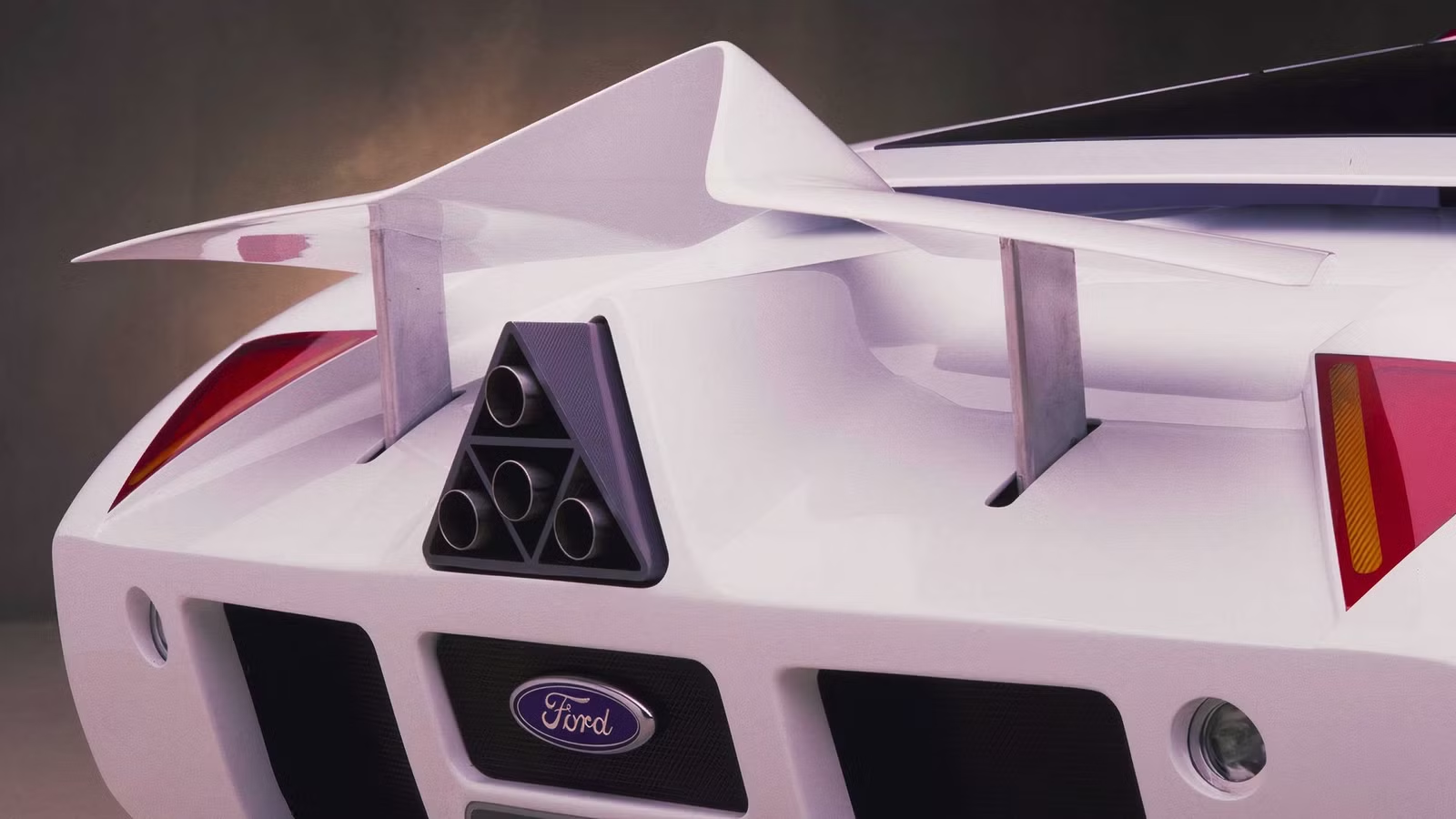
During the 1990s, American boutique auto manufacturers launched an ambitious effort to challenge Europe’s dominant supercar titans. These ventures aimed to merge aerospace engineering with massive domestic horsepower to outpace traditional overseas rivals. Most attempts failed quickly due to insurmountable financial, operational, and market barriers. Small manufacturers lacked the capital required to survive prolonged research cycles, high production costs, and severe global economic downturns.

Severe build-quality issues, unrefined mechanical components, and internal corporate instability frequently eroded customer confidence and delayed deliveries. Furthermore, strictly enforced domestic safety and emissions regulations made homologation prohibitively expensive, driving these boutique manufacturers into bankruptcy before they could reach viable volume.
The Crazy Era Of Top-Speed Supercars
During the 1990s, the international automotive landscape exploded into an unprecedented supercar obsession defined almost entirely by the pursuit of absolute velocity. Automotive manufacturers were engaged in a fierce engineering race, treating top speed figures as the ultimate metric of brand prestige, technological dominance, and superiority. Breakthroughs in aerodynamic simulation, lightweight composite construction, and advanced forced-induction systems allowed engineers to push production vehicles past historical mechanical boundaries. The pursuit of speed evolved from a marketing tactic into a central engineering objective, capturing global media attention and defining supercar culture for the decade.

However, this relentless pursuit forced engineers to compromise vehicle usability and dynamic balance. Reaching extreme top speeds demanded massive engine displacements, radical forced induction, long gearing, and low-drag configurations that often compromised low-speed drivability and mechanical stability. Thermal management became a continuous crisis, as engine bays generated immense heat at sustained top speeds, testing cooling systems to their limits. Tires struggled to endure the extreme centrifugal forces and thermal stresses generated at high velocities. Ultimately, while the decade yielded breathtaking velocity records, it exposed the mechanical realities of prioritizing sheer top speed over real-world performance, usability, and long-term mechanical durability.
The Executive Vision Behind the Ultimate Ford Supercar

In the mid-1990s, executive leadership inside Dearborn decided to formulate a bold statement that would challenge European dominance in the ultra-exotic performance segment. The primary motivation was to showcase the engineering agility of the Ford Special Vehicle Team and create a spiritual successor to the legendary Ford GT40. The Blue Oval’s original supercar dominated the 24 Hours of Le Mans three decades prior. Rather than producing a non-functional static shell for auto shows, program managers commissioned a fully driveable mid-engine prototype. The project moved forward under extreme time constraints, requiring the complete design and assembly of a functional vehicle in roughly six months.
The centerpiece of this exercise had to surpass every contemporary exotic in raw power, technical sophistication, and visual drama. During this period, vehicles like the Bugatti EB110, McLaren F1, and Jaguar XJ220 defined top-tier performance benchmarks. Ford needed an engine capable of commanding total authority over these international rivals. The development program prioritized rapid prototyping, leveraging existing component architecture where possible while engineering custom forced-induction solutions to maximize output. When the Ford GT90 debuted at the 1995 Detroit Auto Show, it stunned the industry with its sharp New Edge styling philosophy and its incredible quad-turbocharged V-12 engine.
Architectural Foundations And Modular Engine Geometry

Engineering a bespoke V-12 engine entirely from scratch within a six-month window presented an impossible mechanical challenge. To bypass the traditional lead times for casting custom engine blocks, the development team looked directly to the established Ford Modular engine family. The Modular program represented state-of-the-art production engineering at Ford, encompassing dual-overhead-cam V-8 engines found in luxury sedans and sports cars. Engineers selected two cast-iron Lincoln 4.6-liter Modular V-8 blocks to serve as the structural donor material for the new flagship project.
Machinists meticulously sectioned both donor blocks, removing two cylinder bores from each block casting. The team then welded the remaining portions together, creating a unified 90-degree V-12 block that could house twelve pistons in two symmetrical six-cylinder banks. The resulting engine retained the exact internal geometry of the production Modular V8, featuring a 90.2 mm bore and a 77.3 mm stroke. Total displacement reached 5,927 cubic centimeters. To complete the physical structure, technicians developed a specialized billet crankshaft, custom-ground camshafts, and modified cylinder heads with four valves per cylinder, driven by dual overhead camshafts on each bank.
Forced Induction Architecture Led To Impressive Performance Metrics

While a naturally aspirated 5.9-liter V-12 would have delivered smooth power and adequate horsepower, Ford engineers pursued extraordinary performance targets. To achieve these goals, they specified a complex forced-induction package comprising four individual Garrett T2 turbochargers. Installing four distinct turbos allowed engineers to match two turbochargers to each cylinder bank, ensuring rapid spool times, reduced lag, and continuous airflow across the entire engine operating envelope. The engine utilized a relatively low static compression ratio of 8.0:1, providing a high safety margin against engine knock while allowing significant forced-induction boost pressure.
When fully tuned, the quad-turbo V-12 produced an astonishing 720 horsepower at 6,600 RPM and 660 pound-feet of torque at 4,750 RPM. These figures dwarfed the outputs of high-profile exotics from Ferrari, Lamborghini, and Porsche during the mid-1990s. Theoretical performance calculations indicated that the GT90 could accelerate from 0 to 60 MPH in just 3.1 seconds, pass through the quarter-mile in 10.9 seconds at 140 MPH, and reach a top speed of 253 MPH. The engine demonstrated the massive untapped potential within the modular production series’ basic architecture.
Thermal Dynamics, Packaging, and Structural Integration

Integrating a quad-turbocharged 5.9-liter V12 into a compact mid-engine chassis created severe mechanical and environmental challenges. The four Garrett turbochargers and their associated plumbing generated extreme exhaust gas temperatures under boost. Because the GT90 utilized light composite body panels and a carbon-fiber structure, intense heat soaking from the centrally located engine bay threatened to degrade or melt structural components and bodywork. Traditional insulation solutions were far too bulky and heavy to fit within the tight packaging confines of the engine bay.
Ford solved this thermal problem by sourcing high-tech materials directly from the aerospace industry. Engineers lined the engine bay and exhaust outlets with heavy-duty ceramic heat tiles similar to those developed for NASA Space Shuttle thermal protection systems. These ceramic tiles effectively dissipated extreme radiant heat, protecting the adjacent composite panels during high-speed runs. Power transfer from the engine to the rear wheels required a robust drivetrain, so engineers selected a heavy-duty FFD-Ricardo five-speed manual transmission configured to handle immense torque loads.
Engineering Legacy And Influence On Future Production

Despite the immense public reaction and successful technical validation of the prototype, the quad-turbo V12 never transitioned into mass production. The financial investment required to re-engineer a spliced engine block into a durable mass-production casting proved prohibitive for a low-volume niche product.
Furthermore, Ford’s corporate focus shifted toward high-volume light trucks and core global vehicle architectures in the late 1990s. The unique GT90 concept car remained a one-off functional demonstrator, periodically appearing at historic automotive events and high-profile museum exhibitions. Nevertheless, the development of the quad-turbo V-12 left a lasting mark on Ford engineering capabilities. in some ways, we can argue that it even inspired the last-generation of the Ford GT.
Sources: Ford, Below the Radar, Ultimate Specs, and Classic Driver.

Related posts





Latest Post


No Comments