
The Tiny British Shop’s 350-HP Lola Ford Used As The GT40’s Template
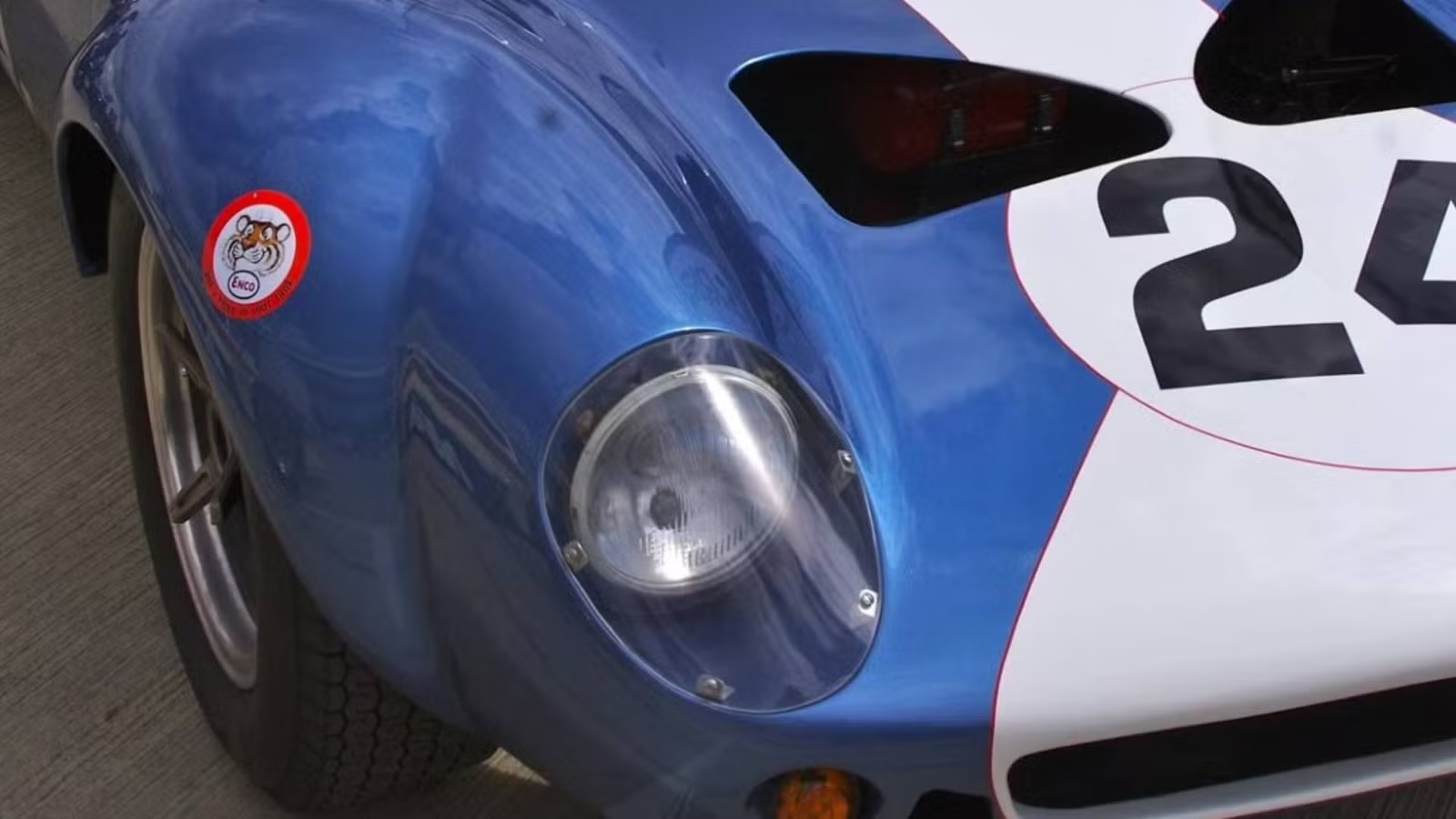
The Ford GT40: the car built out of British engineering, American horsepower, and pure spite for Ferrari. It’s the subject of automotive myth, generational intrigue, and an award-winning feature film. In more ways than one, the GT40 is one of the most iconic motor vehicles ever to hop from a blueprint to the real world, and yet, its origin story is far more complicated than the Ford v Ferrari makes it out to be. At the very beginning of its story is an altogether different mid-engine racer, one with a similar makeup but an altogether different badge on the front.
The GT40’s Missing Puzzle Piece

The history books and Hollywood features tend to focus entirely on Henry Ford II’s blank-check revenge campaign against Enzo Ferrari in 1963, a direct counter to Enzo Ferrari telling Ford to walk away when they tried to buy the Italian supercar maker earlier in the decade. On the face of it, that’s more or less the truth. Yet the true genesis of America’s greatest endurance racer had absolutely nothing to do with Ford at first, apart from the engine sitting right behind the driver’s seat.
Before the GT40 became a legendary, Ferrari-slaying world-beater, Ford executives were desperately searching for an existing mid-engine platform capable of conquering Le Mans. Detroit had the V8 horsepower, but lacked the lightweight, mid-engine chassis dynamics required to survive 24 hours of brutal European racing, sparking a hunt that led them straight to a modest British workshop. Enter Lola Cars, a tiny English racing outfit based in the outer London borough of Bromley that punched above its weight in every way imaginable.
Founded by an eccentric and brilliant engineer named Eric Broadley, Lola operated on budgets that were a fraction of those commanded by Detroit’s giants. Yet Broadley, a future MBE recipient, and his small team developed the exact mid-engine blueprint Ford needed to defeat Ferrari.

A Match Made in Racing Heaven

This is usually where one might expect the large American corporation to swoop in, acquire the small British company for next to nothing, strip it of its assets, and use all the hardware for its own purposes while taking all the credit. Surprisingly, that is not how events unfolded. Instead of a hostile takeover, Ford executives offered Lola a genuine partnership. They acquired the existing prototype vehicles and locked Broadley into a well-funded, two-year development contract.
Still, mixing a large Detroit corporate entity with a small independent racing outfit went about as one might expect. The partnership dissolved after roughly 18 months, thanks to irreconcilable engineering disputes. Broadley, a pioneer of some of the earliest aluminum monocoque frames, championed the material as light enough to boost power-to-weight figures, while still being strong enough to last the length of a race.

Meanwhile, the Ford side, led by former RAF pilot and Mustang I prototype engineer Roy Lunn, believed the cost-effectiveness and ease of construction of steel was the surest path forward. In hindsight, we know which side was on the right side of history. Ultimately, Lola withdrew from the partnership in 1964, but not before Ford used its influence to acquire two of the three examples Lola had built to help beat Ferrari.
The Lola Mk.6, the GT40’s Forgotten Predecessor

Being such a tiny company, Lola only managed to build three mid-engine V8 endurance racers before the Ford partnership soured. Yet what amazing machines they turned out to be. Unveiled to the world at the 1963 London Racing Car Show, the Lola Mk.6 GT was as advanced and forward-thinking as a racing car could be in the early 1960s. Designed by Broadley alongside aerodynamicist John Frayling, it was one of the very first vehicles to successfully marry a lightweight, European-style mid-engine layout with the raw power of a large American V8.
The chassis was aluminum, as its creator intended; the suspension was double wishbone up front and fully independent in the rear with coil springs all around. The whole car, powertrain and all, only weighed about 1,800 lbs in its race configuration, meaning the body and frame weighed practically nothing at all. Under the rear hatch of the Le Mans racer variant, a 260-cubic-inch small-block Ford V8, the same block found in the early Gen-I Mustang, was tuned with four Weber carburetors and produced 350 hp at the crank via a four-speed transaxle.

The Mk.6’s racing debut came in May of 1963 at Silverstone in England,followed quickly by an appearance at the 24 Hours of Le Mans. There, the car set a brilliant pace before a gear selector failure brought the day to an end early. The Mk.6 would rack up one win at the Nassau Speed Week in the Bahamas later that year, but by then, Ford was hard at work adapting Lola’s design.
The 40-Inch-Tall Legacy

The visual and mechanical design language of Broadley’s Mk.6 was soon woven directly into its corporate successor. The low, swooping roofline, the 40-inch-tall height at the roof, the monocoque chassis, albeit steel instead of aluminum, and the mid-rear-mounted V8 were all vital components of what would become the GT40. By 1969, that car had won Le Mans no less than four consecutive times.
Meanwhile, the Mk.6 took a background role as a test mule at Ford, and one example wound up in the hands of a former Shelby American technician named Allen Grant for $3,000. For some context, that’s the equivalent of about $23,000 in today’s money. Grant held onto the car for decades, and today the original steel prototype, the 289 V8-engined aluminum Le Mans racer, and the Traco-tuned Chevy V8-engined Nassau winner in Mecum decals survive as million-dollar collectibles.
Sources: Lola Heritage, RM Sotheby’s, Ford

Related posts


Latest Post


No Comments