
Oldsmobile Used Hurst To Sneak A Forbidden 455 Past GM’s 400-Cube Rule
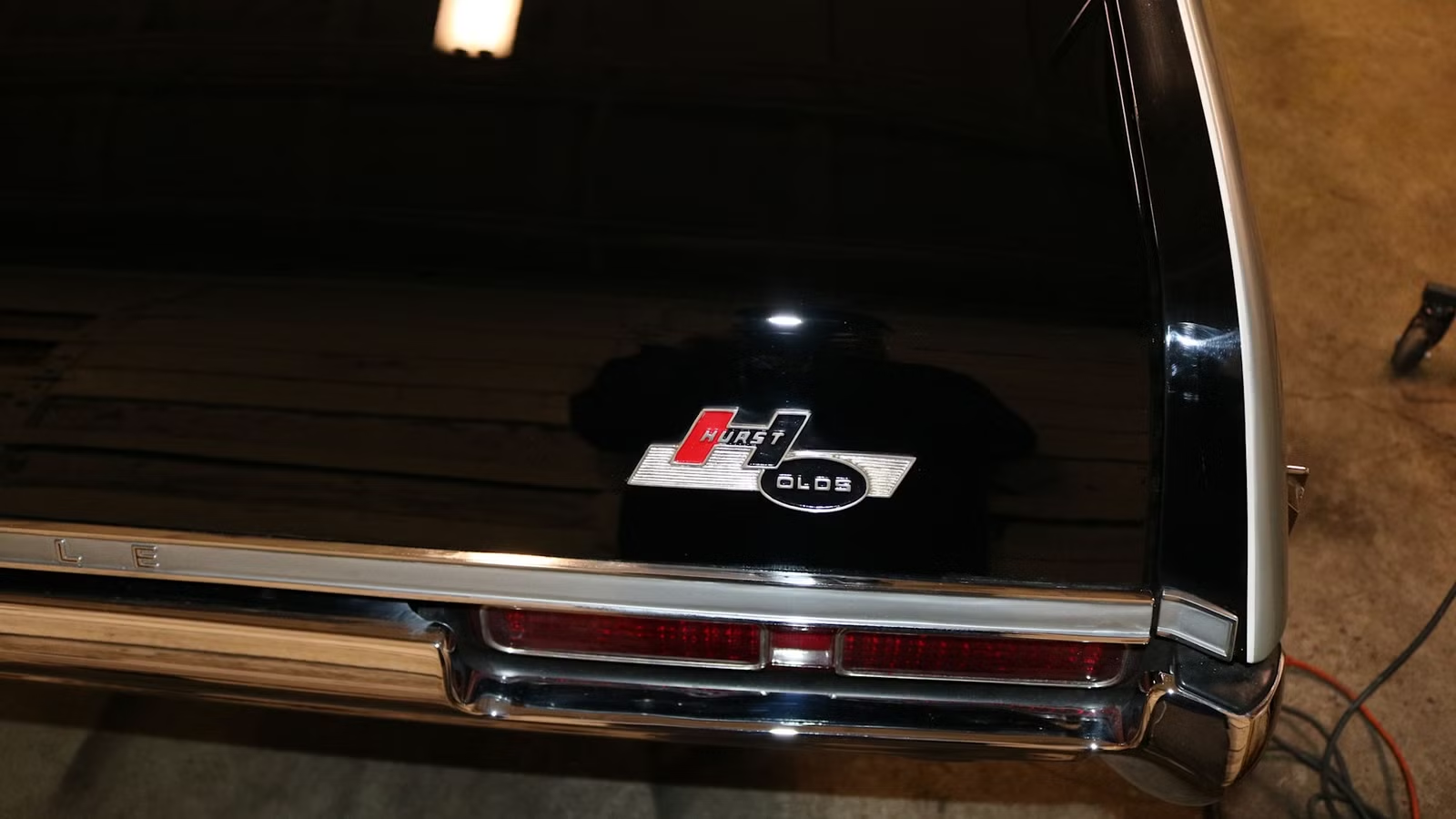
George Hurst built a business by looking at Detroit hardware and asking what would happen if it worked a little better. In 1968, he leveled that question at his personal Oldsmobile 4-4-2. The obvious answer was 55 more cubic inches. The resulting car was so good it convinced Oldsmobile to rebel against General Motors corporate policy, and inspired a partnership that would last decades.
GM Drew A 400-Cubic-Inch Line Through Its Muscle Car Lineup

When you study GM’s 1968 muscle car lineup, a distinct pattern stands out. Pontiac’s GTO topped out at 400 cubic inches, Oldsmobile’s 4-4-2 at 400, Buick’s GS at 400, and Chevrolet’s Chevelle SS at 396. Put a different way, Chevrolet would sell you a 427 in “America’s sports car,” the Corvette, but not in the midsize Chevelle.
In a 1995 interview, Hurst executive Jack “Doc” Watson revealed General Motors’ corporate “Edict on 400 CID.” He recalls such a strict rule against any intermediate-sized muscle car crossing this magic number that even one-off special editions sold with a larger engine were supposed to have the block installed outside the factory.
George Hurst Built Himself The Ultimate Gentleman’s Hot Rod


George Hurst co-founded his eponymous aftermarket performance parts company in 1958. Always the tinkerer, he bought a 1968 Oldsmobile 4-4-2 as his personal car and immediately began imagining it with a larger engine. Jack “Doc” Watson helped turn the idea into a 455-powered personal 4-4-2, using the larger V8 from an Oldsmobile Toronado.
The 455-cubic-inch V8 actually weighed less than the 400 it replaced, so the upgrade didn’t compromise the 4-4-2’s handling. Watson added special paint, a Hurst shifter, engine modifications, and a walnut dash applique. Specifically, the luxurious muscle car had an automatic (Turbo Hydra-Matic) transmission with a Hurst Dual-Gate. The result was a comfortable daily driver that could go, and corner, as quickly as most anything on the road. The car was so good, Hurst pitched the idea to Oldsmobile, which greenlit a limited production run.
The 1968 Hurst/Olds Packed 455 Cubic Inches Into A 4-4-2

Oldsmobile and Hurst turned the prototype into 515 production cars for 1968. The breakdown was 451 Holiday hardtops and 64 Sport Coupes. The spec sheet outlines a 455-cubic-inch V8 rated at 390 horsepower at 5,000 rpm and 500 lb-ft at 3,200 rpm. It was backed by the prototype’s same Turbo Hydra-Matic automatic and iconic Hurst Dual-Gate shifter. Standard gearing was 3.91:1, or 3.08:1 with air conditioning (which claimed about 10 horsepower). The special edition also received forced-air induction, power front discs, heavy-duty suspension, Peruvian Silver paint, black accents, and H/O badging. The flashiest aspect of this “gentleman’s hotrod” in 1968 was the cheeky red inner fender wells Oldsmobile added.
The Hurst/Olds Club of America found the special edition’s original paperwork dictated the 455 be installed off GM property, because corporate policy barred the engine from the A-body. So Hurst/Oldsmobile originally recruited Demmer Engineering in Lansing, Michigan, to finish the cars. But at some point during development, GM either changed its mind or Oldsmobile decided to ask for forgiveness instead of permission. The production H/Os actually received the 455 at the Oldsmobile assembly plant before going to Demmer for additional goodies.
Hurst/Oldsmobile Received Three Times More Orders Than It Could Build

It turns out that George Hurst was far from the only driver interested in a 4-4-2 with a displacement upgrade. Watson remembered 1,677 orders for 1968 Hurst/Oldsmobile cars. The team had originally planned to build 500 in a whirlwind 30-day run. It was only able to expand production to 515. With such high demand, distribution was complex. One dealership ordered 17 cars and was disappointed to receive just two.
For 1969, Hurst and Oldsmobile literally doubled down on the special edition. The team assembled 906 hardtops, with three promotional convertibles. This year’s 455 was rated at 380 horsepower and 500 lb-ft, and featured a milder 285/287-degree cam as standard. It kept its Hurst badging and iconic Hurst shifter. Its new paint job was far from mild: Cameo White paint, Firefrost Gold graphics, functional hood scoops, and even a rear wing.
The Hurst/Olds Outlived The Rule It Had Been Invented To Break

By 1970, GM had done away with the 400-cubic-inch limit for midsize cars that originally inspired the Hurst/Olds partnership. Oldsmobile immediately made a 365-horsepower, 500-lb-ft 455 standard in the 4-4-2. Within two years, George Hurst’s vision had become GM’s standard operating procedure. So did Oldsmobile abandon the aftermarket genius?
The H/O badge had become bigger than the loophole that inspired it. Hurst/Olds produced a special edition for 1972, 1973, 1974, 1975, 1979, 1983, and 1984, followed by the unusual 1988 Hurst/Olds Aero program. The later cars were diverse. Some did Indianapolis pace-car duty, others featured Hurst Hatches, downsized Cutlass bodies, and, in 1983-84, the three-lever Lightning Rod shifter. What began as a joint rebellion against internal GM policy became a unique Oldsmobile tradition that lasted two decades.
Sources: Capital Area District Library, Hurst Performance Vehicles, Hurst/Olds Club of America, Old Car Brochures,

Related posts


Latest Post


No Comments