
The Japanese Motorcycle Built For Riders Who Hate Changing Bikes
It’s cool to see a five-motorcycle garage, with each bike catering to different riding scenarios. However, maintaining this setup is hectic and costly, which often takes the fun out of it. These factors, coupled with the logistics of switching motorcycles for different riding conditions, add up and can make riders start hating a multi-garage setup.

The solution is a single do-it-all motorcycle. A crossover-type tourer excels here because it balances performance with engaging riding dynamics. Being Japanese is the icing on this cake, as it makes owning a do-it-all motorcycle stress-free. So far, the Yamaha Tracer 9 has stood out in this regard. But now, a brand-new contender from Kawasaki could snatch the Yamaha’s thunder.
Why Crossover Touring Motorcycles Are The Most Sensible Do-It-All Choice
Sport tourers make the ultimate do-it-all motorcycles because they bridge the gap between adrenaline-pumping performance and all-day touring-grade comfort. This comes from a fusion of sport bike-derived engines, an ADV-inspired upright stance, comfort-oriented suspension tuning, and practical luggage options.

This unorthodox cocktail makes sport-tourers the most versatile in tarmac-going scenarios and lets them easily transition from a cozy urban runabout to a track-going corner carver. A major downside is its lack of off-road capability. But again, the average rider does very little off-roading, so that’s not a deal-breaker.
Japanese Sport Tourers Add Superior Refinement And Reliability To The Mix

Add to that the Japanese reliability, lower maintenance costs, and affordability, and you get an unbeatable package. They focus on perfecting engineering fundamentals instead of chasing every new, fragile, or exotic technology. They also use statistical quality-control principles like Kaizen and Jidoka to eliminate defects in mass-produced motorcycles. A focus on everyday usability further helps improve practicality. Shared powertrains and other hardware also help keep Japanese bikes priced aggressively.
The All-New Kawasaki Versys 900 Balances Performance And Versatility
Price: $13,599

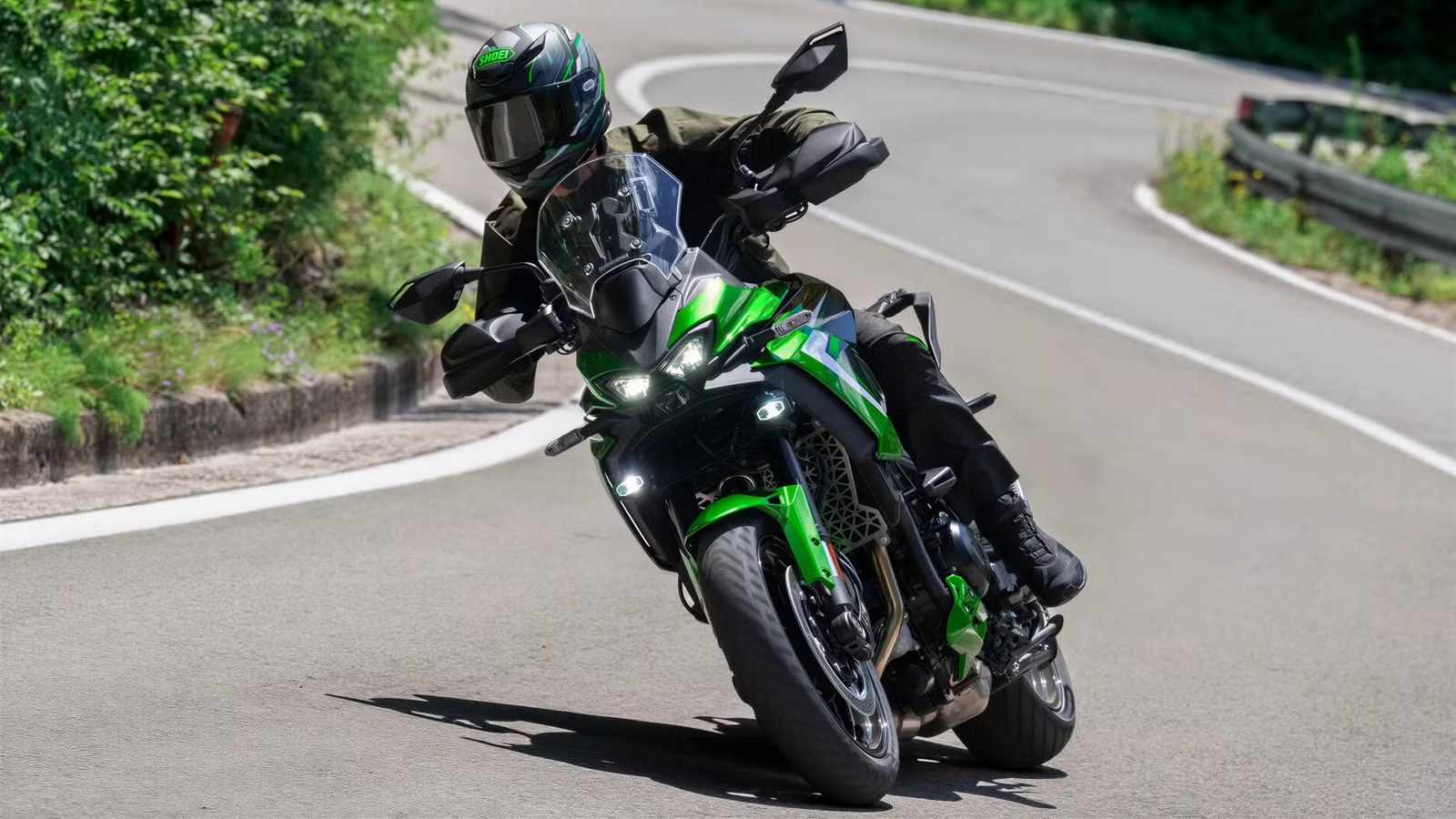
The brand-new Kawasaki Versys 900 slots in between the affordable yet outdated Versys 650 and the flagship Versys 1100 SE LT. It shares its engine with the quite popular Z900 streetfighter and the Z900RS neo-retro roadster. So, sportiness is built right in. Kawasaki also built the new sporty tourer on a versatile chassis and suspension setup. In the United States, the more stacked, touring-focused SE LT version comes with plenty of goodies to make highway riding easier. So daily commuting, winding back road riding, and long-distance touring—everything is easily doable aboard this machine.
Powered By A Sporty Kawasaki Z900-Derived Engine

The Versys 900 is powered by a familiar 948 cc liquid-cooled inline-four engine. It uses the same mill as the Z900 and Z900RS. However, to support the Versys’ versatility, Kawasaki has retuned this engine for stronger bottom-end and mid-range torque. The power profile is also tweaked to be a lot more linear. As a result, this engine delivers sporty performance with the controllability needed for everyday riding and touring duties. Kawasaki USA has yet to release the power and torque ratings, but Kawasaki Europe says it produces 120 horsepower.
A Brand New Chassis That Complements Its Nimble Riding Character

Kawasaki utilizes a specially designed steel trellis frame on the Versys 900 SE LT. It claims to balance agile sport handling with touring stability and comfort. The Versys 1100’s aluminum twin-tube frame serves as a reference to get the balance of rigidity and front-end feel right. Its sub-frame is designed in the image of the Z900 and Ninja H2 SX models, with the lower tubes extending to the swingarm pivot for stability when carrying an adult passenger and luggage. Its aluminum swingarm pivot location further helps achieve a near 50:50 front-rear weight distribution.
Suspension duties are courtesy of 43 mm inverted front forks with 5.9 inches of travel. It gets rebound damping and preload adjustability. The rear gets a horizontal back-link monoshock with 6.3 inches of travel, plus rebound damping and preload adjustability. Braking is handled by twin 310 mm semi-floating front discs paired with four-piston, radial-mount monobloc calipers. The rear gets a 260 mm disc coupled to a single-piston caliper. It also gets a sporty riding feel from a 17-inch lightweight five-spoke wheel design based on the Z900, wrapped in engaging Metzeler Sportec 01 tires.
Touring-Ready Ergonomics And Features

Kawasaki has designed the Versys 900 to be as accessible as a tall-riding touring bike can be. The rider sits upright, with neutral-set footpegs and a tall, wide handlebar. For extra convenience, you can adjust the seat height between 32.5 inches and 33.3 inches in minutes. The brake and clutch levers are also adjustable to suit different hand sizes, while the windscreen is manually adjustable with 1.9 inches of adjustment. Lastly, the standard side cases offer 17 gallons of storage.
This Is The First-Ever Versys With Radar Technology

On the tech front, this is the first-ever Kawasaki Versys to feature Advanced Rider Assistance Systems (ARAS). It gets front- and rear-facing radar sensors that support Adaptive Cruise Control Lite, Forward Collision Warning, and Blind Spot Detection. Beyond these flagship features, the Versys 900 also packs top-spec assistance, safety, and ride-enhancing tech mostly seen on top-tier offerings.
Cornering assist, traction control, power modes, quickshifter, and integrated riding modes are standard. You access these via a five-inch color TFT with two selectable layouts and a clean interface. The Rideology app has also evolved and can now project turn-by-turn navigation on the TFT. Kawasaki also offers voice commands for hands-free operation of supported app functions.

Kawasaki says the Supernaked Z models inspire the Versys 900’s distinctive design and offer a fresh take on what modern ‘sporty’ Versys models will look like. The design combines layered bodywork with aerodynamically shaped open spaces and flowing lines to emphasize the bike’s sportiness. The front fascia features a compact triple LED headlamp and a tall windscreen. The rear section gets an upswept exhaust, a short tail cowl, and standard color-coded side cases. For now, the 2027 Kawasaki Versys 900 SE LT will be offered in a single shade: Plasma Lime Green/Metallic Spark Black.
Sources: Kawasaki and Yamaha Motorsports

Related posts




Latest Post


No Comments