
Electric Lexus LFA Patent Reveals Race-Car Shift Simulation
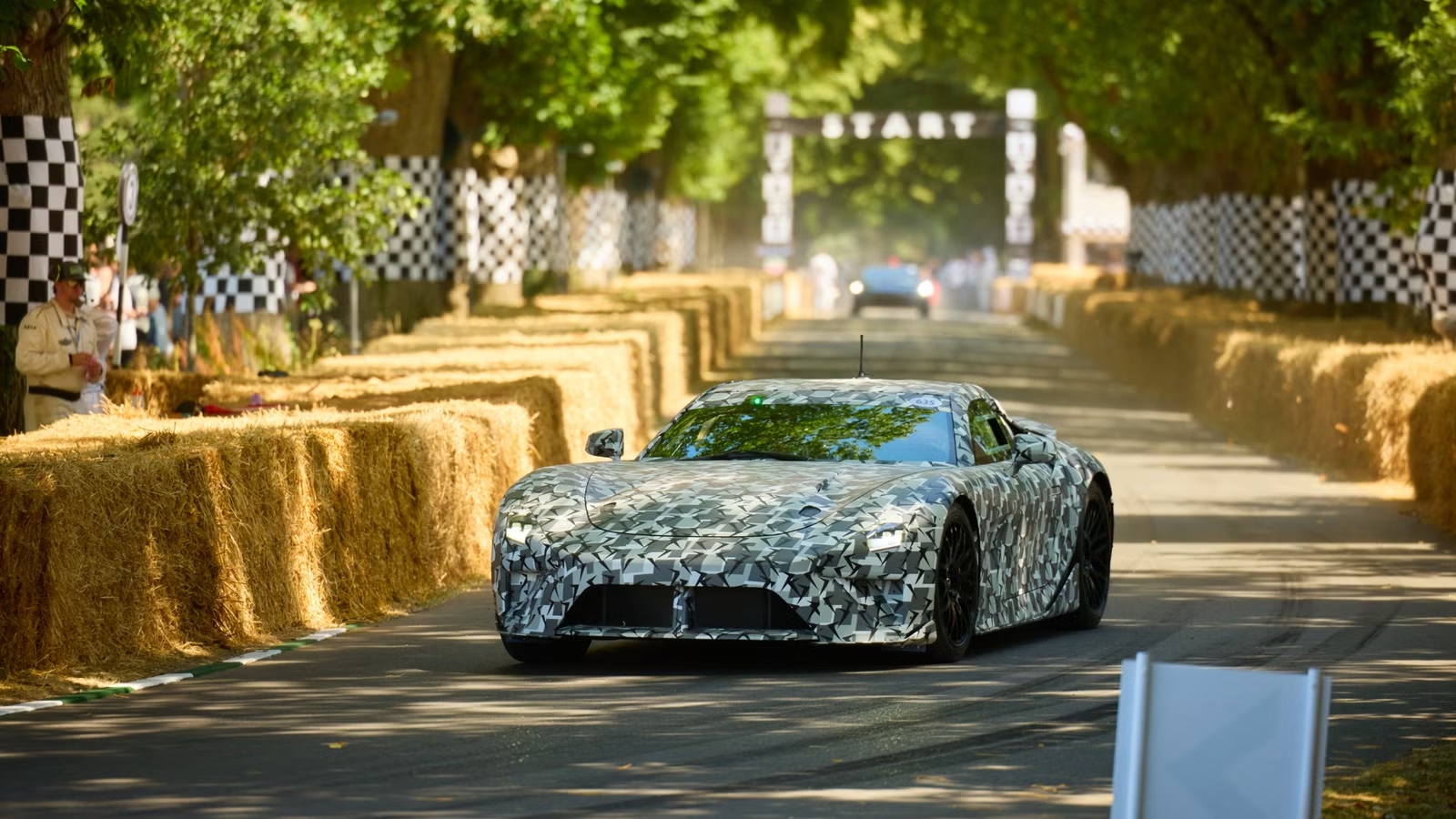
Toyota just gave LFA fans a reason to hope the electric successor won’t feel like every other fast EV. A patent application discovered this week by CarBuzz outlines a system that simulates gear changes in an EV by shaping motor torque to feel like a sequential manual, the kind found in actual race cars. No clutch pedal, no gated shifter, just software doing the job that Yamaha’s co-tuned V10 used to do with pure mechanical theater.

That’s a tall order. The original LFA’s entire identity was built on a 4.8-liter V10 that redlined at 9,000 rpm and put out 553 horsepower, a motorsport-bred engine so obsessively tuned that Lexus angled its cylinder banks at 72 degrees for balance rather than the 90 degrees common elsewhere. Replacing that with a battery and motors was always going to be the hard part. This patent is Toyota’s attempt at answering how you fake mechanical soul when the mechanics are gone.
How The Simulated Shifts Actually Work
The patent, filed with the United States Patent and Trademark Office, describes a controller that adjusts an electric motor’s torque output over a set window to recreate the sensation of a gear change. The driver picks a virtual gear, and the system shapes how torque rises and falls through the shift rather than just letting the motor deliver its usual flat, instant curve.

During a shift, the system can cut torque to zero, mimicking the momentary power loss of a driver disengaging a clutch. Torque then returns, and the patent describes it briefly overshooting the target before settling, recreating the lurch of a clutch re-engaging. This sequence applies to both upshifts and downshifts, with timing and intensity adjustable so a Sport or Race mode could deliver a sharper, more violent shift than a comfort setting.
Why Toyota Ditched The Clutch Pedal Idea

This isn’t Toyota’s first swing at simulated manuals. Its Gazoo Racing skunkworks previously built a prototype EV shift system with an actual clutch pedal and gated shifter, realistic enough that the car could stall or roll back on a hill like a real manual car. The new patent explains why that approach is getting shelved.
Most EV buyers have never driven a stick, and the patent flags the safety risk of handing an unfamiliar clutch pedal to someone who could stall the car or lose power unexpectedly. Dropping the pedal also means faster shifts via paddles or a lever, and it tracks closer to how an actual race car’s sequential gearbox behaves anyway. No clutch to modulate, just a lever and a rev-matched bang through the gears.
Hyundai Got There First, But Toyota Wants To Go Further

Simulated shifting in an EV isn’t new. Hyundai’s Ioniq 5 N already runs N e-shift, pairing virtual gears with fake engine noise to mimic a dual-clutch car, and it’s genuinely fun even if it occasionally feels like a video game bolted onto a crossover. Toyota’s patent takes a more specific swing: recreating a sequential manual’s feel rather than a road-car DCT, with the zero-torque cutouts and overshoot behavior built to echo the harshness of a race-bred gearbox rather than a comfortable daily shifter.
The LFA concept shown in late 2025 already previewed paddle shifters behind the wheel, marked with plus and minus symbols. At the time, those paddles looked like they might just control regen braking, as they do on plenty of EVs. This patent suggests they’re meant to do something closer to what paddles do in the LFA’s spiritual GT3-adjacent cousins: trigger a real-feeling shift event, not just dial in brake force.
What This Means For LFA Purists

None of this replaces a V10 that revved to 9,000 rpm with zero turbo lag because Lexus refused to let forced induction dull the throttle response. Simulated shift feel is still simulated. For LFA diehards who consider that a dealbreaker no matter how convincing the torque shaping gets, Toyota has a fallback: the GR GT supercar, which pairs a real combustion engine with a genuine eight-speed automatic and paddle shifters, no software pretending otherwise.
The electric LFA, due in 2027, is clearly not trying to be that car. It’s trying to prove an EV can still feel like something a driver operates rather than something that just accelerates. Whether torque-shaped virtual gears can stand in for Yamaha’s V10 magic is the question Toyota is betting an entire halo car on.

Related posts




Latest Post


No Comments