
The Japanese Sport Bike That Still Has What It Takes To Terrify Bigger Bikes
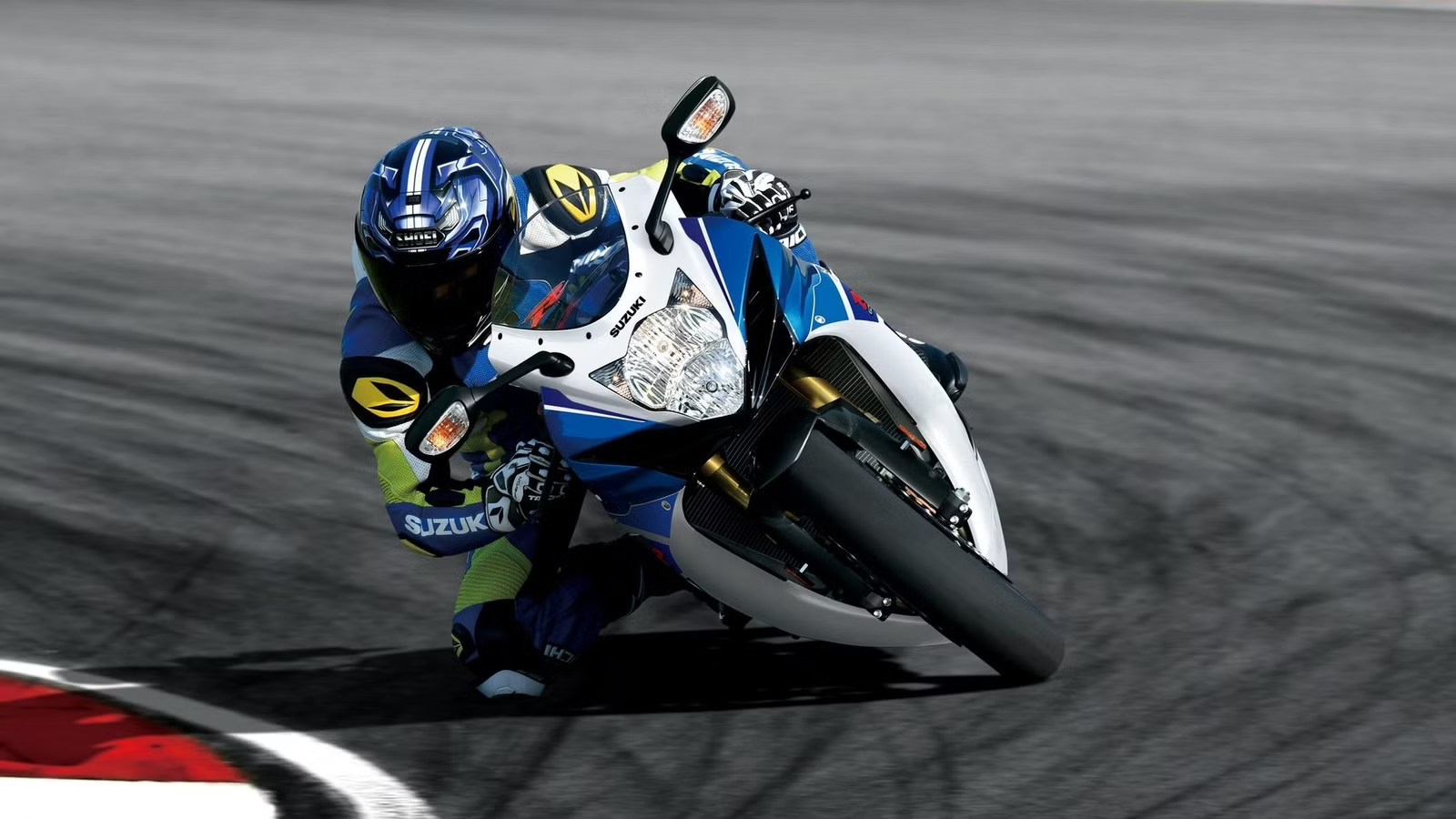
Showroom brochures sell prospective buyers on massive numbers, pushing 200-horsepower dyno sheets and complex electronics packages. Out on a tight backroad or a technical circuit, though, headline numbers do not tell the full story. What riders actually care about over an entire day of riding their motorcycle is clear chassis feedback, manageable tire wear, and an engine that does not leave you drained after twenty minutes. Staying clear of the spec-sheet arms race is a long-standing Japanese four-cylinder machine that skips the tech bloat, using straightforward mechanical balance and easy handling to challenge larger, more expensive bikes.
The Open-Class Penalty: Scorching Heat, Rapid Fatigue, And Devoured Consumables

To say that a modern 1,000 cc sportbike is fast is an understatement, but living with that speed brings real headaches. Putting down over 200 horsepower requires rider aids, but software cannot hide the inertia of a big crankshaft spinning at high revs. That heavy internal mass fights quick steering inputs, forcing you to muscle the bike through fast direction changes while fighting front-wheel lift on corner exits.
The result is rapid fatigue, not to mention the massive heat cooking your legs in slow traffic. On top of the physical workout, ownership costs are brutal. Open-class bikes eat through costly sticky tires, burn up brake pads, and demand high insurance and maintenance costs to keep them running.
Trading Heavy Rotating Inertia For Pure Twin-Spar Chassis Feedback

The mechanical fix comes down to basic engine layout: getting the right balance between bore, stroke, and rotating mass. Keeping the crank assembly lighter and more compact than an open-class motor cuts down gyroscopic force. The front end tips in easily, holds its line, and does not require heavy handlebar input to steer quickly.

Because you are not wrestling the chassis, you burn far less energy and stay fresh late into a ride. Suzuki figured out this middle ground decades ago through practical racing development, sticking with a rigid twin-spar aluminum frame and a dependable, oversquare four-cylinder engine. It is a simple, proven setup that delivers clean feedback and bulletproof reliability without relying on electronics.
The Suzuki GSX-R750 Reclaims The Racetrack Through Mid-Corner Momentum

The Suzuki GSX-R750 hits the sweet spot because it delivers real-world pace across a full day of riding, whether on the road or at the track. Down a wide straight, it simply cannot keep up with a modern 1,000 cc superbike. However, over an entire lap or a twisty mountain pass, it makes up that ground through mid-corner speed, easier line changes, and the ability to get back on the gas early without upsetting the chassis.
Just as importantly, comfortable ergonomics, lower running temperatures, and bulletproof mechanicals make it a bike you will actually ride instead of parking in a garage. With lower consumable costs and far less rider fatigue, you push harder for longer, ultimately running down exhausted liter-bike riders who cannot maintain their pace. In short, it makes liter bikes feel excessive.
Sub-$14,000 Pricing Lands The GSX-R750 In A Solo Niche

The GSX-R750 retails for a base price of $13,249, giving riders a taste of superbike performance for less. This price puts it in a niche between some of the premium middleweight options like the Yamaha YZF-R9 and the Ducati Panigale V2, but there genuinely isn’t any true competitor to it. As such, its value lies not just in the pricing, but in what it offers for it.
Unchanged Since 2011, The 749 cc Four-Cylinder Has Bulletproof Reliability

The sportbike segment is known for rapid evolution, with new tech coming in almost every year. The GSX-R750 flies in the face of this. The last update it received was in 2011, and it was an update, not a complete overhaul, with the biggest change being a switch to titanium valves. This inline four-cylinder engine displaces 749 cc, has a short-stroke design, and a compression ratio of 12.5:1. It makes a very useful 148 horsepower and 63.7 pound-feet of torque, and proves that you don’t need superbike power to impress.
The 2011 update also gave it two ride modes, which, coupled with the great torque spread, make this one of the engines that is supremely flexible. This engine also has Suzuki’s Dual Throttle Valve system and an exhaust tuning valve that helps smooth power delivery across the rev range. A six-speed gearbox with a cable-actuated slipper clutch is present.
Showa Big Piston Forks And Brembo Monobloc Calipers Anchor A Pure Analog Chassis

The GSX-R750 has the size of a 600 cc supersport, which is what gives it its amazing agility. You get a twin-spar aluminum chassis is paired with fully adjustable Showa suspension (41 mm inverted Big Piston Fork and a monoshock). These are paired with twin 310 mm fully floating front brake discs with Brembo monobloc radial four-piston fixed calipers. At the rear, there is a 220 mm disc with a Nissin single-piston caliper. There is no ABS. Given how old the package is, you will have to invest time and effort into understanding what settings work best. On the bright side, replacement parts and upgrades are cheap and easily available — although more often than not, it is so good that it simply makes owners stop looking for upgrades.
54.7-Inch Wheelbase And 419 Wet Pounds Unlock Telepathic Direction Changes

This is not a very large motorcycle, with an overall length of 79.9 inches and a width of 28 inches. The wheelbase is a short and exceedingly fun 54.7 inches, but the ground clearance is standard at 5.1 inches. The seat height is 31.9 inches, which is fairly good for a sport bike, and it weighs 419 pounds. Overall, this delivers big-bike speed without the big-bike weight. The rider triangle is quite aggressive, however.

The GSX-R750 does not bother with features in the way we understand them in modern sport bikes, and it still is a smart buy today. It has an old-school instrument cluster with an analog tachometer paired with an LCD screen with orange backlighting. The screen is nevertheless very informative, with the speedometer, odometer, gear indicator, clock, and ride modes displayed clearly, but it also has a programmable shift light and a lap timer.
Modern liter-bikes might rule the spec sheets, but the machine that effectively launched the modern superbike era 40 years ago still proves that balance beats raw excess. With nothing else on the market offering this mix of 600-class agility and usable inline-four punch, the GSX-R750 remains in a class of one. And that is exactly why the original superbike still terrifies bigger bikes today.
Source: Suzuki Cycles

Related posts


Latest Post


No Comments