
The Camaro Restoration Mistakes That Will Explode in Your Face
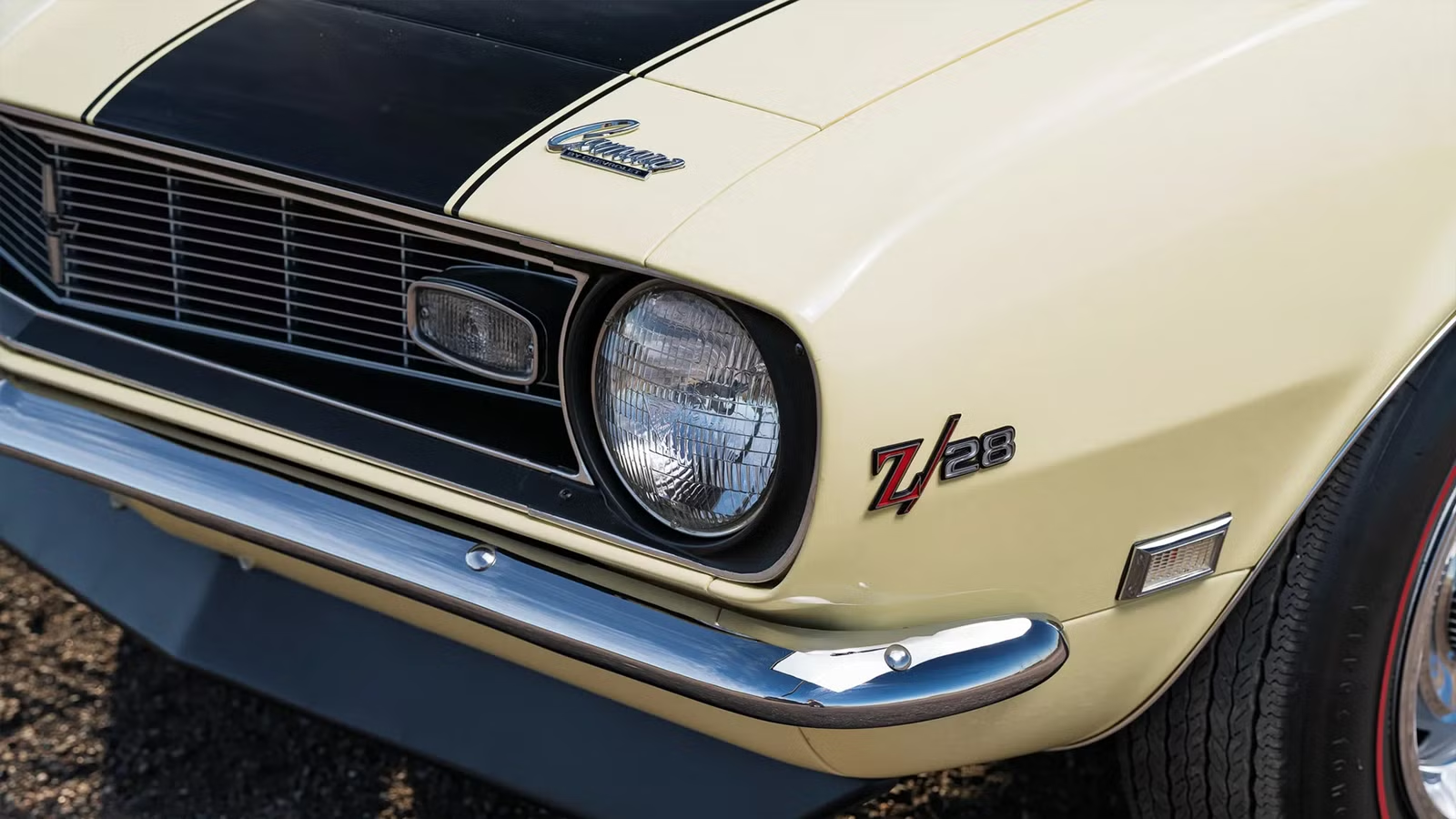
Here comes the boom! But that’s not a good thing, especially when you’re restoring something rare and expensive, like a vintage Chevrolet Camaro model. You never want your muscle car project to go up in smoke. I mean this both figuratively and literally after learning about a 1968 Chevy Camaro that recently exploded due to a simple mistake that could’ve easily been avoided. On that note, there are a few different ways to accidentally turn muscle cars into fireballs.
This 1968 Chevy Camaro Fuel Tank Explosion Serves As A Warning

A 61-year-old Virginia man was transported to the hospital after causing the fuel tank of a 1968 Chevy Camaro to rupture. Vapors inside the tank ignited, causing an explosion as he was grinding and welding on the exterior. This serves as a reminder that multiple shortcuts and simple mistakes can end in disaster during restoration projects.
This explosion was related to fuel tank handling or venting, as the 1968 Camaro doesn’t have a modern sealed evaporation system and vents directly to the atmosphere. Failing to purge liquid residue and varnish in these old, unsealed tanks while cutting or welding near the tank can easily trigger explosions.
Plus, reusing old and decayed wiring can be a costly mistake. While keeping an original wiring harness can save a little cash, it could have brittle insulation that leads to ground failures, short circuits, and electrical fires that suddenly spark up behind the dash or steering column. At the very least, it could lead to unreliable performance.


Also, you’ll want to properly secure Electronic Fuel Injection (EFI) fuel rails. Failing to do so can be one of the most dangerous restoration mistakes. As a modern EFI system transitions from a low-pressure carburetor setup operating around five to 7 PSI to a high-pressure setup at roughly 45 to 60+ PSI, the hydraulic pressure can turn the injectors into pistons, pushing the rails off their mounts if they’re not correctly locked down.
Here’s How To Prevent These Camaro Restoration Mistakes

To prevent your vintage Chevy Camaro from having a fuel tank fire, be sure to completely drain and purge the tank of flammable vapors before executing any welding, grinding, or hot work. OSHA notes that empty tanks can easily contain enough residue to produce a flammable atmosphere in the headspace, and a clean tank with no odors doesn’t mean it’s safe. We stop registering the scent of gas long before the concentration drops below the explosive limit.
First, use a hand pump to drain all liquid gas from the tank into an authorized container. Then fill the tank with water and drain it multiple times to clear out residual fuel and flammable vapors. If you’re welding directly on the tank, fill it with water until it reaches the repair area or purge the inside of the tank with an inert gas like argon or carbon dioxide.
Don’t cut corners with an old wiring harness that needs to be patched. The combination of degradation, lack of modern circuit protection, and custom mods is dangerous. Patching brittle insulation with electrical tape can trap heat inside the wire, overloading the wires with modern electronics, and leaving corroded fuel boxes that generate excessive localized heat. It’s best to use a modern update kit instead.

Failing to secure EFI rails can push the rail up and away from the intake manifold, slide O-rings out of their sealed bores, and create a flamethrower effect as a flammable mist sprays into the engine bay. Mount the rails with heavy-duty brackets to withstand the constant upward hydraulic pressure. Make sure every injector is physically clipped into the rail with factory-style locking clips, and ensure that the O-rings are properly lubricated.
These Camaro Mistakes Can Be Extremely Expensive

The Virginia man is lucky to be alive; he only suffered non-life-threatening injuries, his home didn’t burn down, and the explosion was limited to the fuel tank. But the mistake will add more time and expenses to his restoration project. A fuel tank for a 1968 Chevy Camaro costs between $145 and $1,100, depending on whether it’s a basic reproduction tank, a complete fuel tank kit, or a high-performance tank with fuel-injection-ready setups.
But imagine if the entire car went up in flames. Unfortunately, the original news piece didn’t include what trim level and engine the project Camaro has. Depending on quality and condition, the value for the 1968 Camaro ranges between $14,000 and over $180,000. I’d love to know how much he spent on his project.
Automotive historians estimate that about 70,000 to 82,000 of the original 235,147 Camaro models still survive today. That means around 30 to 35% of 1968 models may still be out there, including rusted shells and pristine examples, making the classic muscle car pretty darn rare.

Spending a little extra to avoid cutting corners with costly mistakes is worth it. A new wiring harness may cost between $120 and over $900, depending on whether it’s an individual section replacement or a full-car update kit. Aftermarket EFI kits typically run from $170 to $350, depending on brand and intake manifold style.
Source: Wavy, OHSA, Hagerty

Related posts




Latest Post


No Comments