
Sport Bikes That Prove You Don’t Need 200 HP To Have Fun
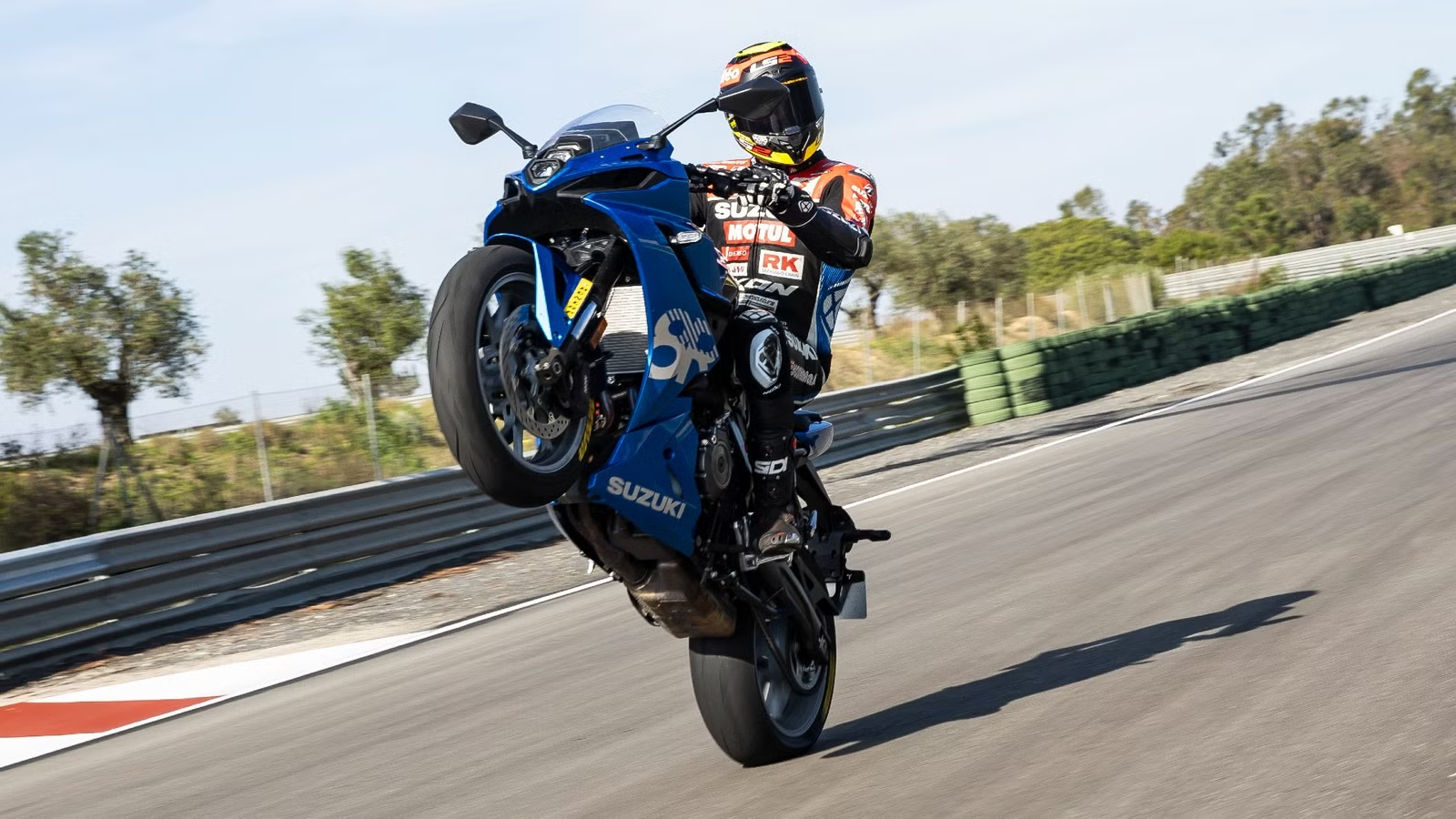
Modern motorcycles have become absurdly powerful, with flagship superbikes and naked bikes these days producing upwards of 200 horsepower. The modern-day performance ceiling has risen to a point where even experienced riders struggle to exploit their capabilities outside a racetrack. No, this isn’t a complaint. But at some point, you have to start thinking about choosing between theoretical horsepower and actual riding fun.

Fortunately, the sport-bike market still offers plenty of motorcycles that prioritize rider involvement over astronomical power figures. Some deliver their thrills through screaming engines and close-ratio gearboxes, while others make better use of their midrange torque and lightweight chassis engineering. A few even bring sophisticated electronics and premium suspension without the intimidation of a full-blown superbike. Here are ten sport bikes that convince you to enjoy the horsepower you have rather than chase more.
Kawasaki Ninja ZX-4RR
Power: 56 HP
The Ninja ZX-4RR makes a compelling argument for enjoying the aural delights of rising five-figure revs rather than outright acceleration. Its 399cc inline-four produces a restricted 56 horsepower in the U.S., although there are ways around that. With the redline being a little beyond 15,000 rpm, the ZX-4RR encourages riders to explore the upper reaches of the tachometer combined with intentional gear selection and a willingness to keep the engine spinning.


Kawasaki hasn’t compromised the supporting hardware either. A Showa Balance Free Rear Cushion (BFRC) Lite shock, adjustable front suspension, and bidirectional quickshifter give it genuine supersport credentials. At $9,999 for the 2026 model, it’s an expensive small-displacement motorcycle, but few alternatives offer the satisfaction of a screaming mini inline-four experience.
Suzuki GSX-8R
Power: 82 HP

Suzuki’s GSX-8R proves that a sport bike doesn’t need an aggressive riding position or a peaky engine to be entertaining. Its 776cc parallel-twin produces approximately 82 horsepower, with a 270-degree crankshaft giving the 8R a distinctive sound character as well. Strong midrange performance makes the engine particularly useful on winding roads, where stronger corner exits become more enjoyable.

The GSX-8R also emphasizes chassis balance, with a Showa Separate Function Fork-Big Piston (SFF-BP) inverted fork providing controlled suspension performance. The Suzuki Intelligent Ride System includes selectable engine maps, traction control, and a bidirectional quickshifter. At $9,699 for the 2026 model, the Suzuki is considerably more practical than a traditional supersport, with manageable ergonomics and an accessible character that comes without sacrificing the entertainment expected of a properly engineered sport bike.
CFMoto 675SS
Power: 95 HP

CFMoto chose an interesting route for the 675SS by developing a 675cc inline-three rather than the typical parallel-twin formula dominating affordable middleweights. Producing 95 horsepower at 11,000 rpm and 51.6 pound-feet of torque, the engine combines useful midrange performance with the distinctive sound and rev-hungry character of a triple.

For the reduced-for-2027 $7,499 MSRP, 675SS buyers get adjustable KYB suspension, traction control, dual-channel ABS, a steering damper, and an up-only quickshifter. The motorcycle also weighs a claimed 429 pounds ready to ride, putting it within striking distance of established Japanese middleweights. Its combination of three-cylinder character, respectable chassis hardware, and aggressive pricing gives enthusiasts a cheaper way to enjoy supersport performance.
Aprilia RS 660 Factory
Power: 105 HP

Aprilia has demonstrated considerable engineering ambition with the RS 660 platform, and the Factory version takes its capabilities further. Its 659cc parallel-twin produces 105 horsepower, while the motorcycle weighs a claimed 403 pounds ready to ride. This makes for a power-to-weight ratio that allows the Aprilia RS 660 to deliver serious performance without relying on a liter-class superbike’s substantial displacement.

The RS 660 Factory’s biggest improvement comes in the form of fully adjustable Öhlins components replacing the regular model’s hardware, providing greater setup flexibility for demanding road riding and track sessions. There’s also the Aprilia Performance Ride Control (APRC) that includes adjustable traction control, wheelie control, engine-braking management, launch control, and a bidirectional quickshifter. A six-axis IMU supports its sophisticated electronic assistance. Its $14,149 MSRP puts it firmly in premium territory, but the investment goes toward control and handling precision.
Yamaha YZF-R9
Power: 117 HP

The Yamaha YZF-R9 effectively addresses one of the biggest compromises associated with traditional four-cylinder supersports. Their relatively weak low-rpm performance is mitigated by the 890cc CP3 inline-three that produces 117 horsepower, but more importantly, is backed by generous midrange torque. Compared with the old YZF-R6, it offers a considerably more flexible engine for everyday riding.

The R9 receives a dedicated aluminum Deltabox frame, fully adjustable KYB suspension, Brembo Stylema front calipers, and an electronics package supported by a six-axis IMU. At $12,499 for the 2027 model, the motorcycle combines serious track-day capabilities with an engine that remains enjoyable on ordinary roads just as well. Its broad torque delivery also makes the R9’s performance easier to appreciate than the narrow powerband of a traditional 600cc supersport.
Ducati Panigale V2
Power: 120 HP

Ducati consciously reduced peak horsepower when developing the latest Panigale V2, replacing the previous 955cc Superquadro engine with a lighter 890cc V-twin producing 120 horsepower. That’s a considerable reduction in output, but the new engine weighs significantly less and incorporates variable intake valve timing to improve torque delivery across the rev range.

Weight reduction extends beyond the engine. The standard Panigale V2 weighs a claimed 395 pounds without fuel, while its aluminum monocoque frame uses the engine as a stressed structural component. Ducati also includes sophisticated electronics, comprising cornering ABS, traction control, wheelie control, engine-braking adjustment, and a bidirectional quickshifter at an MSRP of $16,995 for the 2026 model.
Kawasaki Ninja ZX-6R
Power: 127 HP

Kawasaki’s Ninja ZX-6R continues to represent the traditional supersport formula, albeit with an extra helping of displacement. Its 636cc inline-four produces 127 horsepower at 13,000 rpm and 52.1 pound-feet of torque at 10,800 rpm. Compared with conventional 599cc supersports, the additional displacement improves the midrange performance a bit, without sacrificing the high-rpm character enthusiasts expect from this class.

It also retains the compact proportions and aggressive riding position that make middleweight supersports so effective around a circuit. Fully adjustable Showa suspension, an aluminum perimeter frame, and radial-mount front brakes provide the necessary chassis support. Kawasaki’s quickshifter, selectable power modes, and traction control add useful electronic assistance. Starting at $11,599 for the non-ABS 2027 model, the ZX-6R remains a thoroughly engaging motorcycle.
KTM 990 RC R
Power: 128 HP

KTM’s return to larger-displacement fully faired sport bikes has produced a particularly interesting motorcycle. The 990 RC R uses a 947cc LC8c parallel-twin producing approximately 128 horsepower and 76 pound-feet of torque. Unlike traditional four-cylinder supersports, the engine delivers substantial pulling power through the middle of its operating range, reducing the need to chase maximum rpm.

The chassis is a chromium-molybdenum steel frame that uses the engine as a stressed member, while fully adjustable WP Apex suspension and Brembo Hypure front calipers provide serious track-focused hardware. KTM also equips the motorcycle with sophisticated electronic rider aids and multiple riding modes for a very reasonable $13,949 starting price. It offers explosive performance from its mid-range, making it feel much faster than its specs.
MV Agusta F3 R
Power: 147 HP

MV Agusta’s F3 R demonstrates how an unconventional engine configuration can give a motorcycle its own distinct character. Its 798cc inline-three produces 147 horsepower at 13,000 rpm, combining the high-rpm excitement associated with four-cylinder supersports with the unmistakable soundtrack of a triple. The engine also incorporates a counter-rotating crankshaft, which helps reduce vibrations, bringing the experience closer to an inline-four’s smoothness.

The F3 R is equally serious about electronics. Adjustable traction control, wheelie control, multiple engine maps, and MV Agusta’s Electronically Assisted Shift (EAS) 3.0 system complement its track-oriented chassis. At $15,998 for the 2026 model, the Italian motorcycle occupies an interesting position among premium middleweights, as its appeal lies in the combination of sophisticated engineering, distinctive engine character, and genuine supersport performance rather than outright horsepower alone defining it.
Suzuki GSX-R750
Power: 148 HP

Few motorcycles demonstrate the appeal of balanced performance better than the GSX-R750. Suzuki has retained essentially the same fundamental formula for years, combining the compact dimensions of a 600cc supersport with the additional power and torque of a 750cc inline-four. The GSX-R750 weighs a claimed 419 pounds ready to ride and features fully adjustable Showa suspension, Brembo radial-mount front calipers, and a six-speed transmission with a back-torque-limiting clutch.

Electronic assistance remains limited compared with newer rivals, placing greater emphasis on rider skill and mechanical feedback. At $13,249 for the 2026 model, the GSX-R750 retains the qualities that made the original formula successful. It delivers considerably stronger performance than a conventional 600cc supersport without the weight, cost, or overwhelming power of a modern 200-horsepower superbike.
Source: Various Manufacturers

Related posts

Latest Post


No Comments