
The Honda Engine That Helped Create A Generation Of Enthusiasts
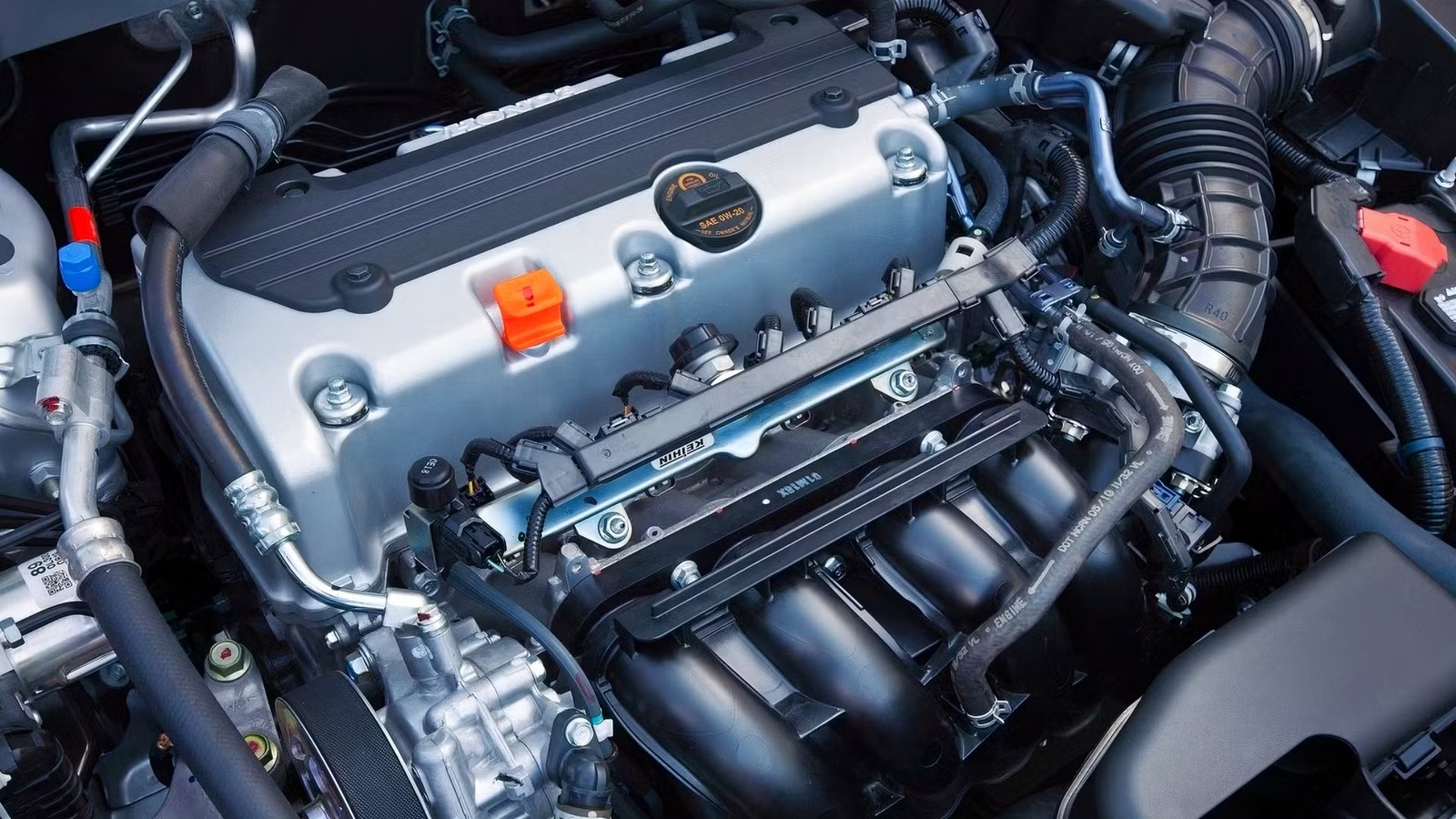
It rarely gets the spotlight, doesn’t feature in any factory performance car flagship, and never earned a badge of its own. Yet this engine quietly became one of the most important Honda ever built. Bolted into family sedans, crossovers, and compact SUVs, it looked like the least exciting motor in the lineup. But its long-stroke design, forged internals in key variants, and sheer abundance in junkyards turned Honda’s four-cylinder into the backbone of modern tuning culture: a swap-friendly workhorse that let a new generation build serious power without a serious budget.
How The K24 Turned Honda’s Everyday Cars Into Tuning Platforms

When Honda introduced the K24 in the early 2000s, it wasn’t designed with enthusiasts in mind. The engine debuted in the 2002 Honda CR-V as the K24A1, a torquey, unglamorous four-cylinder meant to move a compact SUV around town with reasonable fuel economy and none of the drama associated with Honda’s high-revving performance engines. It showed up next in the redesigned 2003 Accord, then spread across the Honda Element, the Acura TSX, and eventually the 2012 Civic Si, always doing the same quiet job of providing dependable, mid-range torque for daily drivers.
That ubiquity is exactly what made the K24 significant. Because Honda dropped it into some of its highest-volume models for over a decade, the engine became endlessly available on the used market. A blown Civic or a wrecked Accord that would have been scrapped for parts instead became a donor car, its engine pulled and dropped into something far more interesting.

Where earlier Honda tuning culture revolved around scarce, expensive engines like the B18C or the H22, the K24 offered something different. It was a genuinely modern, i-VTEC-equipped four-cylinder that could be sourced cheaply and in huge numbers. That shift, from rare performance engine to common commodity, is what turned everyday Hondas into an accessible tuning platform for people who couldn’t afford the exotic stuff.

The Engineering Choices That Made The K24 So Easy To Modify

Displacement was the K24’s biggest advantage from day one. At 2.4 liters, it was larger than the 2.0-liter K20 that powered cars like the RSX Type-S and early Civic Si, and Honda achieved that extra size mostly through a longer stroke: 99mm compared to the K20’s 86mm. A longer stroke naturally produces more torque lower in the rev range, which is exactly what tuners want as a foundation before adding boost or a higher redline.
The K24’s bottom end is also unusually robust for what was, on paper, a family-car engine. Certain variants, most notably the K24A2 found in the Acura TSX, came with forged connecting rods and stronger internals than a typical economy-car engine needed: a byproduct of Honda engineering the block to handle multiple applications rather than tuning it down to the bare minimum for each one. That over-engineering gave tuners real headroom to add turbochargers or superchargers without immediately needing to rebuild the short block, something that wasn’t true of many rival engines from the same era.
The K24’s block shares enough architecture with the K20 that swapping a K20 cylinder head, with its higher-flowing ports and more aggressive VTEC cam profiles, onto a K24 block became one of the most popular builds in the Honda community. Known as a “Frankenstein” or K20/K24 swap, this hybrid combines the K24’s torque-friendly displacement with the K20’s higher-revving top end, producing a broader, more usable power curve than either engine offers on its own. Few engine families make that kind of mix-and-match so straightforward, and it’s a major reason the K24 became a default starting point rather than a niche option.
From Accord To Civic Si, The Honda Models That Gave The K24 Its Reputation

The Honda Accord did more than any other model to establish the K24’s reputation. From the K24A4 in the 2003 to 2005 generation through later revisions like the K24A8 and K24Z3, Honda’s best-selling sedan carried the engine through consistent updates for nearly a decade, refining its output and reliability with each generation. Because Accords were sold in such high numbers, wrecked and high-mileage examples became a steady, affordable source of K24 engines for builders, a supply chain that simply didn’t exist for older, rarer Honda engines.
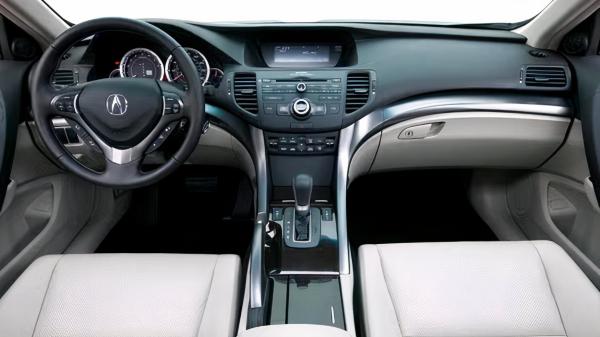
The Acura TSX added a performance-minded variant, the K24A2, which paired the standard K24 displacement with a more aggressive dual-VTEC intake and exhaust setup than the base Accord versions received, plus those forged rods that made it a favorite for boosted builds. The CR-V and Element contributed volume and durability, proving the engine could handle daily abuse across different body styles without issue.

The 2006 to 2011 Civic Si, in both coupe (FG2) and sedan (FA5) form, actually used the K20Z3, a 2.0-liter engine. The K24 didn’t arrive in the Civic Si until the 2012 to 2015 generation (FB6), which switched to the K24Z7, a 2.4-liter unit producing 201 horsepower. That later Si, along with the TSX and the long-running Accord, is what cemented the K24’s presence among Honda enthusiasts, rather than the earlier K20-powered Si that many casual fans associate with the nameplate.
Why Tuners Still Chase The K24’s Power, Strength, And Huge Aftermarket

More than two decades after its debut, the K24 remains one of the most commonly built engines in the Honda tuning world, and the reasons come down to a simple combination of strength, displacement, and support. Builders regularly push K24-based combinations well past 400 horsepower on the stock block with a turbocharger, aftermarket fuel system, and supporting hardware: a figure that would require a full bottom-end rebuild on most engines this size. The factory-forged internals found in variants like the K24A2 give tuners real confidence that the block can handle serious boost without immediately grenading.
The aftermarket has grown around the K24 for exactly that reason. Companies like Skunk2, Brian Crower, Manley Performance, and K-Tuned all produce K-series-specific parts, from forged pistons and stroker kits to intake manifolds and header systems, giving builders a level of parts availability that few other engine families can match. Standalone engine management from companies like Hondata and AEM makes tuning straightforward, and the sheer number of K-series builds documented online means almost every combination a tuner wants to attempt has already been tried, refined, and shared by someone else.

A used K24 pulled from a wrecked Accord or CR-V costs a fraction of what a comparable turbocharged four-cylinder from another manufacturer would cost, and that affordability, combined with the engine’s proven strength, is why the K24 remains the default choice for anyone building a serious Honda project on a real-world budget.
How The K24 Became One Of Honda’s Most Influential Enthusiast Engines


The K24’s influence isn’t about a single iconic model or a dramatic factory performance variant; it’s about what the engine unlocked across Honda’s entire lineup over nearly two decades. By putting a strong, modifiable four-cylinder into some of its highest-volume vehicles, Honda inadvertently built the infrastructure for a swap culture that didn’t depend on rare, expensive donor cars. That’s a fundamentally different legacy than the B-series or H-series engines that came before it, which built their reputations on scarcity and factory performance pedigree rather than accessibility.
Where those earlier engines defined Honda’s factory performance era of the 1990s, the K24 defined something more democratic. It defined a generation of builders who could walk into a junkyard, pull a running engine out of a wrecked Accord, and turn it into the foundation of a genuinely fast car. The K20/K24 hybrid swap in particular has become something close to a rite of passage in the Honda community: a build that requires real mechanical skill but not a five-figure parts budget.

That’s ultimately what separates the K24 from other good engines. It didn’t need a halo car or a factory performance badge to earn its reputation; it earned it through two decades of daily-driver duty, junkyard abundance, and a bottom end tough enough to handle whatever tuners threw at it. Few engines Honda has ever built can claim to have shaped enthusiast culture quite so thoroughly while spending most of their life under the hood of a family sedan.
Sources: Honda, Kelley Blue Book, Engine Builder Magazine

Related posts






Latest Post


No Comments