
The Jaguar XK150 was the pinnacle in 1957 – it’s still great today
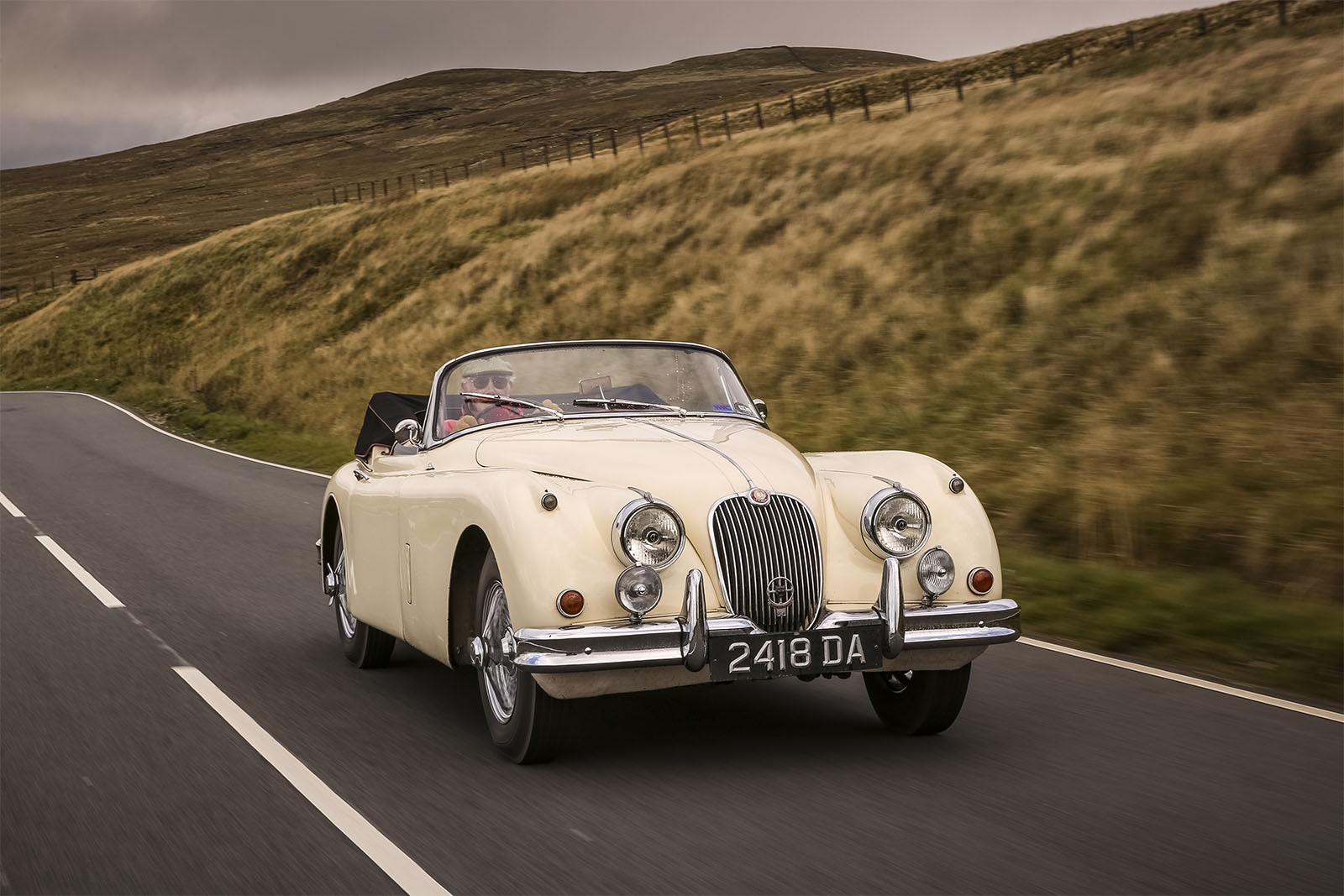
Few people Harrison’s age lust after an XK150 in the modern day – their loss

What’s the best car in the world today? There are countless possible answers, and you could argue for hours without reaching a conclusion.
Seventy years ago, though, you could ask almost anyone and they would give the same answer: the Jaguar XK150.
This breathtaking GT was the result of a decade of refining the original XK120. It brought a raft of upgrades over its predecessors: a single-piece windscreen, a modern dash and disc brakes all round.

Today its 0-62mph time of around 8.0sec seems faintly sedate, but at the time of its launch the prospect of a road car being capable of such off-the-mark acceleration – and then to keep going all the way to 130mph was scarcely believable, particularly compared with the Ford Zephyrs and Morris Minors that occupied most driveways.
As a lifelong admirer, I’ve always wondered if the XK150 would still feel groundbreaking and rapid, and if it lives up to its lofty reputation – but never thought I’d get to find out.
Enter Andew Martin, one of the directors of the Jaguar Drivers’ Club and an ambassador for the Jaguar Daimler Heritage Trust.
After a chance meeting at a cars and coffee meeting on a damp day in Scotland, he asked if I fancied a go in the car he had brought along: the JDHT’s pristine, 95,000-mile XK150. I wasn’t going to say no, was I?
In fact, I’m not sure the noise I emitted would qualify as ‘saying’ anything at all.
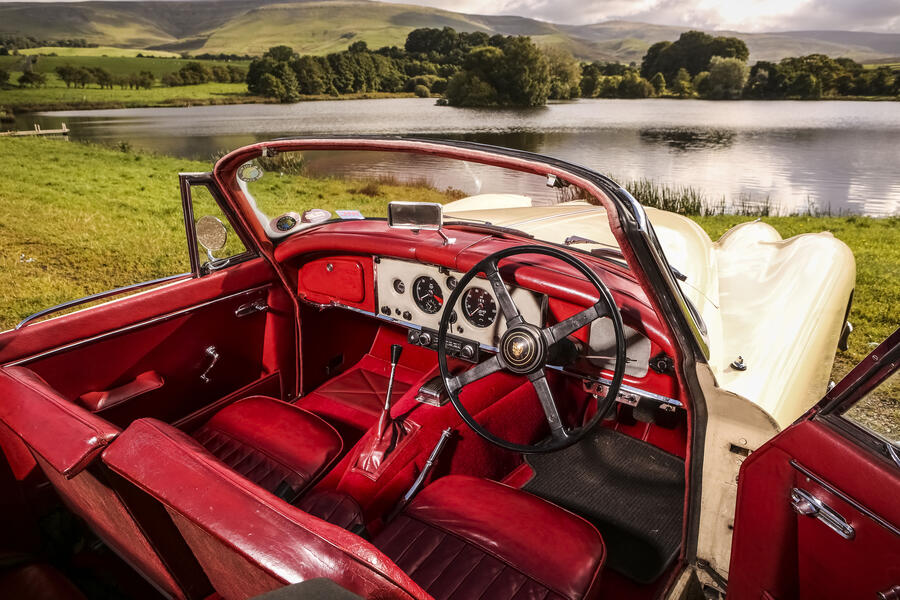
Fold yourself into the driver’s seat and things aren’t anywhere near as archaic as you might expect from something produced in the same year as Sputnik.
Sure, the steering wheel feels like it’s about twice the size of a modern one and the pedals are so far offset to the right that you feel like you might as well put your feet outside the car, but you adapt to these quirks far more easily than you might think.
How does it drive? Well, having been in a few cars from this era, it’s certainly one of the more modern-feeling ones.
The turn-in, I suppose thanks to the independent front suspension, is surprisingly solid. I sort of expected the gargantuan thing in front of me to be more of a ‘suggestion wheel’, but it really does go where you point it.
That solid rear axle means it’s solid in a straight line, too a good thing, as it still feels quick even by modern standards.
The ‘XK’ 3.4-litre straight six really does pull with gusto, but frankly its performance plays second fiddle to the stunning soundtrack it emits.
The induction noise under throttle is simply heavenly, splitting apart the air as those carbs work away up front.
Back off the throttle, though, and it’s a surprisingly refined machine. It’s pretty quiet inside and it rides much better than many a modern alternative, thanks to its low kerb weight and towering sidewalls.
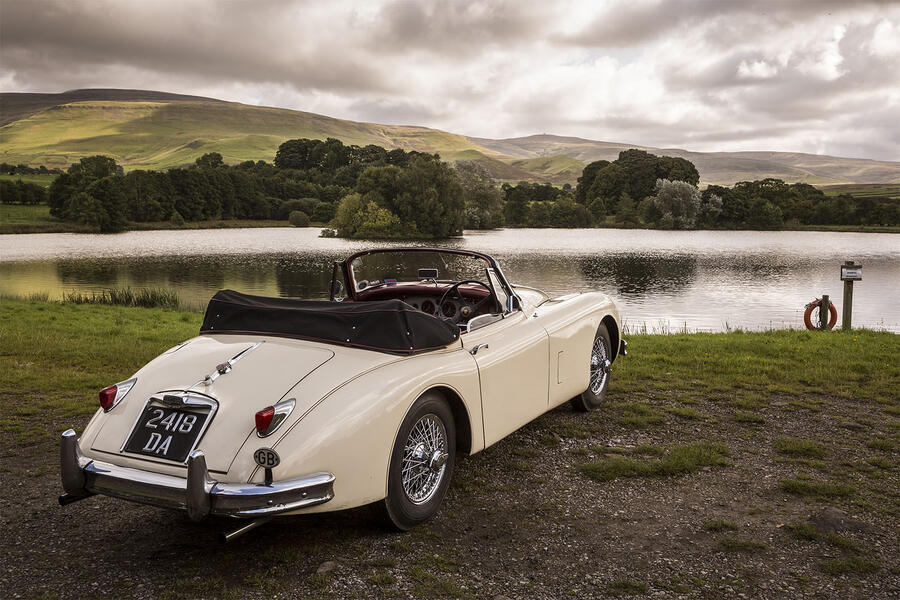
There are some niggles, of course. The Moss four-speed gearbox is far from the easiest to operate; its gears seem to be in a slightly odd place and there’s no synchromesh on first, so your shifts have to be slow and accurate – a far cry from the stick-slamming you can get away with in today’s manual sports cars.
But that’s just highlighting the limits of the technology at the time, at which Jaguar was clearly (and comfortably) operating.
I don’t get to drive classic cars all that often, but it always puts a smile on my face when I do – especially when they still feel this well engineered and capable.
The XK150’s achingly beautiful looks, its fantastic engine and the revelation that it handles so much better than I had expected it to all combined to make something really special.
The best car in the world in 1957? Sure was, and it’s still one of the all-time greats today.

Related posts


Latest Post


No Comments