
The Automotive Trend That Enthusiasts May Eventually Regret
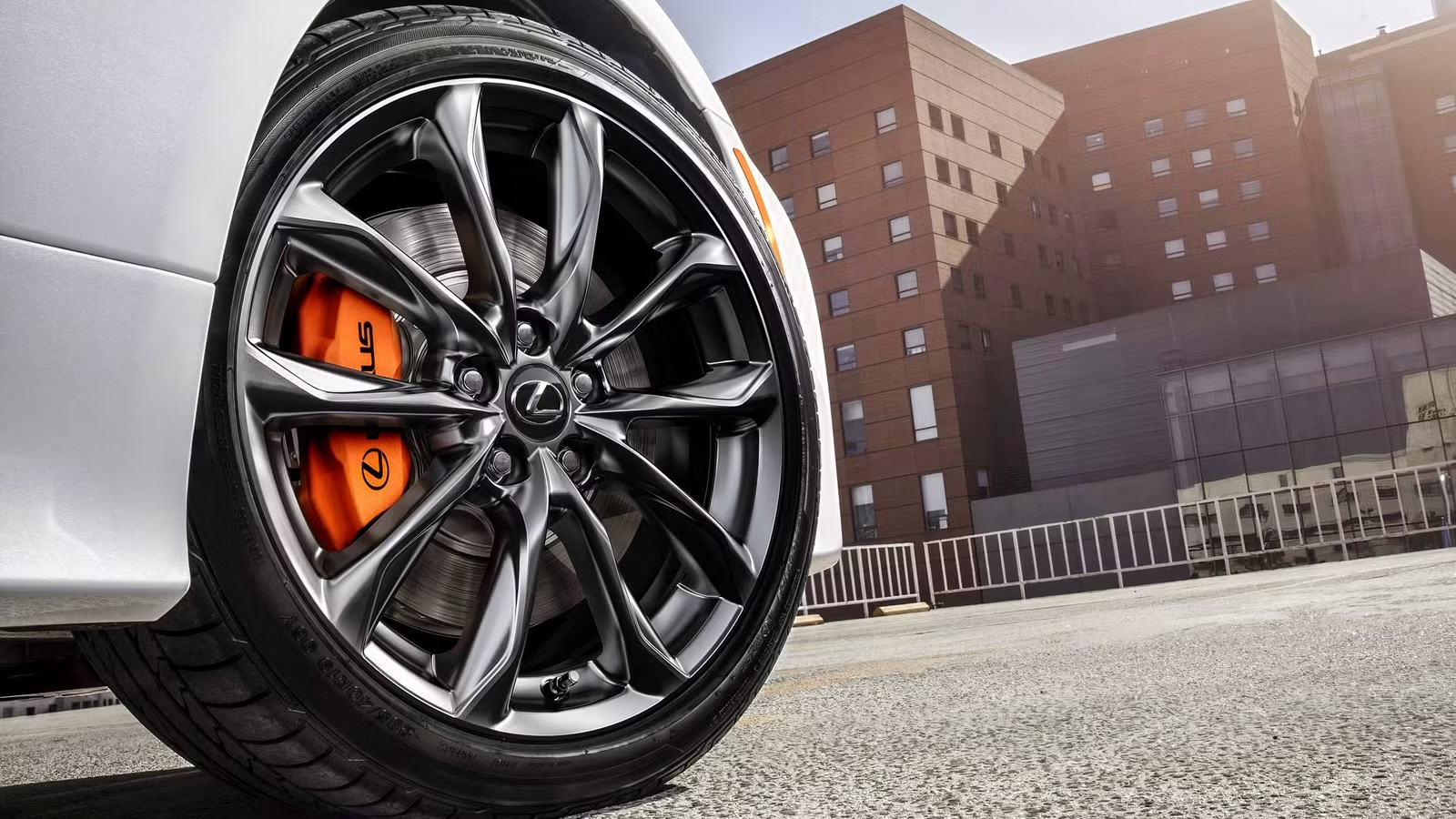
A car can look faster in the showroom and feel worse on the road. Larger wheels fill the arches, expose the brakes, and give even an ordinary trim a performance-car stance. The trouble begins when that visual upgrade brings shorter tire sidewalls, more weight, a harsher ride, and a larger repair bill. For enthusiasts who care about how a car responds beyond smooth pavement, oversized wheels may be the automotive trend worth questioning.
When An Upgrade Starts Making A Car Worse
Performance Styling Has Become More Important Than Performance

A large wheel makes an immediate impression. You can see it from across a parking lot, which helps explain why it has become such a common part of appearance packages. Tire compliance and wheel weight are harder to convey in a photograph.
That does not mean large wheels are inherently bad. A car may need a particular diameter to clear its brakes, and a carefully chosen wheel-and-tire package can sharpen steering response. The issue is treating the diameter itself as an upgrade. If the larger package makes the car less comfortable, more vulnerable to damage, or less responsive over bumps, the visual payoff deserves a closer look.
Bigger Is Not Automatically Better

The tire matters as much as the wheel. When the overall tire diameter remains roughly the same, fitting a larger wheel generally means using a shorter sidewall height. That shorter sidewall can reduce flex during quick steering inputs, giving the car a more immediate feel on smooth pavement.

You may enjoy that response on a clean road. Your commute probably includes expansion joints, broken pavement, and potholes, however. Those surfaces ask the tire to absorb impacts and maintain contact while the suspension works. The best package depends on where you drive and what you want the car to do there.
Potholes And Repair Bills: The Hidden Price Of Low-Profile Tires
Ultra-Low-Profile Tires Leave Less Room For Real Roads

Look at the tire size before judging a wheel option. In a size such as 255/40R20, the “40” means the sidewall height is 40 percent of the tire’s 255-mm section width. A lower-profile tire leaves less rubber and air between a sharp impact and the rim.
That difference becomes apparent when you hit a pothole you could not avoid. Tire Rack notes that low-profile tires on large wheels are particularly susceptible to impact damage. A taller sidewall is no guarantee against a severe strike, but it gives the tire more room to absorb one. If you regularly drive on rough streets, that margin has practical value.
The Visual Upgrade Can Become An Expensive Repair

The cost of a wheel option does not end at the window sticker. A damaged tire may need replacement, and a hard strike can also damage the wheel. If a sidewall develops a bulge after an impact, it needs inspection; the visible damage may appear well after the event that caused it.
Replacement costs also depend on the specific tire required by the larger wheel. Size, load rating, speed rating, and tire type all matter. You should compare prices for the factory-approved packages for the car you are considering rather than assuming that every larger tire costs more. Do the same for a replacement wheel. A package that looks like a modest upgrade at purchase can feel less modest when you need to replace part of it.
Large Wheels Can Undermine The Driving Experience
Added Unsprung And Rotational Weight Can Change Steering Response

Wheel diameter alone does not tell you how heavy a package is. Construction and tire choice can make a larger package lighter than a smaller one, or substantially heavier. That weight matters because the wheel and tire move with the suspension and rotate whenever the car accelerates or brakes.
Tire Rack tested this on a BMW 3 Series using two 17-inch setups with the same tire model and size. The lightweight wheels weighed 17 pounds each; the heavier wheels weighed 27 pounds each. The lightweight package weighed 38.5 pounds per corner, compared with 48.5 pounds for the heavier one. Testers found the lighter setup more communicative and responsive, while the heavier one felt less willing to change direction.
That is a useful warning against judging performance by appearance. It is also a test of deliberately different wheel weights, not proof that every one-inch factory upgrade creates a dramatic change. If steering feel is why you want new wheels, check the weight of the complete wheel-and-tire package before buying.
Less Sidewall Can Reduce Confidence On Rough Pavement

Weight affects how readily the suspension controls a wheel. Sidewall height affects how the tire handles the first part of an impact. You can feel the distinction from behind the wheel: one package may respond crisply to an initial steering input yet become unsettled when the road turns patchy.
That is where a little compliance can help an enthusiast. A tire that absorbs a rough surface more gracefully may let you place the car with greater confidence. The shorter sidewall might feel sharper on a smooth corner, but if you find yourself slowing down or steering around every damaged section of road, that sharpness has limited use.
The right answer still depends on the car and the tire. A well-developed performance package can deliver excellent control, and a taller sidewall cannot rescue a poor tire. The point is to assess how the car behaves on the roads you actually use, beyond how quickly it responds in the first few feet of a turn.
Electrification Makes Compromise More Obvious
Wheel And Tire Choices Can Reduce EV Range

With an EV, you can sometimes see the trade-off in the published range figures. Lucid lists the 2025 Air Touring at an EPA-estimated 406 miles on 19-inch wheels, 377 miles on 20-inch wheels, and 361 miles on 21-inch wheels. That is a 29-mile difference between 19 and 20 inches, and a 45-mile difference between 19 and 21 inches on the same model.
Those numbers should not be read as the effect of wheel diameter alone. Lucid also changes tire brand, size, and type across those packages: the 19-inch setup uses all-season tires, while the 20- and 21-inch setups use summer performance tires. The published comparison shows what happens when you choose the complete factory package. It is still a meaningful choice if range is one of your priorities.
The larger setups may provide the grip and response you want. If you use that capability, the range trade-off may be easy to accept. If you chose the wheels mainly for their appearance, losing miles per full charge is a harder sell.
Heavy EVs Put More Pressure On Tires And Ride Quality

Lucid lists the 2025 Air Touring’s curb weight at 5,009 pounds with 19-inch wheels. Its tire and suspension engineers have to manage that mass while delivering strong acceleration, control, and comfort. A taller sidewall gives them another way to handle everyday impacts; a shorter one puts more of that work on the tire’s construction and the suspension.
The weight of the wheel package deserves attention here, too, but there is no verified wheel-weight figure in Lucid’s published specifications that would justify claiming a particular number of pounds gained at each corner. Range ratings establish the measurable difference between its packages. The wheel-weight question would require separate measurements. That is why an EV wheel choice deserves more thought than a glance at the configurator. You are choosing a tire, a ride character, and a range rating along with the design.
Smaller Wheels Could Become The Enthusiast Choice Again
The Smartest Factory Configuration May Be The Least Flashy

Before paying for the biggest wheels, compare the factory tire sizes, replacement options, and published efficiency figures. Drive both packages if a dealer has them available, and include a rough stretch of road on the route. Pay attention to impact noise, steering response, and how settled the car feels after a bump.
Check fitment before considering a smaller aftermarket wheel. Brake clearance, load rating, offset, and the correct overall tire diameter all matter. A factory-approved smaller package gives you a straightforward place to start.
Real Performance Is About More Than Filling The Wheel Wells
Large wheels can be the right choice when their grip, steering character, or brake clearance serve a purpose you value. They are less convincing when the main benefit is how the car looks while parked. An enthusiast’s choice should make you want to drive the car more often and with more confidence. On the roads you use every day, it may turn out to be the wheel with a little more tire around it.
Sources: Lucid Motors, Tire Rack, NHTSA, Car and Driver

Related posts


Latest Post


No Comments