
Toyota’s Hybrid Sales Jumped Nearly 40% While Rivals Cut EV Production, And One Model Is Doing Most Of The Work
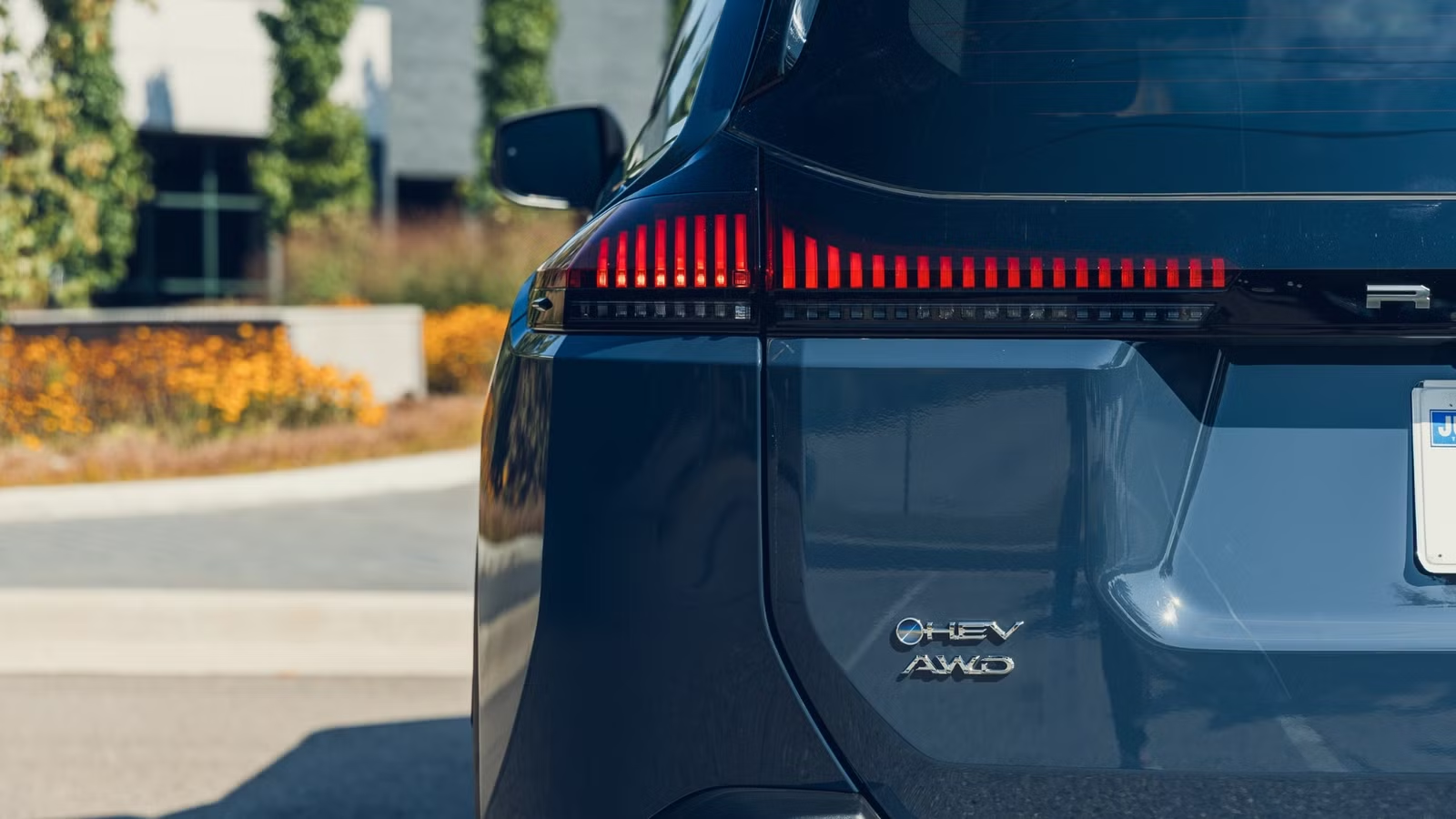
Toyota’s electrified vehicle sales jumped 37.8% year over year in September 2026, the automaker confirmed this week, pushing hybrids, plug-in hybrids, and EVs to 58.2% of everything Toyota and Lexus sold in the month. The number lands at an awkward moment for rivals leaning hard into pure electric bets: Ford’s EV sales fell roughly 80% in the same quarter, and GM just confirmed it’s building 75% fewer Chevy Bolt EVs than planned.

One vehicle is carrying an outsized share of that growth. The RAV4 Hybrid sold 28,642 units in September alone, a 123.2% jump over the same month last year, and has moved more than 200,000 units year-to-date. That’s not a niche hybrid story. It’s Toyota’s best-selling crossover, now sold almost exclusively as a hybrid, pulling in buyers who just want a RAV4 and are getting better fuel economy without asking for it.
The RAV4 Hybrid And Camry Hybrid Are Doing The Heavy Lifting

Toyota’s September numbers show electrified sales hit 117,215 units, up 37.8% year over year, across the Toyota and Lexus brands combined. For the full third quarter, electrified sales reached 363,367 units out of 633,223 total vehicles sold, a 28.5% increase that came even though Toyota’s overall sales barely moved, up just 0.6%.

The RAV4 Hybrid is the clear volume leader, but it’s not alone. The Camry Hybrid sold 25,350 units in September and has moved over 260,000 units year-to-date, an 11.2% gain. Both nameplates are now hybrid-only in the U.S., meaning there’s no gas-only RAV4 or Camry left to cannibalize those figures. Buyers aren’t choosing hybrid power as an upgrade anymore. It’s just what the car is.
The Crown Signia And Other Lexus Models Are Filling In Behind Them

The Crown Signia, a crossover nameplate that didn’t exist before the 2025 model year, sold 2,056 units in September, up 94.5% year over year, with 17,983 units moved so far in 2026. It’s a smaller number next to the RAV4 and Camry, but the growth rate signals real demand for a model with no gas-only equivalent and no legacy baggage to shed.
Over at Lexus, the RX crossover tells a similar story at the luxury end. Of the 89,824 RX models sold this year, 37,448 were hybrids and another 5,738 were plug-in hybrids, meaning hybrid power accounts for nearly half of every RX leaving dealer lots. The redesigned ES follows the same pattern: the ES Hybrid outsold the all-electric ES EV by more than two to one, 5,133 units to 2,083. For shoppers cross-shopping either nameplate, the hybrid isn’t the alternative choice. It’s the default one.
Hybrids Still Dwarf Toyota’s Own EV Lineup

Toyota’s pure-electric models are growing fast off a small base. The bZ doubled its sales to 24,994 units through three quarters, ahead of the Chevy Equinox EV but still behind the Hyundai Ioniq 5. Toyota and Lexus combined sold about 17,387 BEVs and 26,173 plug-in hybrids in the third quarter, both record highs for the brands.
But scale tells the real story. Toyota sold 931,434 hybrids between January and September, a figure that makes its entire EV lineup look like a rounding error by comparison. That gap matters for anyone shopping right now: hybrid versions of the RAV4, Camry, Sienna, and RX are stacked on dealer lots in volume, while EV trims remain a smaller slice of inventory and configuration choices.
The contrast with the rest of the industry sharpens the point. Ford’s EV sales fell about 80% in the quarter, though a chunk of that drop reflects an unusually strong year-ago comparison tied to the expired federal tax credit. GM is cutting Chevy Bolt production by 75% after building just 4,224 units through August. Toyota built its strategy around offering a hybrid version of nearly everything it sells, rather than pushing buyers toward EVs before the market was ready. Right now, that approach is translating directly into showroom traffic other brands aren’t seeing.
None of this means Toyota has solved the EV transition. Its battery-electric volume is still small next to hybrid sales, and the bZ lineup remains a distant also-ran against the Ioniq 5. But for buyers deciding between a hybrid crossover and a pure EV right now, the inventory, the incentives, and the trim choices are stacking up on the hybrid side of the lot. The RAV4 Hybrid and Camry Hybrid aren’t a hedge anymore. They’re the mainstream pick.

Related posts


Latest Post


No Comments