
Wireless Charging Puts BMW Ahead of Mercedes and Audi in the Race to Kill the Plug
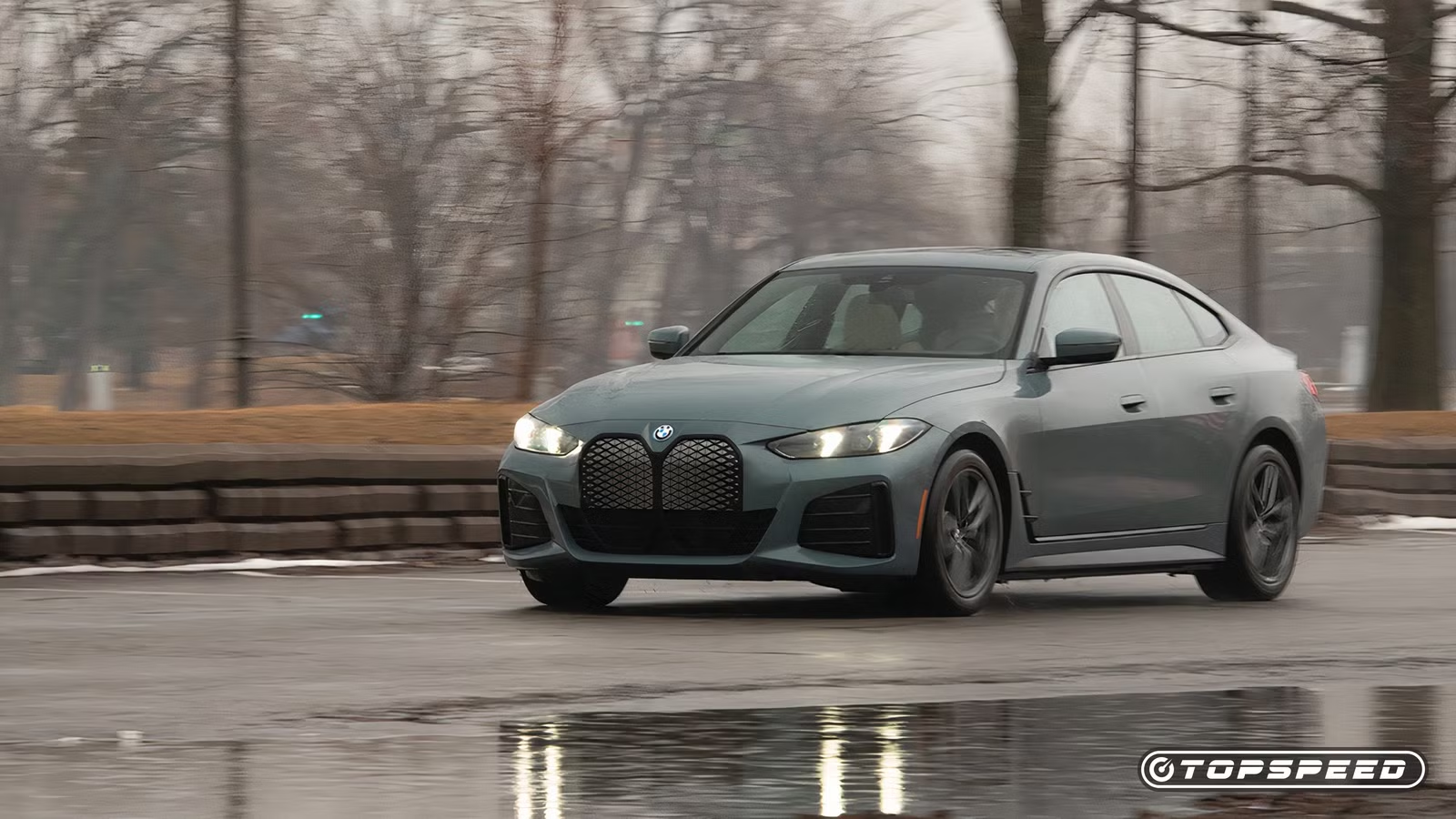
BMW just moved wireless EV charging out of the concept phase and into the lab. The automaker has partnered with New York-based HEVO Inc. and Oak Ridge National Laboratory to bench-test a next-generation polyphase coil charging system built for future electric and autonomous vehicles, according to an HEVO announcement made this week. It’s a quiet move, but a telling one: while Mercedes and Audi have floated inductive charging as a someday feature for years, BMW is the one running actual hardware through actual lab testing right now.

The timing matters. BMW is set to appear at the Berenberg and Goldman Sachs German Corporate Conference this week, and any concrete detail the automaker shares there about pilot timelines or efficiency targets would confirm this isn’t just an R&D side project. For luxury-EV shoppers trying to figure out which brand is actually building the plugless future rather than just talking about it, this is the clearest signal yet.
What Polyphase Coil Charging Actually Does Differently
Most wireless charging demonstrations to date, including early industry concepts from other automakers, have relied on single-phase coil systems. Those pulse magnetic flux through a primary coil to induce voltage in a receiving coil, but that approach uses the available electromagnetic field inefficiently and needs a larger coil footprint to hit meaningful power levels.

Oak Ridge’s polyphase design works differently. It uses rotating magnetic fields across multiple phases rather than a single pulsing field, which cuts voltage, current, and thermal stress on the inverter, rectifier, coils, and tuning components. ORNL has already demonstrated the concept charging a passenger EV wirelessly at 100 kW with 96% efficiency, and says the polyphase coils achieve 8 to 10 times the power density of conventional single-phase setups. In plain terms: smaller, lighter hardware that can push more power without cooking itself, which is exactly the packaging problem an automaker has to solve before wireless charging can go from a garage pad to a real production option.
Why This Matters More Than Just Convenience

Wireless charging solves a problem that owners actually complain about: cables, connector wear, and the daily ritual of plugging in. But the bigger opportunity BMW appears to be building toward is autonomous and fleet operation. A car that can park itself over a charging pad and top off without a human involved is a prerequisite for any serious self-driving or automated-fleet ambition, not just a nice-to-have for a busy owner in a driveway.
HEVO’s involvement adds a piece BMW doesn’t have in-house: existing commercial deployment experience. The company’s Rezonant charging hardware and Journey software platform are already UL certified and SAE qualified, used in real depot and fleet charging setups. Pairing that commercial know-how with ORNL’s lab-grade coil research gives BMW a shortcut most automakers don’t have if it wants wireless charging integrated into actual vehicle platforms rather than just proven on a bench.
Where Mercedes and Audi Stand By Comparison

Mercedes and Audi have both talked up inductive charging research over the years, but neither has confirmed an active hardware testing partnership with a national lab on the scale of what BMW just announced. That gap is what makes this news notable rather than routine. Talking about a technology and running it through bench validation with a federally funded lab are different stages of maturity, and BMW just moved into the second one while its rivals remain associated with the first.
None of this guarantees BMW ships wireless charging on a production EV next year, or even names a date at this week’s investor conference. Bench testing compatibility between HEVO’s coil topologies and ORNL’s polyphase tech is still early-stage validation work, not a production announcement. But for buyers comparing BMW’s iX lineup against the Mercedes GLC Electric or an eventual Audi EV with wireless ambitions, it’s a real data point on which brand is actually closer to killing the plug.
The real test comes at the Berenberg and Goldman Sachs conference this week. If BMW attaches a pilot timeline or a stated efficiency target to this work, it turns from a promising lab partnership into a competitive head start. If it stays vague, the polyphase coil story is still the most concrete wireless-charging move any luxury automaker has made public so far.

Related posts




Latest Post




No Comments