
10 Touring Motorcycles Built For Riders Who Rack Up Serious Miles
What separates a good touring motorcycle from a great one? It isn’t horsepower or a flashy dash. It’s how you feel after the third fuel stop. The best long-distance bikes have supportive seats, keep wind and fatigue in check, and run engines that lope along at highway speeds, so you forget how long you’ve been on the road. These ten range from plush American baggers to affordable sport-tourers, and each suits riders who regularly rack up serious miles. The list goes from most expensive to least expensive.
Harley-Davidson Street Glide 3 Limited
Price: $39,199
The Street Glide 3 Limited is the only trike on this list, and it suits riders who want stability without giving up touring comfort. The redesign is the story. A chassis-mounted differential replaces the axle-mounted unit, and reverse now runs through the starter motor, which cuts unsprung weight by about 68 pounds. That let Harley fit softer springs and shocks, and a wider rear track and a wheelbase 1.6 inches longer add stability. The Milwaukee-Eight VVT 117 makes 105 horsepower and 129 pound-feet of torque.

For maximum touring comfort, it has an aerodynamic batwing fairing, a 12.3-inch Skyline OS display with a four-speaker audio system, all-LED lighting, and a tire pressure monitoring system. Fuel economy is around 39 mpg from a 6-gallon tank. At 1,250 pounds, it’s the heaviest bike here, and at $39,199, the most expensive.
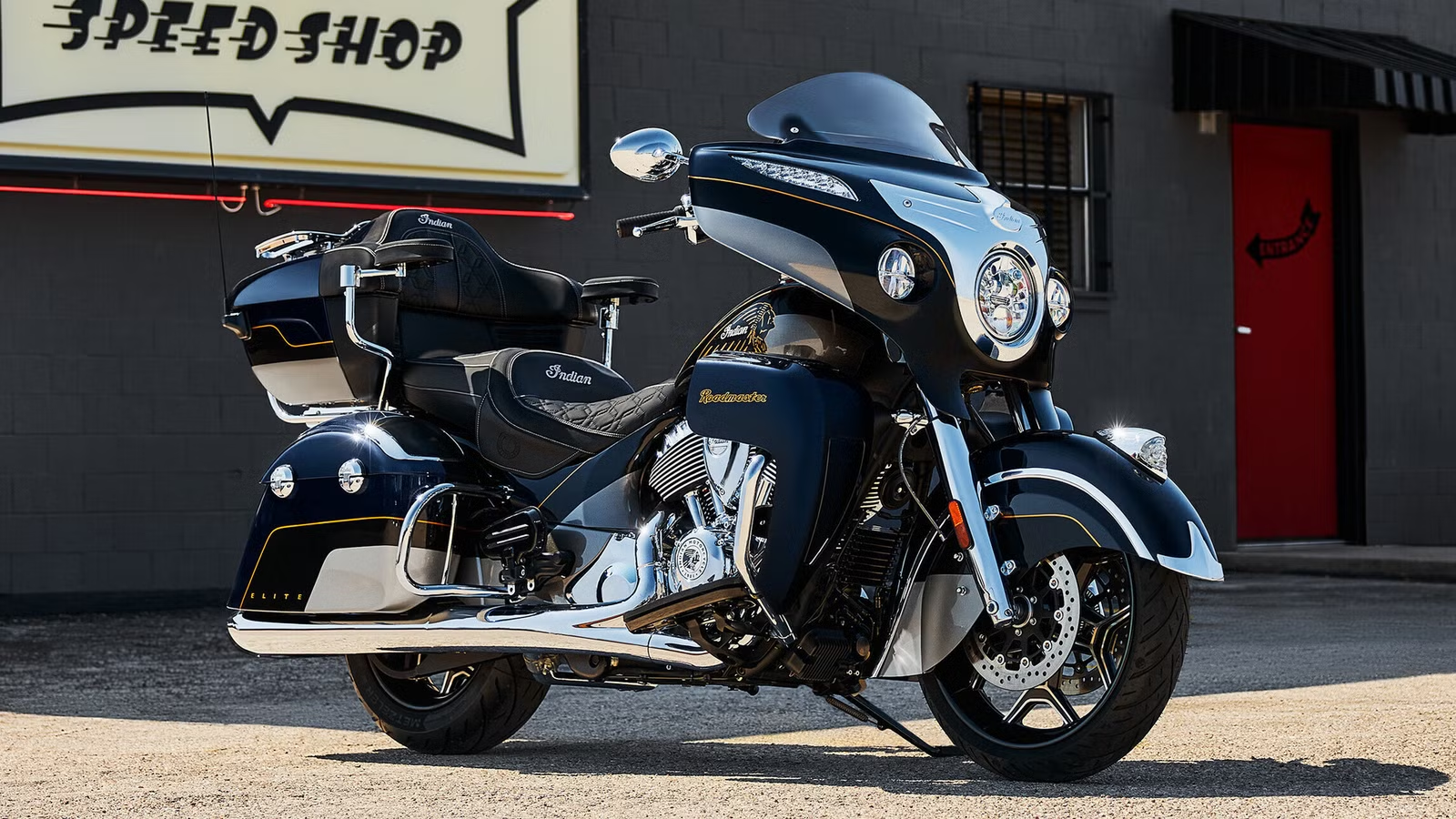
Indian Roadmaster 116
Price: $34,999


The Roadmaster is the classic full-dress Indian. Where the Pursuit adds tech and a liquid-cooled engine, the Roadmaster keeps a more traditional approach with the air-cooled Thunderstroke 116. This 1,890cc V-twin makes 126 pound-feet of torque at just 2,900 rpm, so it cruises at highway speeds without working hard. Moreover, this engine is incredibly reliable, making the Roadmaster a machine that offers Honda-like longevity with Harley-like presence.

Indian ensures the Roadmaster delivers unparalleled classic luxury to match its traditional powertrain. Comfort and convenience come from a heated two-up seat, heated grips, and a push-button power windshield. A 7-inch display provides navigation and Apple CarPlay, and cruise control, keyless ignition, and tire pressure monitoring are standard. Remote-locking saddlebags and a trunk offer more than 34 gallons of storage, while rear cylinder deactivation and three ride modes complete the package.
Harley-Davidson Road Glide Limited
Price: $32,999

The Road Glide has long been Harley’s pick for riders who want a calm ride at highway speeds, and the Limited is the fully loaded version. The Milwaukee-Eight 117 makes 106 horsepower and 131 pound-feet of torque. Power goes through a six-speed gearbox, and Harley estimates 45 mpg from the 6-gallon tank.

Harley-Davidson loads the Road Glide Limited with comfort and tech. A 12.3-inch Skyline OS display handles embedded navigation and Apple CarPlay, and the four-speaker, 200-watt audio system is built for highway speeds. Heated seats with independent rider and passenger controls and heated grips are standard, and the redesigned Grand Tour-Pak adds a passenger backrest. Cornering ABS, cornering traction control, and vehicle hold control come standard too. The frame-mounted fairing and tall windscreen also offer good wind protection.
Indian Pursuit 112
Price: $32,499

The Pursuit is Indian’s flagship full-dresser and the Road Glide’s most direct rival. It’s powered by the liquid-cooled PowerPlus 112, a 1,834cc V-twin that makes 126 horsepower and 133 pound-feet of torque, making it an absolute monster of an engine. This has been developed with the help of motorsport, in the King Of The Bagger racing series, where it has had much success.

Comfort is well covered. A massive chassis-mounted fairing effectively isolates the rider from wind buffeting, while electronically adjustable Fox rear suspension allows you to dial in the preload directly from the dash. The 7-inch touchscreen runs Ride Command with Apple CarPlay integration, and heated grips, a premium touring trunk, and heated seats all come standard. There are loads of assistive features too, that include top-spec bits like blind-spot monitoring and rear-collision alerts. The Indian Pursuit weighs 937 pounds in running order and carries 6 gallons of fuel.
Honda Gold Wing Tour DCT
Price: $30,500

The Honda Gold Wing has been the touring benchmark for decades, and the Tour DCT is the version to get if you want the complete package. Power comes from a 1,833cc flat-six making 126 horsepower and 125 pound-feet of torque, paired with a seven-speed dual-clutch transmission and shaft drive. The engine is smooth and quiet, and the DCT takes the clutch and shifting out of the equation, which helps in traffic and on long days.

Honda loads the Tour with comfort and tech. A 7-inch TFT display handles navigation and wireless Apple CarPlay and Android Auto, and four ride modes (Tour, Sport, Eco, and Rain) let you tailor the bike to the road. Cruise control, an electric windscreen, a heated seat, heated grips, hill start assist, and a reverse function are all standard, and the 61-liter trunk should help in storing some luggage. It’s a heavy bike at around 860 pounds, but the low center of gravity helps it feel lighter once it’s moving. The tank holds 5.5 gallons.
BMW K 1600 GTL
Price: $30,095

Six-cylinder engines are rare in motorcycling, and the K 1600 GTL has one of the best. The 1,649cc inline-six makes 160 horsepower and 132.7 pound-feet of torque, with a broad, strong pull across the rev range. That’s more power than the Gold Wing, with torque in the same league as the big American twins. Unlike the Honda, there’s no automatic option. Power goes through a six-speed manual gearbox.

BMW loads the GTL with comfort and tech. Duolever front suspension, Paralever rear suspension, and electronic suspension adjustment keep the ride composed, and a 10.25-inch TFT display handles navigation through the BMW Motorrad Connected app. Reverse assist, a heated seat, and heated grips are standard, along with three ride modes and Hill Start Control Pro. The tank holds about 7 gallons, and at 789 pounds, it’s lighter than the Gold Wing.
BMW R 1300 RT
Price: $22,745

The BMW R 1300 RT stands out as the ultimate touring motorcycle, offering the balance of comfort, sportiness, and performance. It’s BMW Motorrad’s sport-tourer, sharing its engine with the R 1300 GS. The 1,300cc boxer twin pumps out 145 horsepower and 110 pound-feet of torque. Moreover, with a dry weight of 584 pounds, the 1300 RT should feel agile compared to the other touring motorcycles.

BMW loads the RT with hardware built for serious miles, including EVO Telelever front and EVO Paralever rear suspension tied to a Dynamic ESA adaptive chassis. A 10.25-inch TFT display handles navigation, while standard heated grips and dual speakers add luxury. Available front and rear radar bring adaptive cruise control and blind-spot monitoring to the mix, keeping mental fatigue low on long highway stretches.
Kawasaki Versys 1100 SE LT ABS
Price: $19,499

The Kawasaki Versys 1100 SE LT is a sport-tourer, and that makes it the most engaging bike in the list’s lower price range. Unlike the full-dress machines, it uses a lightweight aluminum twin-tube frame and 17-inch wheels, which keep the handling sharp. Powering it is a 1,099cc inline-four that Kawasaki updated for 2025, adding 13 horsepower. It makes 133 horsepower and 82.5 pound-feet of torque, and electronically adjustable suspension keeps the ride comfortable on long days.

To cover long hauls effortlessly, it features an adjustable windscreen and a relaxed, upright riding stance. The electronics include two power modes, three levels of traction control, a two-way quickshifter, and IMU-based cornering management. Cruise control, smartphone connectivity, heated grips, hand guards, and two 28-liter saddlebags are standard, and the tank holds 5.5 gallons. At 571 pounds before the bags, this Kawasaki is easy to handle.
Suzuki GSX-S1000GX+
Price: $18,599

It might be one of the most underrated crossovers on the market, yet the GSX-S1000GX+ quietly stands as the most technologically advanced street bike Suzuki has ever built. Under the sharp bodywork sits the legendary K5-derived 999cc inline-four from the GSX-R1000, pumping out 150 horsepower and 78 pound-feet of torque. By pairing that superbike power with the upright, relaxed ergonomics of the V-Strom 1050, Suzuki created a true crossover.

The GX+ earns its spot on this list largely because of its comfort tech. Its Suzuki Advanced Electronic Suspension (S.A.E.S.) is a road-adaptive system that automatically smooths out uneven pavement in real-time across four distinct damping modes. Suzuki also packed it with long-distance tech, including a Smart Cruise Control system that stays active even during clutchless gear changes. It also features a robust suite of rider aids, including three power modes, wheelie control, roll torque control, cornering ABS, and a Slope Dependent Control System.
Yamaha Tracer 9
Price: $12,599

The Yamaha Tracer 9 perfectly balances power and versatility in a highly accessible package. It blends the fun of the MT-09 naked bike with the wind protection and upright posture of a tourer, and it shares its engine with the MT-09. The 890cc CP3 triple makes about 117 horsepower and 68.6 pound-feet of torque. Sharing the engine with a popular naked bike also works in its favor for reliability.

The standard Tracer 9 keeps the focus purely on analog ride dynamics. It utilizes a lightweight aluminum Deltabox frame and manually adjustable KYB suspension, keeping the wet weight down to an incredibly agile 483 pounds. A 7-inch TFT with three display themes, cornering LED headlights, and customizable ride modes round out the tech. Cornering traction control and slide control are included, and heated grips are an optional accessory. Yamaha also sells GT versions with hard panniers.
Source: Honda, Harley-Davidson, Indian, Kawasaki, Yamaha, BMW, Suzuki

Related posts

Latest Post


No Comments