
Royal Enfield’s Most Charming Motorcycle Isn’t Its Most Powerful
There’s a sound some motorcycles make at idle that you tend to feel in your chest before you actually hear it. It’s a slow thump that sounds like it has all day. Pull in the clutch, click into first, and you roll out into town with no urge to hurry. Red lights or a slow car ahead doesn’t feel bothersome. You catch yourself taking in the scenery more than usual. It’s a feeling that is impossible to put on a spec sheet, as no dyno chart captures it and no lap time explains it.

Charm is something a motorcycle either gives you or doesn’t, usually within the first mile, and some of the best at it never needed large amounts of power to do it. Royal Enfield’s entire lineup follows this very philosophy, but one particular retro bike serves as the clearest example of the approach.
Why Charm Has Never Needed A Big Number
Power is an easy metric to measure, which is why it dominates the conversation around motorcycles. Horsepower, torque, and top speed can all neatly fit into a table. What a bike feels like at 35 mph on a Sunday morning doesn’t, and so it gets left out. Ask riders about the bikes they remember fondly, and the answers rarely involve peak output.


They talk about things like the sound of the exhaust or the small mechanical noises that made the machine feel alive. There’s a quiet advantage to a bike that isn’t overpowered. You can use all of it. You can open the throttle on a country road, hear the engine working, and still be at a speed where you can enjoy the scenery.
The Classic 350 And Its Trip Around The World

Royal Enfield’s Classic 350 is built around a simple idea: a single-cylinder engine, a round headlight, a teardrop tank, and a riding position that asks nothing of you. It doesn’t try to be the fastest or most advanced bike in its class. It tries to look right, feel right, and be easy to live with, and riders around the world have responded to this simplistic charm.
Lineage That Goes Back Decades

Royal Enfield started in Redditch, England, in 1901 and is often described as the oldest motorcycle brand still in continuous production. The Classic line has been around since 2009, and its styling draws from the G2 350 cc Bullet of 1948, whose shape you can still see in the tank, fenders, and the overall stance of the motorcycle. Today, the Classic 350 gets fuel injection and modern brakes, and all of it is wrapped in a shape riders from the 1950s would recognize.
From India To Europe And Beyond

The Classic 350 is a big deal in India, where the bikes are built, and the brand has a huge following, but the appeal doesn’t stop at the border. It’s sold across Europe, North America, and many other markets, and it attracts very different riders in each of them. New riders like the friendly 31.7-inch seat height and gentle power. Returning riders like that it feels like the bikes they used to know, without the reliability headaches. Style-minded buyers love how it looks parked outside a cafe.
In the US, it starts at $4,999, which keeps it within reach of anyone who wants a good-looking bike without a big financial commitment. That mix is the real story. A bike that makes sense to a first-time rider in Chennai, a commuter in London, and a weekend rider in California is doing something right.
The Classic 350 Has A Simple Way Of Doing Things

Open the spec sheet, and no stats jump out at you. The Classic 350 is powered by a 349 cc air- and oil-cooled, single-cylinder engine that makes about 20 horsepower at 6,100 rpm and 19 lb-ft of torque at 4,000 rpm. Those numbers are small, and they’re meant to be. However, they don’t convey how the torque arrives. The Classic 350 pulls smoothly from low revs, so you never need to rev the engine hard. You can short-shift, let the revs fall, and let the thump carry you along. The beat you hear at idle is still there at cruising speed, just quicker. Top speed is around 70 mph, which is all this bike needs.
The chassis follows the same thinking. At roughly 430 pounds wet, it’s not a featherweight motorcycle, but the weight sits low and the bike feels planted. The suspension soaks up rough pavement instead of passing it to your back, and handling is predictable and relaxed. Braking is taken care of by disc brakes at both ends. That’s plenty for a bike of this speed and weight, and it suits the way the Classic wants to be ridden: smoothly, and with plenty of room to spare.

Shifts are positive, and the clutch is friendly. Newer versions add an assist-and-slipper clutch, which lightens the lever and smooths downshifts. It’s a small change, but it helps a lot in stop-and-go traffic. Owners also report a fuel efficiency of around 80 mpg, so a tank of roughly 3.4 gallons can take you past 250 miles.
Small Details, Big Personality On The Classic 350

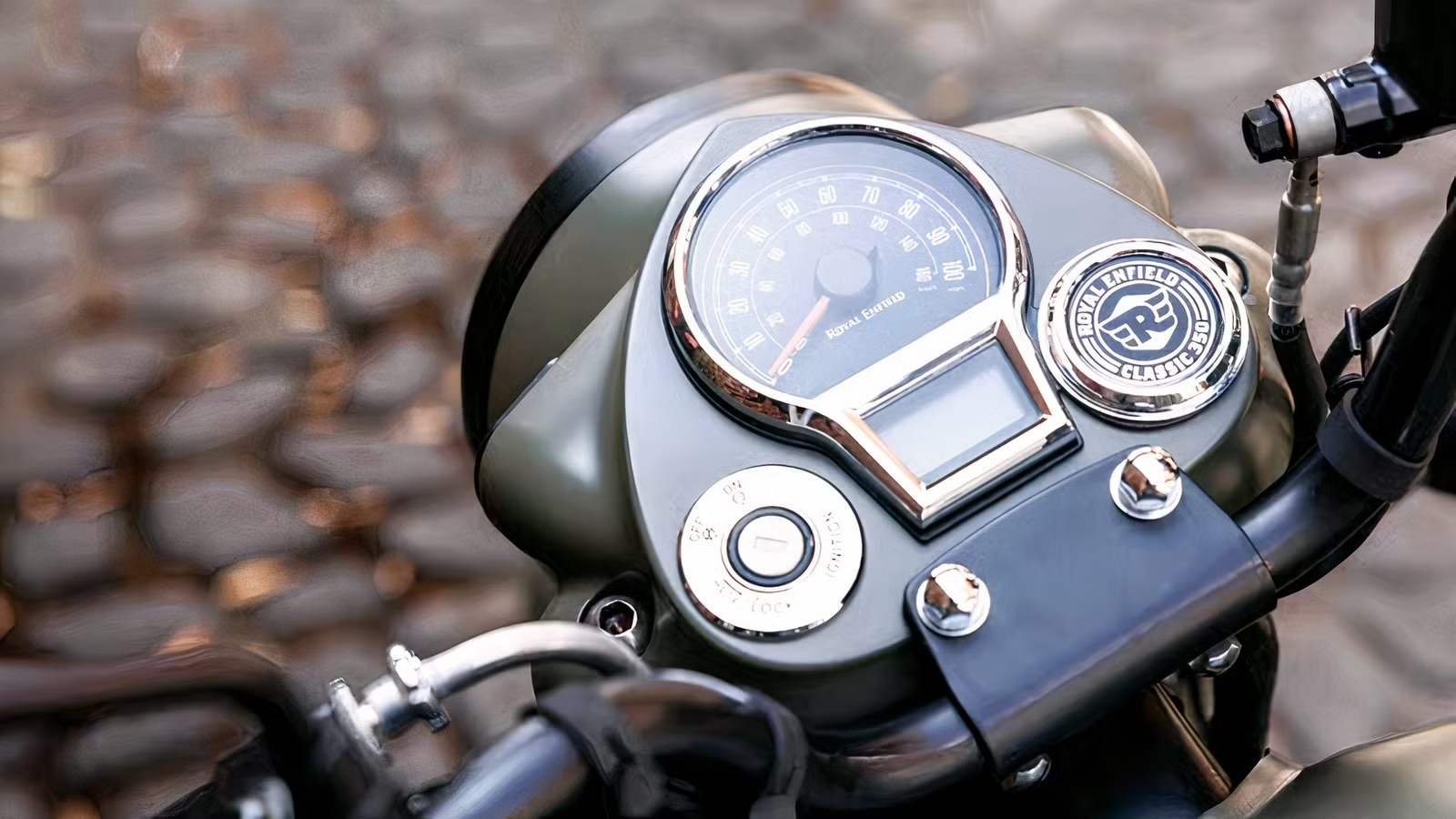
A lot of the Classic’s charm comes from things you’d never find on a spec sheet. The round chrome headlight gives the front end a friendly face. The teardrop tank has a curve that looks right from every angle, and chrome accents look spectacular when the light catches it just right. The bike draws attention parked next to nearly anything modern. The instrument pod is a small round cluster with an analog speedometer and a compact digital display, and it looks like it belongs to another era. You look down, check your speed, and get back to riding.

Royal Enfield also offers a variety of paint options for the Classic 350, and they range from muted tones to brighter finishes. The brighter color options are specced with chrome and spoked wheels. The darker trims go the other way, with alloy wheels and a moodier finish for riders who want the shape without the shine. The accessory list and aftermarket are large, so making the bike your own is a pretty easy task.
Modern Tech That Stays Out Of The Way

Beneath the vintage look of the Classic 350, there’s plenty of modern equipment. ABS is standard, and there is also the convenience of a USB Type-C port and adjustable levers. In certain markets, the Classic 350 also gets the Tripper Pod from Royal Enfield, a small display that shows turn-by-turn directions. What matters is how quietly it all works. There are no ride modes to cycle through and no menus to learn. The technology is there when you need it and remains invisible the rest of the time. It’s modern hardware doing its job without demanding any attention.
Living With The Classic 350 Every Day

Ownership is where the Classic quietly makes its best case. The engine is simple, parts are easy to find and cheap by motorcycle standards, and the machine is straightforward enough that many owners do basic maintenance themselves. There’s no complex electronics package waiting to fail.
It’s easy to ride every day, too. The low seat height and modest weight make it manageable around town, and the relaxed engine doesn’t wear you out in traffic. You can commute on it all week and take a longer ride on the weekend without changing your approach. Moreover, because it never feels intimidating, you tend to ride it more often, and that’s where a lot of owners say the bike really wins them over. It’s the one you grab for a quick errand and end up taking the long way home on.
Royal Enfield builds more powerful motorcycles, and some of them are excellent. But the Classic 350 captures what the brand does best. It invites you to slow down, listen to the engine, and enjoy the ride. And riders don’t buy it for the numbers. Instead, they buy it for the feeling of rolling away from a stoplight with that steady thump underneath and nowhere in particular to be. That’s the charm of the Classic 350, and it turns out you don’t need much horsepower to have it.
Source: Royal Enfield

Related posts


Latest Post


No Comments