
1970 Dodge Hemi Coronet R/T Surfaces With 185 Original Miles
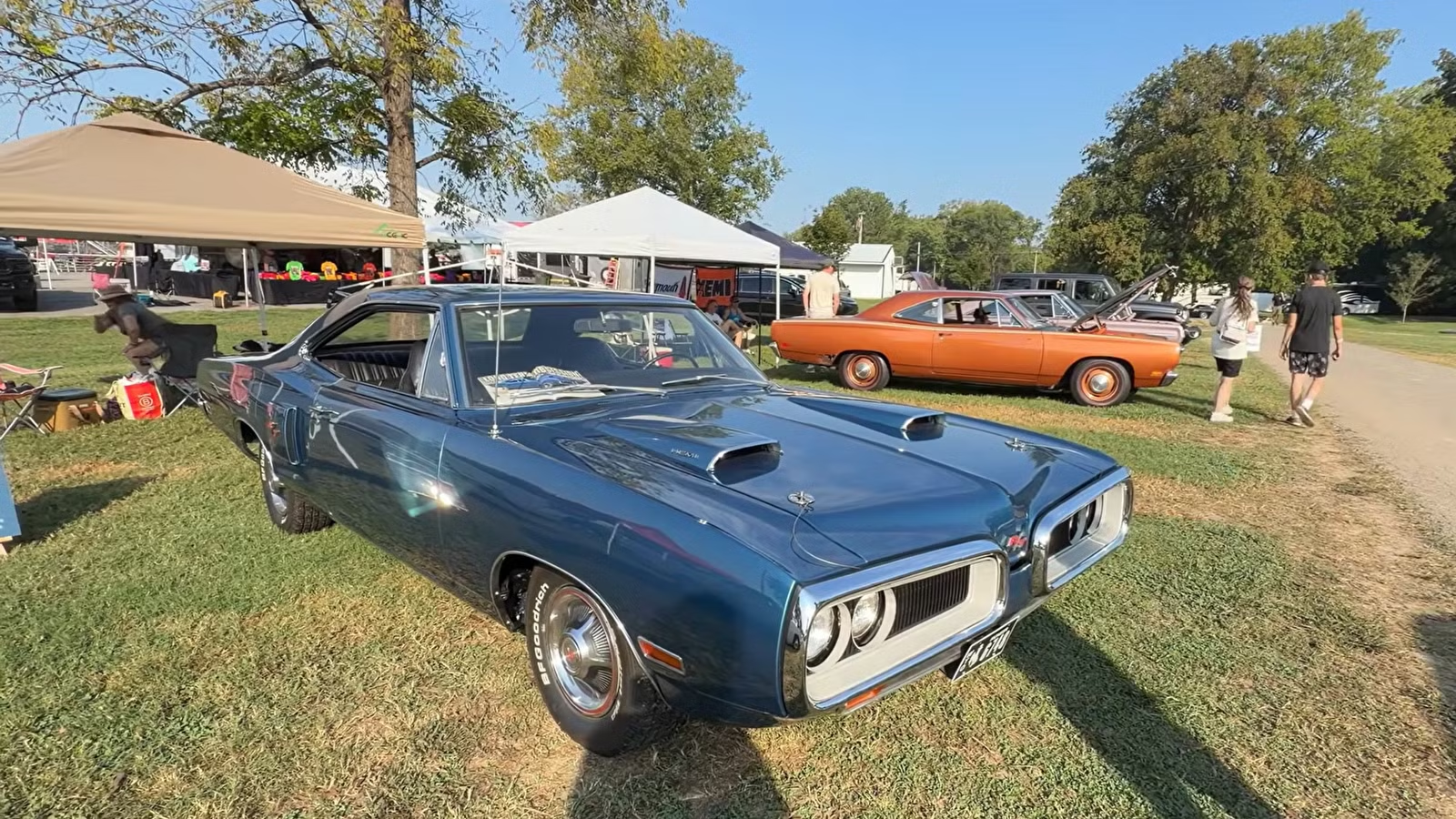
A 1970 Dodge Coronet R/T with the 426 Hemi has just come out of long-term storage with 185 miles on the odometer. That number isn’t a typo or a rolled-back clock story. It’s a genuine, unrestored survivor from the single rarest year of Hemi Coronet production, and cars with mileage that low simply don’t resurface intact.

Most 1970 Coronet R/Ts that are still around have been driven, crashed, rebuilt, repainted, or restored at some point over the last five and a half decades. This one appears to have skipped all of that. A sub-200-mile Hemi Mopar sitting in original condition is the kind of find that reframes what’s possible for the rest of the surviving fleet, and it lands at a moment when Mopar collectors are already paying premiums for untouched originals over even the most meticulous restorations.
Why Hemi Coronets Are Rarer Than The Charger Crowd Realizes
The Charger gets all the attention in Mopar circles, largely thanks to Hollywood and NASCAR lore, but the Coronet R/T Hemi is the tougher car to find. Dodge built just 2,319 Coronet R/T hardtops and 296 convertibles for 1970, and only a small fraction of those buyers checked the Hemi box. Just 14 Coronet R/T hardtops were ordered with the 426 that year, and of those, only four came with the A-833 four-speed manual, according to HotCars’ own reporting on the rarest Hemi four-speed Mopars ever built. That makes a four-speed ’70 Coronet Hemi R/T hardtop the rarest hardtop in the entire Mopar muscle lineup, full stop.

The Charger built its reputation on looks and screen time. The Coronet built its reputation on being nearly impossible to find with the Elephant engine under the hood. Buyers in 1970 were already drifting away from expensive, thirsty big-block options as insurance rates climbed and fuel prices crept up, and the Hemi option cost roughly $718 on top of an already pricey R/T package. Few people paid it. That’s exactly why a surviving example with 185 miles carries so much weight now.
Original Beats Restored, And This Car Proves The Point
HotCars has covered this trend directly: unrestored, numbers-matching Hemi Mopars are consistently outperforming even expertly restored examples at auction. A highly original 1969 Hemi Road Runner with just over 35,000 miles sold for $275,000 despite not being in Concours condition, while a 1970 Charger Hemi R/T with 14,000 miles and zero restoration work brought $352,000, the highest price ever paid for a second-generation Charger. The pattern holds across the board. Buyers aren’t just paying for horsepower and rarity anymore. They’re paying for proof that a car has never been touched.
A 185-mile Coronet R/T Hemi sits even further out on that curve than any of those cars. It’s not a well-preserved driver with some factory-correct parts swapped back in. It’s a time capsule in the literal sense, a snapshot of exactly what a 1970 Mopar muscle car looked, smelled, and felt like the day it left the dealership.
What This Means For The Coronet’s Reputation Going Forward

The 426 Hemi itself only ever found its way into 9,761 cars across its entire 1965 to 1971 production run, and the Coronet R/T was never the volume play among them. For years, that rarity didn’t translate into Charger-level money. A 1970 Coronet Hemi R/T hardtop sold for $247,500 in 2023, a figure that looks almost modest next to seven-figure Daytonas and Hemi ‘Cuda convertibles. A verified, 185-mile original has a real shot at changing that conversation, not through speculation on price, but simply by existing as proof of how scarce true survivor-grade Hemi Coronets actually are.
Finds like this don’t happen often, and when they do, they tend to recalibrate how the whole segment gets valued.
Cars like this are the reason Mopar collectors keep checking barns and storage units long after everyone else has given up. Here’s hoping this Coronet gets the kind of careful, documented handling its mileage deserves.

Related posts





Latest Post


No Comments