
1987 Monte Carlo SS Aero Coupe With 752 Miles Is For Sale
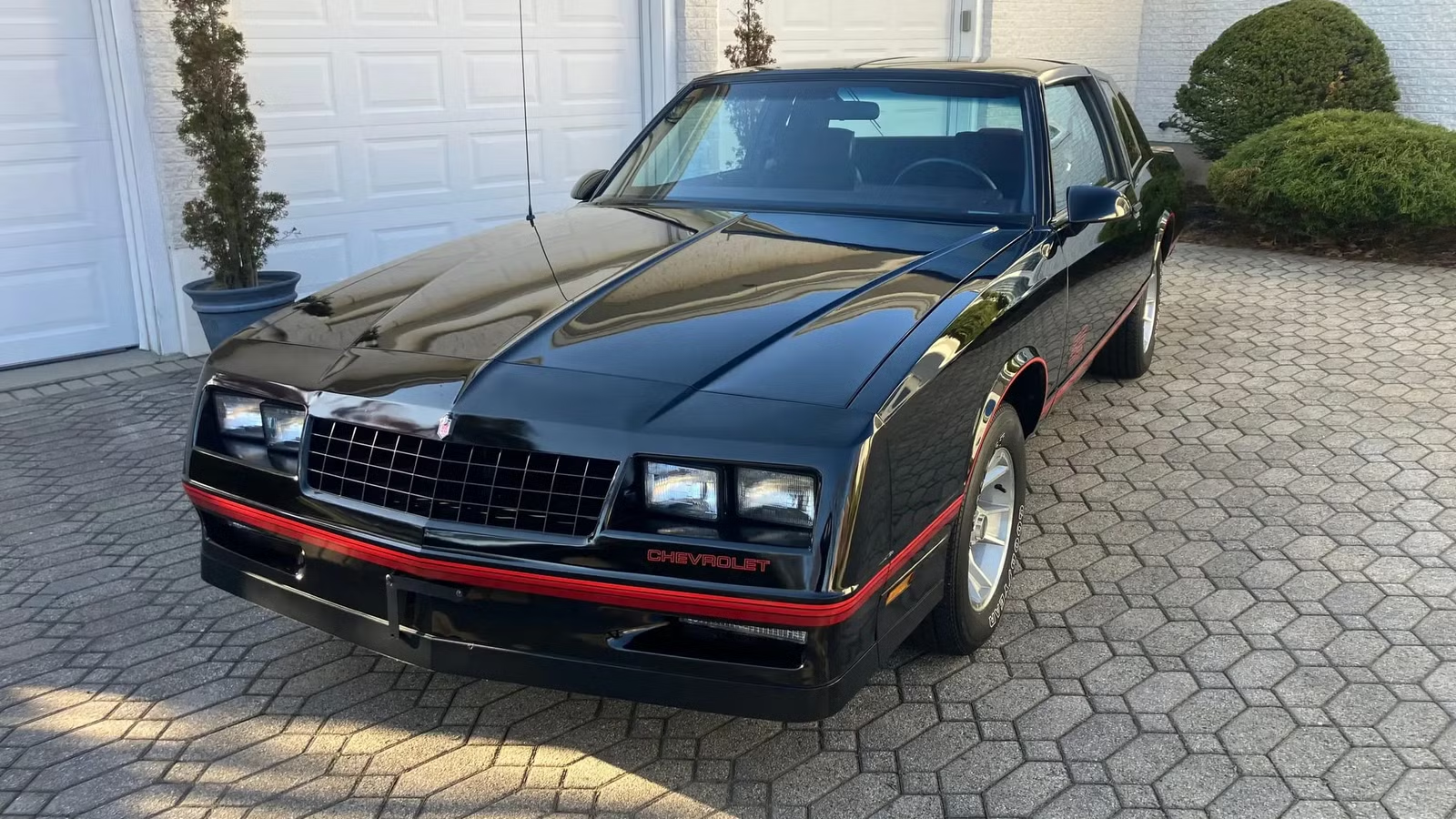
A 1987 Chevrolet Monte Carlo SS Aero Coupe with just 752 miles on the odometer has surfaced on the open market, and it’s the kind of listing that stops serious collectors cold. These cars were built in limited numbers specifically to homologate an aerodynamic trick for NASCAR superspeedway racing — and finding one this untouched, decades later, is genuinely unusual.

Most Aero Coupes were driven, modified, or simply used up over the years. The ones that survive in anything approaching original condition are closely held, rarely changing hands publicly. A sub-1,000-mile example hitting the open market is the sort of event that moves through collector circles fast.
The Sloped Rear Window Was a Factory-Built Racing Cheat
The Aero Coupe’s defining feature — that steeply raked, fastback-style rear window — wasn’t a styling exercise. It was an engineering solution to a specific NASCAR problem. By the mid-1980s, Chevrolet‘s Monte Carlo was losing ground to Ford’s slicker Thunderbird on superspeedways like Daytona and Talladega, where aerodynamics separate the front-runners from the field.

NASCAR’s homologation rules required that any body modification used in competition had to appear on a production car sold to the public. So GM engineered the sloped rear glass — replacing the standard Monte Carlo‘s more upright backlight — and built enough street cars to satisfy the sanctioning body. The result reduced aerodynamic drag and improved high-speed stability in ways that gave Chevy drivers a measurable edge at full-throttle superspeedway speeds. The public got a visually distinctive coupe; the race team got a rulebook-legal aero advantage.
Production Numbers That Make Every Survivor Count

GM produced the Aero Coupe for the 1986 and 1987 model years only, with combined production across both years totaling around 6,000 units — a small number by any mainstream standard, and a fraction of overall Monte Carlo SS output during that period. The 1987 model year was the final run, making it the last expression of a car that was already on borrowed time as GM prepared to retire the G-body platform entirely.
That limited production window, combined with the reality that most were purchased as regular-use vehicles rather than garage queens, has made low-mileage survivors increasingly scarce. Cars that spent their lives being driven — even lightly — accumulated wear that separates them from a true time-capsule example. A car with 752 miles represents a vehicle that was essentially parked shortly after purchase and left that way.
What Makes This Specific Example Stand Out

The mileage figure alone sets this car apart from the vast majority of Aero Coupes still in existence. At 752 miles, the drivetrain, interior, and body panels have experienced almost none of the wear that comes with normal use — no highway miles grinding on the 305 cubic-inch V8, no sun-faded upholstery from years of daily exposure, no door dings from parking lots. What the listing represents is a car that has been stored rather than used, preserving the factory-original state that collectors and judges at concours events prize above almost anything else.
The listing surfaced on August 28, 2026, and given the profile of the car, serious interest typically follows within days of a listing like this going public. Ultra-low-mileage homologation specials from this era attract a specific, motivated buyer — one who understands exactly what they’re looking at and moves accordingly.
The End of an Era for the G-Body Monte Carlo

The 1987 model year holds extra weight for Monte Carlo enthusiasts because it was the last. GM discontinued the nameplate after that year, closing out the G-body generation that had carried the Monte Carlo through the 1970s and into the mid-1980s. The SS trim had only returned for 1983, giving it a relatively short run before the curtain came down, and the Aero Coupe was the final, most specialized expression of that revival.
For gearheads who followed NASCAR during that period, the Aero Coupe connects directly to the superspeedway battles of the mid-1980s — a time when aerodynamic development was reshaping what stock car racing looked like at 200 mph. Owning one in this condition is as close as a collector can get to a piece of that history without pulling a race car out of a museum.
Aero Coupes in this condition don’t wait long. Anyone tracking this listing should already know what to do.

Related posts






Latest Post


No Comments