
The Cheapest Full-Size Oldsmobile Of 1966 Hid A $34 320-HP Sleeper Option
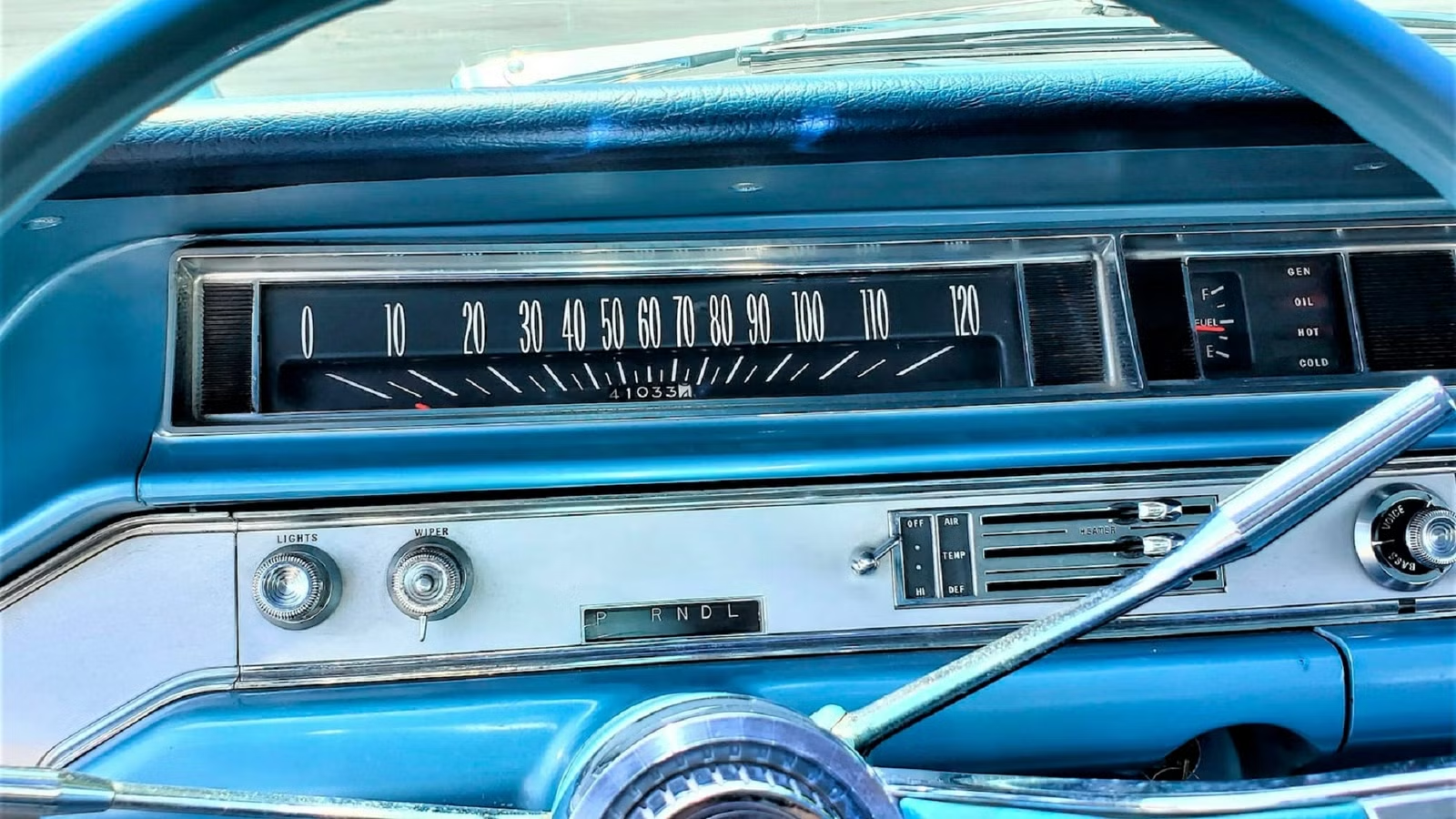
Some of the best performance cars of the 1960s told everyone exactly what they were, wearing scoops, stripes, special badges, and names made for Saturday-night grudge matches. One full-size Oldsmobile went the other way, though—it sat at the cheap end of the lineup, looked ready for grocery duty, and used an engine better known for sensible family service. But one tiny box on the order sheet gave that V8 320 horsepower, and the option cost less than a decent car radio.
Oldsmobile Built Its Cheapest Full-Size Car To Steal Buyers From Chevrolet And Ford

In that era, Oldsmobile occupied a useful spot in General Motors’ hierarchy. Chevrolet handled the mass market, while Olds offered more prestige and stronger V8 appeal without pushing buyers into Buick or Cadillac territory. Those who wanted a full-size Oldsmobile on a tighter budget still needed an entry point, and the company answered with a cheaper 88 that combined big-car dimensions with less costly hardware and a lower sticker price.
But muscle-car history favors cars that advertised their intentions. A GTO or 4-4-2 barely needed an introduction, but Oldsmobile’s cheapest full-size car had no such advantage. It existed to get families into a big Olds, not to win bench-racing arguments decades later. That made the right engine option much more interesting.
A $33.70 Engine Option Changed The Personality Without Changing The Car


The standard engine already had respectable numbers. Oldsmobile’s 1966 specifications list a high-compression 330-cid Jetfire Rocket V8 with a two-barrel carburetor, 260 gross horsepower, and 355 lb-ft of torque. Buyers could also choose a lower-compression 250-hp version for regular fuel.
Then came the important line on the dealer sheet: L74, Jetfire Rocket V8 H.C., four-barrel carburetor, $33.70. On this car, that option raised output to 320 hp and 360 lb-ft with 10.25:1 compression. The confusing part is that L74 meant something different on more expensive full-size Oldsmobiles. There, it identified a high-compression 425-cid Super Rocket, but on the budget model, L74 meant a hotter 330. That shared option code has caused plenty of incorrect 425-cid claims ever since.
The 1966 Jetstar 88 Was Oldsmobile’s Forgotten 320-HP Full-Size Sleeper

That budget Oldsmobile was the 1966 Oldsmobile Jetstar 88, and its name needs one immediate clarification – the Jetstar 88 and Jetstar I were separate cars. Oldsmobile sold the Jetstar 88 from 1964 through 1966 as its inexpensive full-size 88. The Jetstar I, in turn, was a sportier two-door performance model sold in 1964 and 1965.
The difference matters because the Jetstar I carried much stronger standard engines. The 1964 version used a 345-hp 394-cid V8, while the 1965 model received a 370-hp 425-cid Starfire engine. That 425 produced the famous 470 lb-ft figure often misapplied to the Jetstar 88. Oldsmobile dropped the Jetstar I after 1965, while the cheaper Jetstar 88 survived for one final model year.
The real 1966 Jetstar 88 still had an appealing sleeper formula. It rode a 123-inch wheelbase and shared the scale of Oldsmobile’s other full-size cars, but it used the smaller 330-cid Jetfire Rocket. Buyers could order the high-compression, four-barrel L74 version with 320 gross horsepower for only $33.70. The exterior stayed modest, the badges stayed the same, and nothing advertised the extra 60 horsepower.

Despite sharing the L74 option code with a 425-cid engine offered in the Dynamic 88 and Delta 88, the Jetstar 88 could not be ordered with that engine. Its L74 was strictly the 320-hp four-barrel 330.
Transmission choices added to the fun. Oldsmobile offered a four-speed manual, the Jetaway automatic, and the Turbo Hydra-Matic according to its dealer equipment sheet. That meant an informed buyer could combine the hotter 330 with a proper four-speed or three-speed automatic in Oldsmobile’s least glamorous full-size model. It was not a factory drag package, but it was far more serious than its trim level suggested.
Production makes the Jetstar 88 even more interesting today. Historical Oldsmobile production data lists 30,247 Jetstar 88s for 1966, compared with roughly 95,834 Dynamic 88s and 88,626 Delta 88s. Among those three mainstream 88 series, the Jetstar was comfortably the least common.
Why The Jetstar 88 Disappeared From Muscle-Car History

The first problem was the name. Jetstar 88 sounded almost identical to Jetstar I, and the latter had the performance hardware enthusiasts remembered. Over time, the Jetstar I’s 425-cid engine and 470 lb-ft torque figure began migrating into stories about the cheaper Jetstar 88. The mistake sounds believable because both cars shared Oldsmobile styling cues and existed within the same era.
The second problem was Oldsmobile’s own hierarchy. The company marketed the Jetstar 88 as its affordable full-size entry point. Dynamic 88 and Delta 88 buyers got access to the 425-cid Super Rocket family, while the Jetstar stayed with the smaller 330. It also lacked a special muscle-car package, hood treatment, or aggressive graphics. A 320-hp L74 car looked much like a basic two-barrel Jetstar sitting beside it.

Timing hurt, too. By 1966, Detroit had taught performance buyers to focus on intermediates. Pontiac had the GTO, while Oldsmobile had the 4-4-2 with a much clearer muscle-car identity. A large, lightly trimmed family Olds did not fit the emerging image of performance. The Jetstar 88 disappeared after 1966 as Oldsmobile reshuffled its full-size lineup, leaving little time to build a legend.
The Real Jetstar 88 Story Is Better Than The 425 Myth

Giving the 1966 Jetstar 88 a 425-cid V8 and 470 lb-ft makes for an eye-catching story, but Oldsmobile’s own documents tell a better one—the Jetstar 88 actually used the 330-cid Jetfire Rocket. In standard high-compression form, it made 260 hp and 355 lb-ft. Spending only $33.70 on L74 added a four-barrel carburetor and pushed output to 320 hp and 360 lb-ft.
That is what makes the car worth remembering. The Jetstar 88 was not a secretly rebadged big-block muscle car. It was a budget full-size Oldsmobile whose supposedly modest engine could become surprisingly serious with one cheap option. A buyer could add the hotter 330, choose a four-speed or Turbo Hydra-Matic, and keep the same quiet exterior.

The result was not a Jetstar I, a cut-price Starfire, or a hidden factory 425 special. It was simply… a well-ordered Jetstar 88. Six decades later, that may be the best sleeper detail of all: the interesting version was never hiding behind a famous badge. It was hiding on the order sheet.
Source: Oldsmobile, General Motors

Related posts



Latest Post


No Comments