
Mazda’s Next Rotary Will Power The Wheels Directly
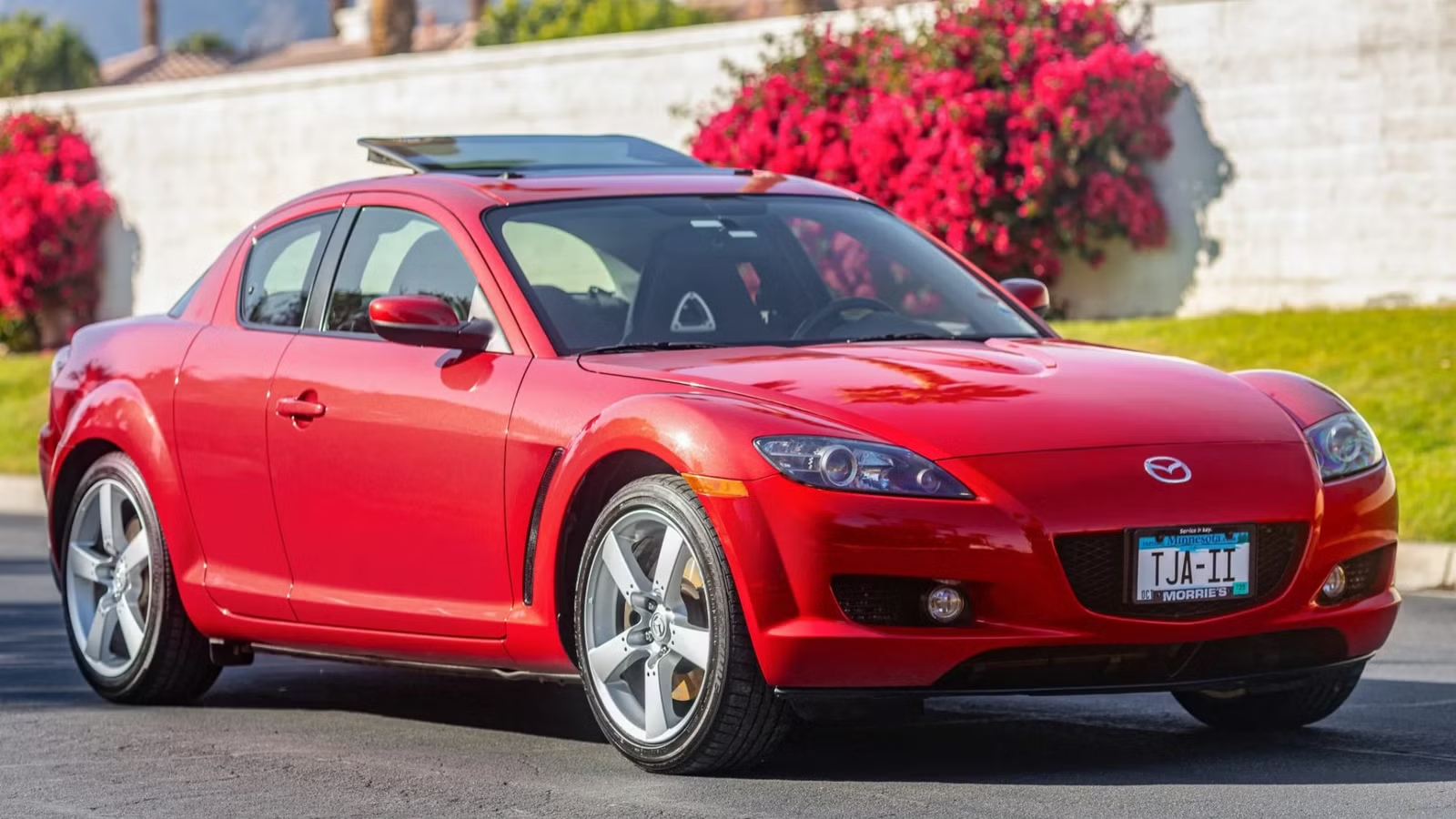
Mazda just confirmed the rotary engine is getting a job back. Moritz Oswald, product-planning manager at Mazda Motor Europe, told Car Magazine that the company’s next rotary application won’t just sit in the engine bay spinning a generator. This time, the rotary will actually help turn the wheels.
That’s a real reversal from the MX-30 R-EV, Mazda’s only rotary-powered vehicle on sale today, where the 830cc single-rotor engine never touches the drivetrain. It just tops off a battery while an electric motor does all the actual driving. Oswald hasn’t named a model or a launch window, but what he described, and what he explicitly ruled out, reads like a company building toward a real performance rotary again, not just keeping the badge alive for nostalgia’s sake.
Why Mazda Is Walking Away From The Range-Extender Playbook
The MX-30 R-EV was always a compromise. Its rotary spins a generator that feeds a 17.8-kWh battery, and the electric motor alone handles propulsion, closer to a portable power plant than the engine that powered RX-7s and RX-8s for decades. Rotary purists noticed, and they weren’t shy about saying the setup missed the point entirely.

Oswald seems to agree. He described a system where the car pulls away in EV mode and then lets the rotary “heighten up” and contribute to propulsion once it’s needed, a fundamentally different job than spinning quietly at a fixed rpm to keep a battery charged. That means Mazda’s engineers are now working through the packaging, cooling, and drivetrain integration required to connect a rotary to the axles again, not just keep it idling as a backup generator.
The Rotary Was Never About The Spec Sheet

Oswald was blunt about what actually matters here. “The reason why people love the rotary is because of the revving, because of the sound, because of the vibration,” he said, treating the engine as an experience rather than a numbers game. Coming from a product-planning manager, that’s a notable thing to prioritize over raw efficiency, especially for an engine with a well-earned reputation for drinking fuel and oil.
He also took a clear position on gearboxes, ruling out a CVT entirely. “CVTs come with quite some disadvantages in terms of gear shifts and driver engagement. The real connection is lost,” Oswald said. For a company trying to keep a high-revving engine legal under current emissions rules, walking away from the transmission layout that maximizes fuel economy is a deliberate trade, feel over numbers, in favor of keeping the rotary sports car dream intact.
The Engineering Behind The Talk

None of this is just a product manager riffing to a magazine. A 2023 patent filing covers a rotary-specific exhaust gas recirculation system built for a twin-rotor, turbocharged architecture. Older rotary designs burned extra fuel just to cool the rotor housing and control combustion temperatures, which is exactly the kind of inefficiency that made them miserable to certify under tightening emissions standards. The patented system splits exhaust flow between side-port and peripheral-port outlets, sending hot gases to the turbo for power while routing cooler gases back through the intake, addressing the rotary’s historical weak point directly rather than papering over it.
Mazda has kept the Wankel format alive since the 1967 Cosmo Sport through the last RX-8 in 2012, and it remains the only manufacturer still committed to the layout. Oswald frames the current push as coming from inside the company, not from marketing. “At Mazda, and that is why I really like working at Mazda, we have a lot of enthusiasts,” he said, which lines up with long-standing reports that Mazda’s own engineers keep pushing the rotary program forward internally rather than letting it die quietly.
No model name is attached to any of this yet, and Oswald stopped short of promising a timeline. But between the patent work, the direct quotes ruling out half-measures, and a company that’s refused to let the rotary die since 1967, this is the clearest signal in over a decade that a rotary built to actually drive, not just hum along charging a battery, is coming. Rotary fans have waited since 2012 for exactly this kind of commitment. It finally sounds real.

Related posts

Latest Post


No Comments