
Mazda’s Rotary Comeback Signals The MX-5’s Next Engine Could Be Something Nobody Expected
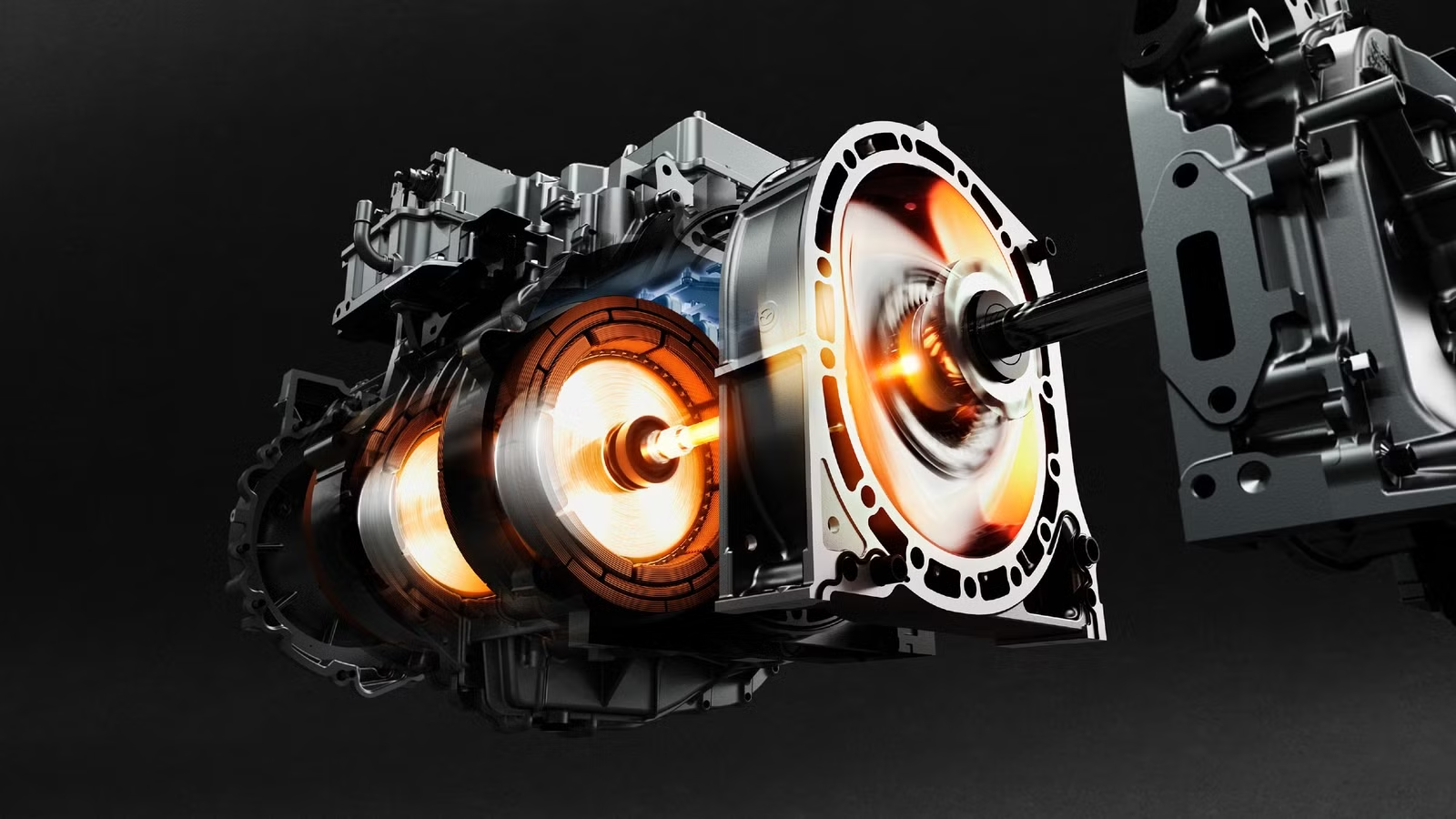
Mazda just gave rotary fans a reason to pay attention again. Moritz Oswald, product-planning manager at Mazda Motor Europe, told Car Magazine that the company’s next rotary application won’t just sit under the hood spinning a generator like it does in the MX-30 R-EV. This time, the rotary itself will help turn the wheels.

Oswald didn’t name a car or a launch date. But the way he described the engineering, and what he ruled out along the way, points toward something that matters a lot to anyone hoping the MX-5 keeps its analog soul as emissions rules tighten. Mazda is thinking hybrid, not electric-only, and it’s already decided against one gearbox layout that would have compromised the driving feel entirely.
Why The MX-30 R-EV Setup Isn’t The End Goal
The MX-30 R-EV uses an 830cc single-rotor rotary purely as a range extender. It spins a generator, tops off a 17.8-kWh battery, and never touches the wheels directly. The electric motor does all the actual driving. It’s a clever way to keep the rotary alive on paper, but it strips away the part that made the engine famous in the first place.

Oswald’s comments mark a break from that approach. He described a system where the car pulls away in EV mode, then lets the rotary “heighten up” and contribute to propulsion once it’s needed. That’s a fundamentally different job for the engine than generating electricity from a fixed spot in the engine bay. It means Mazda’s engineers are working through the packaging, cooling, and drivetrain challenges of an engine that actually spins the axles again, not just one that hums along at a steady rpm to keep a battery topped off.
The Case For Rotary Character Over Rotary Efficiency

Oswald was blunt about what the rotary is actually for. “The reason why people love the rotary is because of the revving, because of the sound, because of the vibration,” he said, treating the engine as an experience rather than a spec-sheet exercise. That’s notable coming from a product-planning manager, since efficiency and emissions compliance are usually what dictate an automaker’s next move, not vibration character.
He also ruled out CVTs entirely for whatever comes next, saying they “come with quite some disadvantages in terms of gear shifts and driver engagement” and that “the real connection is lost.” For a company weighing how to keep a high-revving engine legal under modern emissions standards, walking away from the transmission that maximizes fuel efficiency is a deliberate trade-off in favor of feel over numbers.
The Engineering Behind The Talk

None of this is just a product manager riffing to a magazine. A 2023 patent filing covers a rotary-specific exhaust gas recirculation system built for a twin-rotor, turbocharged architecture. Older rotary engines burned extra fuel just to cool the rotor housing and control combustion temperatures, which is exactly the kind of inefficiency that made them hard to certify under newer emissions rules. The patented EGR system splits exhaust flow between side-port and peripheral-port outlets, routing hot gases to the turbo for power and cooler gases back through the intake, addressing that weakness directly.
Mazda has kept the rotary format alive since the 1967 Cosmo Sport through the last RX-8 in 2012, and it remains the only manufacturer still committed to the layout. Oswald frames the current push as coming from inside the company rather than from marketing, saying Mazda has “a lot of enthusiasts” pushing the engineering forward internally.
What This Could Mean For The MX-5

No model name has been confirmed for this direct-drive rotary hybrid, and Oswald stopped short of tying it to any specific car. But the pieces line up in a way that’s hard to ignore for anyone watching the MX-5’s next generation. A lightweight rotary that starts in EV mode and adds mechanical punch mid-drive, paired with a transmission chosen specifically to preserve driver engagement, is close to the ideal answer for a sports car trying to stay analog while meeting emissions targets that a naturally aspirated four-cylinder increasingly struggles with.
Mazda has already shown this thinking in concept form with the Iconic SP, a rotary-hybrid sports car concept built around similar ideas. Whether that architecture eventually lands in a production MX-5 is still unconfirmed. But between the patent work, Oswald’s comments, and Mazda’s public refusal to give up on internal combustion for its sports cars, the direction is clearer than it’s been in over a decade.

Related posts




Latest Post



No Comments