
The British Motorcycle That Feels Built for Real Roads
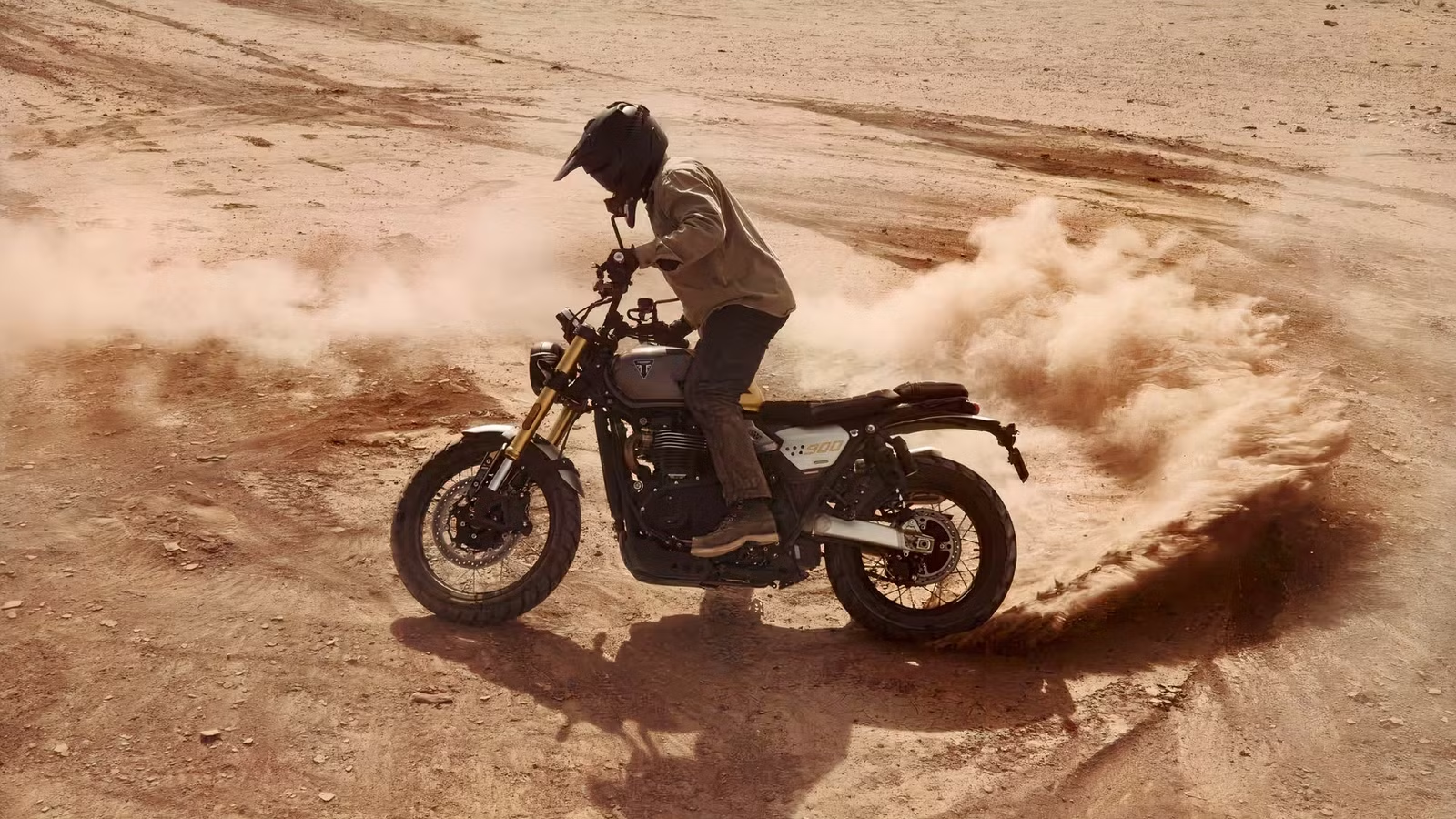
The best motorcycles aren’t always the fastest, lightest, or the most aggressive performance-focused machines. They are the ones that make sense when the road turns unpredictable, traffic becomes frustrating, and a weekend ride stretches far beyond the city limits. A motorcycle built for real roads needs versatility. It should deliver effortless performance, soak up road imperfections, offer comfortable ergonomics for hours in the saddle, and use electronics that inspire confidence without overshadowing the experience.

That balance is difficult to achieve. The most compelling machines occupy the middle ground, and one British motorcycle takes this approach particularly seriously. It combines classic character with modern engineering to create a machine that feels ready for almost anything the road can throw at it.
Why Real-World Riding Rewards Versatility Over Extremes
A motorcycle designed for real-world riding needs to handle various situations riders encounter on a daily basis. Specialization can be impressive, but it often comes with some compromises. A sport bike may deliver thrilling performance yet feel cumbersome in traffic. A large ADV can excel on long-distance journeys and in off-road conditions but feel intimidating at low speeds. A minimalist retro roadster may turn heads but lack the hardware needed for rough terrain.


That makes versatility valuable, creating a more rewarding ownership experience by allowing one motorcycle to take on multiple roles. It can handle the daily commute, stretch its legs on a weekend trip, and tackle an unpaved shortcut without forcing the rider to change motorcycles or plan every route around the machine’s limitations.
A Motorcycle Should Feel At Home In The City And Beyond

Most riders spend more time on ordinary roads than racetracks or remote trails, making real-world usability a motorcycle’s true measure. This is where the modern scrambler makes considerable sense. It combines the approachable ergonomics of a standard motorcycle with a larger front wheel, increased suspension travel, wide handlebars, and capable tires. The appeal isn’t about turning every rider into an off-road adventurer. It’s about having enough versatility to take the scenic route or explore rough patches without feeling out of place. One British motorcycle has embraced this philosophy for over two decades.
The Triumph Scrambler 900 Brings British Versatility To Everyday Riding
Starting MSRP: $12,995

The British motorcycle in context is the Triumph Scrambler 900. Triumph’s modern scrambler lineage can be traced to the original factory competition scramblers and desert racers of the 1960s. The contemporary Scrambler first arrived in 2006 as a Bonneville-based motorcycle inspired by machines such as the TR6 Trophy. This current-generation model evolved from the Street Scrambler introduced in 2017 to the Scrambler 900 brand name in 2023, retaining the high-mounted exhausts, large front wheel, and Bonneville-derived character that define the bike.

For 2026, Triumph has continued to refine the recipe by sharpening the motorcycle’s styling and upgrading several important mechanical components. The result is still unmistakably a modern classic, but it now has a more purposeful chassis and enhanced visual contemporary look, with a new fuel tank and reworked bodywork. The 2026 Triumph Scrambler 900 retails at an MSRP of $12,995, before destination charge and taxes.
A 900cc Parallel Twin Focused On Low-End Performance

Diving into the details, at the heart of the Scrambler 900 is Triumph’s proven 900cc liquid-cooled, 8-valve parallel-twin engine, featuring a 270-degree firing order. It produces 64 horsepower at 7,250 RPM and 59 pound-feet of torque at just 3,250 RPM. That low torque peak is central to the motorcycle’s character, giving it a strong, accessible pull where riders spend most of their time.
With peak torque arriving so early in the rev range, the Scrambler 900 accelerates cleanly from low speeds without demanding constant gear changes or excessive clutch work. Paired with a slick five-speed transmission and light torque-assist clutch, the powertrain feels effortless whether overtaking on the highway or navigating low-speed fire roads.

The 270-degree crankshaft gives the twin a distinctive pulse compared with a conventional 360-degree parallel twin while contributing to its unmistakable exhaust note. The two-into-two system and high-level twin silencers produce the deep, throaty soundtrack that complements the Scrambler’s character.
The Scrambler’s Chassis And Hardware Bring Genuine All-Road Ability

Supporting its torquey engine is a purpose-built chassis that balances road agility with light off-road stability. The Scrambler 900 uses a tubular steel frame, while its suspension receives one of the most significant updates for 2026. Up front, the new 43mm Showa upside-down forks provide 4.7 inches of wheel travel, while twin Showa piggyback shocks deliver the same travel at the rear and add preload adjustment.

The Scrambler’s geometry is designed to inspire confidence, combining a lightweight aluminum swingarm with classic wire-spoked wheels – a 19-inch front and 17-inch rear – wrapped in dual-purpose Metzeler Tourance tires. Its 30.8-inch seat height remains approachable for a motorcycle with genuine all-road ambitions, while the slim stand-over area, tapered fuel tank, and upright riding position provide a commanding view and natural connection to the machine.
Modern Electronics Add Confidence Without Overcomplicating It

Despite its clean, minimalist retro styling, the Scrambler 900 packs a comprehensive suite of modern rider aids. Its ride-by-wire throttle system enables three riding modes – Road, Rain, and Off-Road – that tailor throttle response and traction control to changing conditions. The Off-Road mode also disables rear ABS, giving riders greater freedom when the road ends.

Braking hardware is upgraded for 2026 and works alongside an advanced IMU to enable lean-sensitive Optimized Cornering ABS and Cornering Traction Control. Up front, a larger 320mm floating disc pairs with a radial-mounted four-piston caliper, while the rear uses a 255mm disc with a two-piston caliper. The round instrument cluster preserves the classic aesthetic while adding an LCD, color TFT section, and smartphone connectivity through the MyTriumph app.
The Triumph Scrambler 900 Might Be The Ultimate British Motorcycle For Real Roads
The Triumph Scrambler 900 occupies an appealing middle ground. It offers more all-road hardware and suspension travel than a typical retro roadster while remaining more approachable and less imposing than a large ADV. Its 900cc twin provides ample performance for highway travel while retaining the low-revving character that makes everyday riding so engaging. That balance is ultimately what makes the Triumph Scrambler 900 feel so well suited to real-world conditions.

Its competitors take slightly different approaches to the formula. The Ducati Scrambler Icon leans toward a sportier, more road-focused character, while the Moto Guzzi V7 combines distinctive transverse V-twin character with shaft-drive convenience but remains firmly road-oriented. The Royal Enfield Bear 650 embraces the scrambler formula at a considerably lower price point, making it an alternative rather than a direct rival. The Triumph’s appeal lies in bringing these qualities together without compromising the versatility that defines it.
Source: Triumph Motorcycles

Related posts


Latest Post


No Comments