
BMW Built A Diesel With More Torque Than The M5. America Never Got It
Article Summary
- BMW’s 2012 N57S used three turbos to make 740 Nm (546 lb-ft) from a 3.0-liter inline-six, more torque than the V8-powered F10 M5.
- It powered the M550d, 750d, and X5 and X6 M50d, but the US only got the milder 265-hp X5 xDrive35d.
- With plug-in hybrids now outselling diesels in the EU, the newest X5’s only diesel makes 70 Nm less than the 2012 engine did.
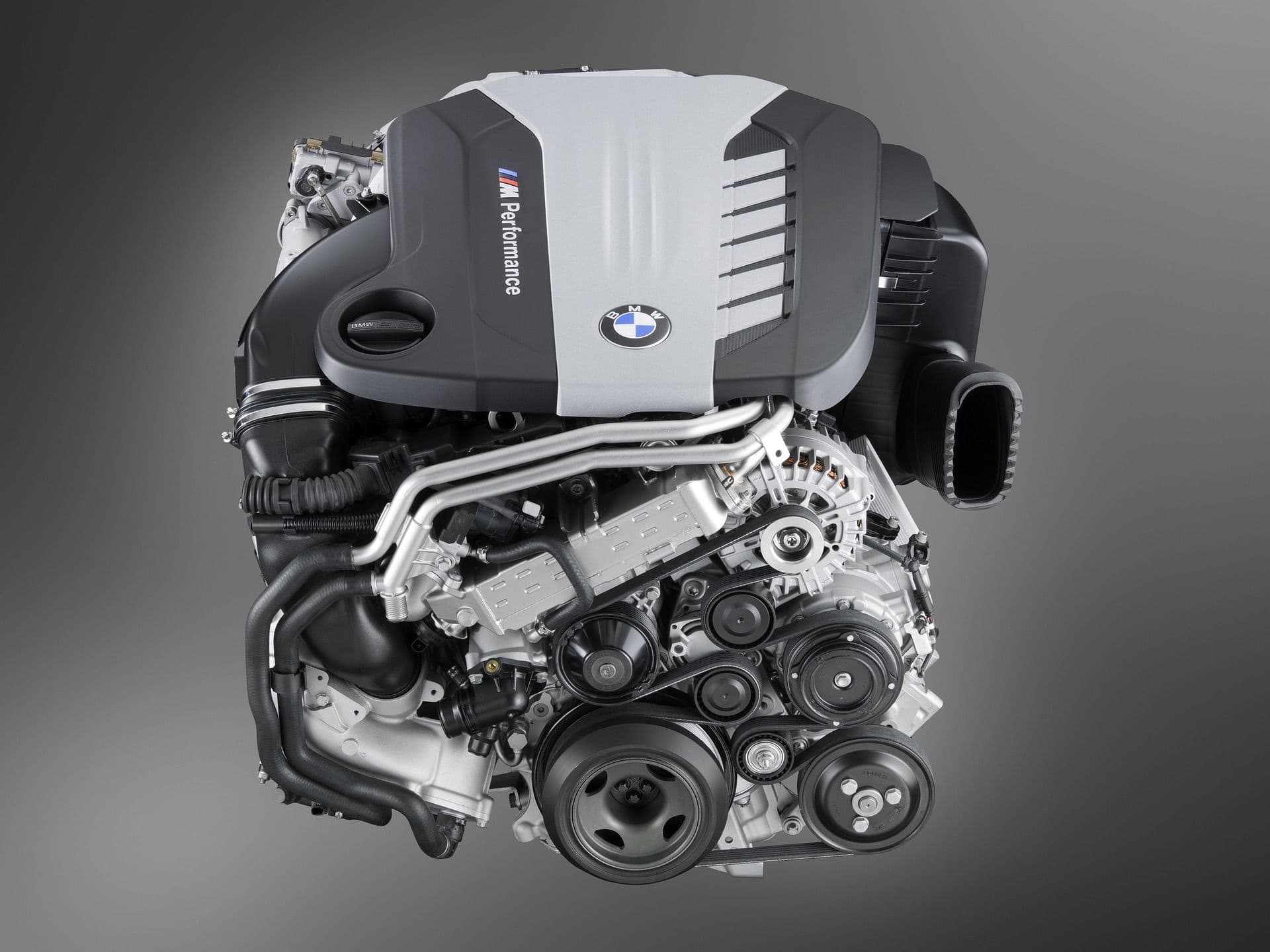
In 2012, BMW sold a 5 Series with more torque than the M5. It wasn’t a V8, and it didn’t come to America. The M550d xDrive used a 3.0-liter inline-six diesel with three turbochargers, and it made 740 Nm (546 lb-ft). The F10 M5 of the same era, with its twin-turbo V8, made 500 lb-ft. American buyers did get a BMW diesel back then. The X5 xDrive35d was a solid, frugal SUV with a 3.0-liter twin-turbo six making 265 hp and 425 lb-ft. Europe got the same displacement with a third turbo and roughly 120 lb-ft more torque, in the M550d, the 750d, and the X5 and X6 M50d. Most people on this side of the Atlantic never saw one.
We’re bringing it up now because diesel is fading even in the market that built it. In the first half of 2026, plug-in hybrids outsold diesels in the European Union, 9.8 percent to 7.5 percent. The new G65 X5 offers exactly one diesel, a mild-hybrid 40d xDrive with 670 Nm (494 lb-ft), which is 70 Nm less than the tri-turbo made 14 years ago. We drove the N57S in three different BMWs, and we doubt anyone will build an engine like it again.
What The N57S Was

The N57S arrived in early 2012 as the launch engine for BMW M Performance Automobiles, the line that sits between regular models and full M cars. BMW M GmbH tuned the chassis, xDrive, and steering of the cars around it, and the engine gave the new sub-brand its headline figure.
It started life as the N57 3.0-liter inline-six diesel, then got a new aluminum crankcase, piezo common-rail injection running at up to 2,200 bar, and a third turbocharger. Output was 280 kW (381 PS, or 375 hp), with 740 Nm (546 lb-ft) available from 2,000 to 3,000 rpm. That works out to 93.6 kW per liter, a figure BMW pitched as a new benchmark for diesel engines. At launch, it was the most powerful six-cylinder diesel on sale.

For context, the 4.4-liter twin-turbo V8 in the launch-era F10 550i made 600 Nm. The diesel six out-torqued BMW’s own V8 by a wide margin, and it did so from 2,000 rpm.
How Three Turbos Work Together
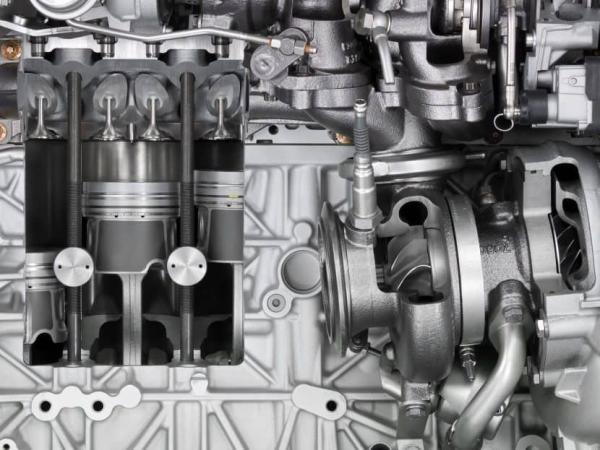
BorgWarner supplied the hardware: two small BV45 high-pressure turbochargers with variable turbine geometry, and one larger, water-cooled B2 low-pressure turbo. They didn’t all spool at once. Just above idle, the first small turbo worked in series with the big one, so the low inertia of the small unit gave quick response while the large one built charge pressure. Above roughly 2,700 rpm, the second small turbo joined in. Peak boost was 3.5 bar.
The point of all that plumbing was to eliminate the tradeoff that normally comes with big diesel power: you either get a small turbo that runs out of breath early or a big one that leaves a hole down low. BorgWarner claimed the three-stage setup gave nearly 25 percent more power and 8 percent better fuel economy than BMW’s two-stage twin-turbo system, while meeting Euro 6.
It came at a cost. The N57S weighed 24 kg more than the twin-turbo engine it was based on, and it needed its own intercooling and flap control across three stages. That complexity is exactly why an engine like this makes little sense in 2026, when an electric motor delivers the same low-end response with no plumbing at all.
Where You Could Get One
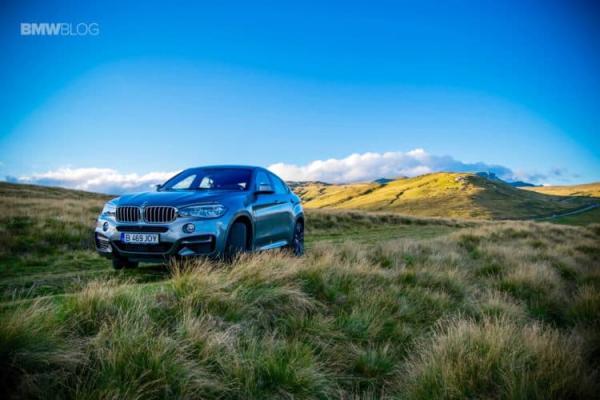
The tri-turbo was never offered in the US. In Europe and other markets, it powered:
- F10 BMW M550d xDrive sedan and F11 M550d xDrive Touring
- E70 BMW X5 M50d and E71 X6 M50d, followed by the F15 X5 M50d and F16 X6 M50d
- F01 BMW 750d xDrive and F02 750Ld xDrive
The M550d xDrive sedan did 0-100 km/h (62 mph) in 4.7 seconds, and the Touring took 4.9 seconds. Both were limited to 250 km/h (155 mph) and rated at 6.3 and 6.4 l/100 km in the EU cycle, respectively. Every one of these cars came with xDrive and an eight-speed automatic, since no manual gearbox BMW had was going to survive that torque.
What It Was Like To Drive
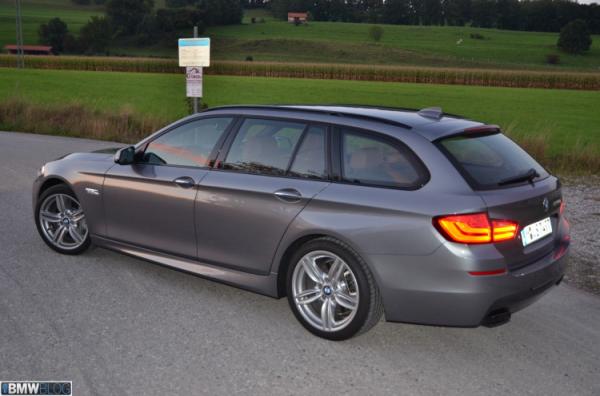
We first drove the tri-turbo in an M550d xDrive Touring in 2012, and it got to us quickly. Throttle response was instant, and the low-rev torque pushed us back into the seat. On back roads, the wagon cornered with almost no body roll, and on the Autobahn it still pulled effortlessly above 120 mph. Driven hard at high speeds over a few hundred miles, it averaged around 25 mpg. “The M550d Touring has won my heart, not only with its power, but also with its elegant and aggressive design, and versatility,” we wrote at the time. A fast diesel wagon with M-tuned xDrive is about as close to a perfect European enthusiast car as BMW has built.
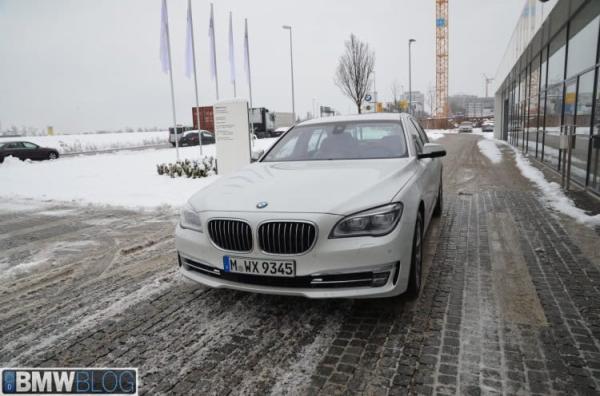
The 750d xDrive gave us a tougher test. We flew to Munich in early 2013 just as one of the biggest snowstorms of that German winter arrived, and drove a 740 Nm limousine through 12 to 15 inches of snow. It sounds like a bad idea, but on winter tires and with a 40:60 rear-biased xDrive split, the big 7 Series found traction without drama. Pushed hard into sharp corners, it understeered, but it never felt unstable.
Once the snow melted, we took it onto back roads, staying below 200 km/h because of the winter tire rating. With that much torque, the 750d pinned us into the seat while the eight-speed moved through the gears smoothly. It hit 100 km/h in a claimed 4.9 seconds, and we still averaged 36 mpg combined. It started at 88,500 euros and never came to the US.
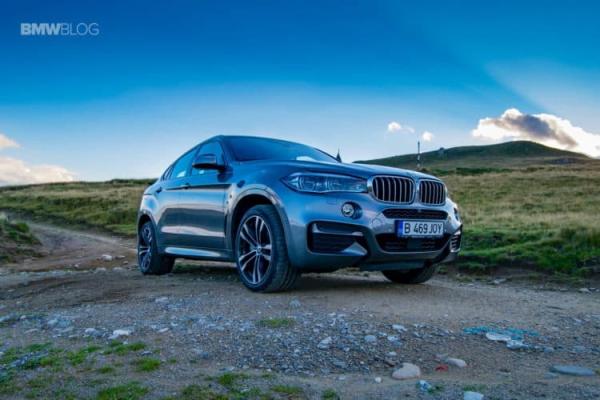
By 2016, when we drove the X6 M50d, the tri-turbo had already been on sale for four years, and it still surprised him. He had driven one several times before and said the spec sheet didn’t prepare him for how fast, smooth, and brutal the engine was. With peak torque at 2,000 rpm, you’d expect it to run out of breath early, like most diesels. It didn’t. It pulled like a turbocharged gasoline engine across the rev range and got to 250 km/h (155 mph) without strain.
BMW quoted 5.2 seconds to 100 km/h, and Gabriel thought that was conservative for a 2.2-ton SUV. It was also frugal for its size, averaging about 11 l/100 km (21 mpg) around town and 7 l/100 km (34 mpg) outside the city, which meant roughly 700 km (435 miles) on a tank. Most of the X6s he saw on European roads then were M50ds, even at over 90,000 euros.
Why It Won’t Happen Again
BMW did push the idea one step further. In 2016, the 750d got the quad-turbo B57S with 760 Nm (561 lb-ft), but it was gone by 2020, and the diesels that replaced it went back to two turbos and mild-hybrid assistance.
The tri-turbo made sense in a specific time and place: a Europe where diesel was the default for anyone doing long miles, where taxes in many countries favored a 3.0-liter engine over a 4.4-liter V8, and where a buyer spending six figures on an X6 still cared about range. Plug-in hybrids now cover most of that ground on paper, with low official consumption, instant electric torque, and none of the regulatory pressure hanging over diesel.
That doesn’t make the N57S any less impressive. It was heavy, complicated, and never sold in America, and it still gave us one of our favorite memories from covering this brand: a 7 Series pulling cleanly out of a snowy Munich corner on 740 Nm. The newest X5’s only diesel makes 70 Nm less than that 2012 engine did. BMW could build a stronger diesel today, but it has no reason to, and that’s why the best diesel it ever sold will stay a car most Americans only read about.

Related posts


Latest Post



No Comments