
10 Used SUVs With The Most Reliable Engines
Buying an SUV with a reputation for reliability does not guarantee you are getting its best engine. Manufacturers routinely change powertrains between generations, and one questionable redesign can turn a dependable nameplate into a much riskier purchase. Turbochargers, cylinder-deactivation systems, direct injection, and increasingly complicated transmissions can improve performance and fuel economy, but they also introduce additional failure points. The SUVs on this list demonstrate that proven engineering still matters. None is completely problem-free, but each recommended engine has an established service history, relatively few catastrophic weaknesses, and enough high-mileage examples to inspire confidence.

This ranking considers an engine’s production history, internal durability, mechanical complexity, known failure patterns, parts availability, and demonstrated ability to exceed 200,000 miles.
10
2014–2016 Mazda CX-5
2.5-Liter N/A Skyactiv-G | 184 Horsepower
The 2014–2016 CX-5 is available with Mazda’s naturally aspirated 2.5-liter Skyactiv-G four-cylinder, producing 184 horsepower and 185 pound-feet of torque. It works with a conventional six-speed automatic rather than a CVT. This engine uses direct injection and a high compression ratio, but it does not depend on a turbocharger to produce everyday performance. The result is a compact SUV that delivers responsive handling and respectable efficiency without an especially complicated powertrain.
Earlier Engines Avoid Some Later Cylinder-Deactivation Concerns

Mazda added cylinder deactivation to certain 2.5-liter engines after this recommended period. Some later CX-5s have experienced cylinder-head cracking and coolant leakage, making the earlier non-turbo, non-cylinder-deactivation engine particularly attractive. Carbon buildup is possible with direct injection, and buyers should check for oil leaks and cooling system problems. However, major internal failures are relatively uncommon when the engine receives consistent oil changes.

9
2017–2019 Toyota Highlander Hybrid
3.5-Liter Hybrid V6 | 306 Horsepower (Combined)

Toyota paired its 3.5-liter 2GR-FXS V6 with electric motors and an electronically controlled continuously variable transmission for the Highlander Hybrid of this era. Total output is 306 horsepower, while the rear electric motor provides AWD without a conventional driveshaft. Toyota’s hybrid transmission uses a planetary gearset rather than the belts and pulleys found in a conventional CVT. It is an extensively proven system with fewer friction components than its complexity might suggest.
The Battery Is A Greater Concern Than The Gasoline Engine

The 2GR-FXS V6 in the 2017-2019 Highlander Hybrid has relatively few major internal weaknesses. Water-pump leakage and timing-cover seepage are possible, but catastrophic engine problems are uncommon. A pre-purchase inspection should include a hybrid-battery diagnostic test. Battery age, cooling-fan cleanliness, and voltage differences between battery blocks matter more than mileage alone. A replacement battery is expensive, but it does not erase the durability of the gasoline engine or hybrid transmission.
8
2000–2006 Chevrolet Tahoe
5.3-Liter Vortec V8 | 295 Horsepower

Most Tahoes from this generation use GM’s 5.3-liter LM7 or flex-fuel L59 V8. Depending on the model year, output ranges from approximately 285 to 295 horsepower, with up to 335 pound-feet of torque. These Gen III small-block engines have simple pushrod construction, excellent parts availability, and strong bottom ends. They also predate the Active Fuel Management system, which caused lifter and camshaft problems in some later GM V8s.
The Engine Can Outlast The Rest Of The SUV

Water pumps, intake manifold gaskets, knock sensors, and broken exhaust manifold bolts are known trouble spots. These problems can be inconvenient, but they rarely require complete engine replacement. Rust, electrical problems, brake-line corrosion, and a neglected four-speed automatic may pose greater risks than the V8. A clean 2000-2006 Tahoe can still make a dependable and affordable full-size SUV.
7
2011–2015 Nissan Xterra
4.0-Liter VQ40DE V6 | 261 Horsepower

The Xterra’s naturally aspirated 4.0-liter V6 generates 261 horsepower and 281 pound-feet of torque. It uses a timing chain and is available with either a five-speed automatic or a six-speed manual transmission. The VQ40DE is not especially fuel-efficient, but its straightforward construction and understressed output suit an SUV designed for towing and off-road use.
Later Xterras Avoid The Most Serious Early Problems

Earlier Xterras can develop timing-chain-guide noise. Some 2005–2010 automatic models also experienced radiator failures that allowed coolant to mix with transmission fluid, potentially destroying the transmission. Targeting a 2011–2015 Xterras reduces both concerns. Buyers should still inspect the radiator, listen for timing-chain noise, check for frame rust, and look for evidence of hard off-road use.
6
2012–2014 Honda CR-V
2.4-Liter K24 Four-Cylinder | 185 Horsepower

Honda’s 2.4-liter K24Z7 engine produces 185 horsepower and 163 pound-feet of torque. It comes paired with a conventional five-speed automatic, giving these models a particularly simple drivetrain. The K24 family has an extensive history across Honda and Acura products. It also avoids the fuel-dilution concerns associated with the smaller turbocharged engine offered in later CR-Vs.
A Cold-Start Rattle Deserves Attention

A failing VTC actuator can create a brief grinding or rattling noise during startup. Valve-clearance adjustments can also be overlooked because they are not required as frequently as oil changes. Neither concern outweighs the K24’s strong overall record. A 2012-2014 CR-V with documented fluid changes and no persistent startup noise can remain dependable well beyond 150,000 miles.
5
2013–2015 Lexus RX 350
3.5-Liter 2GR-FE V6 | 270 Horsepower

The RX 350 uses a naturally aspirated 3.5-liter V6 producing 270 horsepower and 248 pound-feet of torque. It comes with a six-speed automatic and either FWD or AWD. This version of the 2GR-FE does without turbocharging, cylinder deactivation, or a complicated hybrid system. Its smoothness and conservative output make it particularly well-suited to the RX’s relaxed character.
External Leaks Are More Common Than Internal Failures

Water pumps and timing-cover seals can eventually leak, and repairing a substantial timing-cover leak may require considerable labor. Buyers should also look for neglected coolant and transmission-fluid service. The core engine is exceptionally durable. A properly maintained 2013-2015 RX 350 can be a smarter purchase than many lower-mileage European luxury SUVs with more complicated powertrains.
4
2014–2016 Toyota Highlander
3.5-Liter V6 | 270 Horsepower

The 2014–2016 Highlander uses Toyota’s 3.5-liter 2GR-FE V6, producing 270 horsepower and 248 pound-feet of torque. Toyota paired it with a conventional six-speed automatic. These years precede the Highlander’s move to an updated direct-injected V6 and eight-speed transmission. You sacrifice some performance and efficiency, but you gain a drivetrain with a longer service history and fewer variables left unresolved.
Oil And Coolant Leaks Require Inspection

Timing-cover seepage and water-pump leakage are the principal engine concerns. Both can be expensive because accessibility issues, rather than parts costs, drive up the repair bill. Those weaknesses are generally external and predictable. They are less alarming than widespread bearing, piston, or timing-chain failures and can often be identified during a pre-purchase inspection.
3
2010–2023 Lexus GX 460
4.6-Liter 1UR-FE V8 | 301 Horsepower

The GX 460’s naturally aspirated 4.6-liter V8 produces 301 horsepower and 329 pound-feet of torque. A six-speed automatic and full-time four-wheel-drive system come standard. Port and direct fuel injection help prevent the intake deposits associated with direct-injection-only engines. The V8 is understressed, smooth, and capable of accumulating substantial mileage.
Coolant-Valley Leaks Can Be Labor-Intensive

Coolant can leak beneath the intake manifold and collect in the engine valley before becoming obvious. Buyers should check for declining coolant levels and dried pink residue around the rear of the engine. Cam-cover seepage and secondary-air-injection problems are also possible. Even with those weaknesses, the 1UR-FE remains one of the most dependable modern luxury SUV engines.
2
2010–2024 Toyota 4Runner
4.0-Liter 1GR-FE V6 | 270 Horsepower

Toyota kept the 4Runner’s naturally aspirated 4.0-liter V6 and five-speed automatic largely unchanged for 15 model years. The engine produces 270 horsepower and 278 pound-feet of torque. The drivetrain feels dated and consumes plenty of fuel, but that lack of evolution became one of its greatest strengths. Parts, maintenance procedures, and common problems are thoroughly understood.
Rust May Become A Greater Threat Than The Engine

Later versions of the 1GR-FE have a better head gasket record than some earlier Toyota applications. Water pumps, ignition coils, and minor oil leaks can still require attention as mileage accumulates. The frame deserves an equally careful inspection, especially in salt-belt states. On a rust-free, properly maintained 2010-2024 4Runner, the engine may be one of the last components you need to worry about.
1
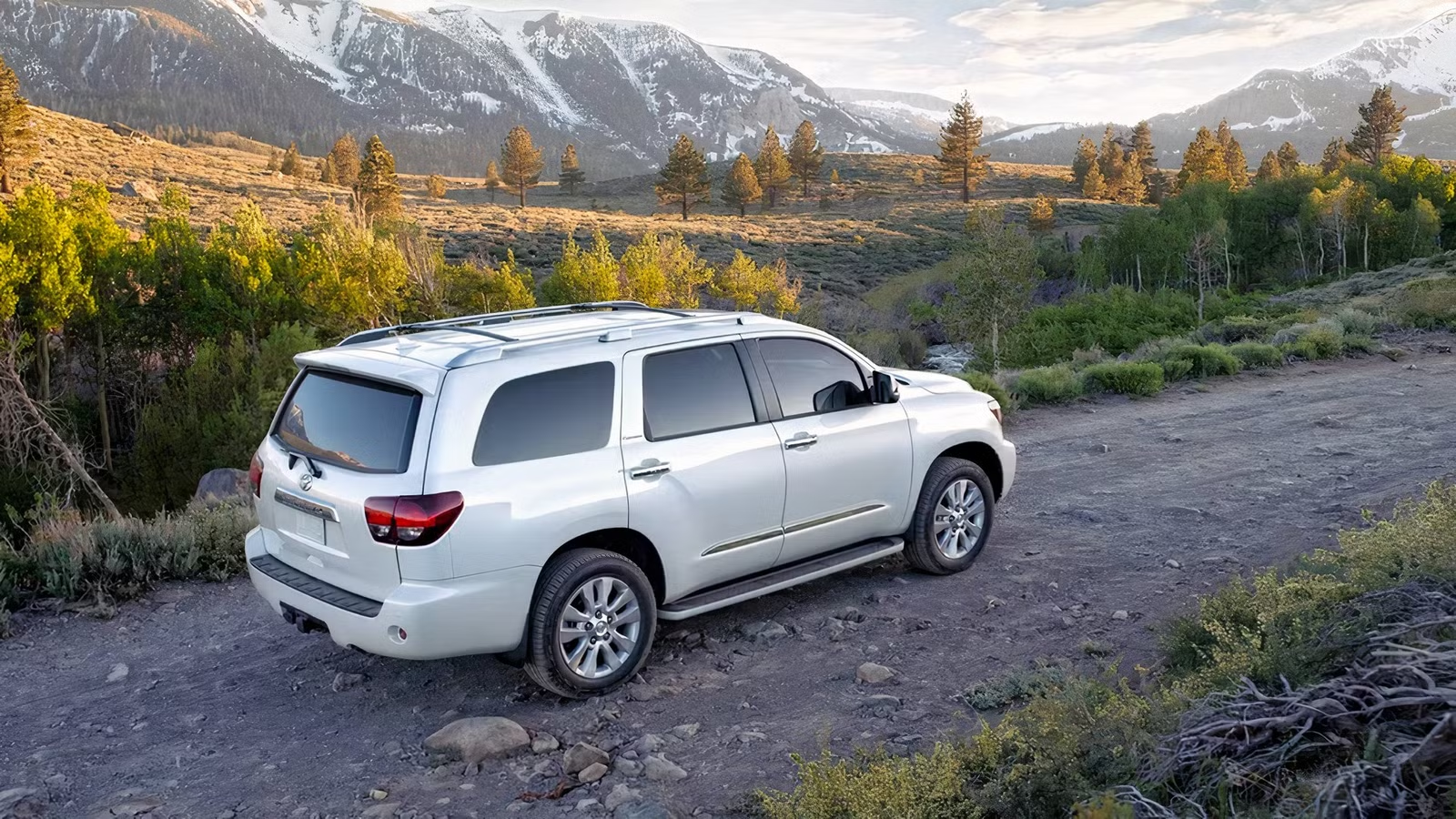
2008–2022 Toyota Sequoia
5.7-Liter 3UR-FE V8 | 381 Horsepower

Toyota’s naturally aspirated 5.7-liter V8 generates 381 horsepower and 401 pound-feet of torque. It pairs with a six-speed automatic and avoids turbocharging, cylinder deactivation, and stop-start hardware. That simplicity comes with poor fuel economy, but it also contributes to exceptional longevity. Current iSeeCars research gives the Sequoia a 42.3-percent projected chance of reaching 250,000 miles, compared with 5.4 percent for the average vehicle.
Cam-Tower Leaks Are Its Most Important Weakness

Oil can seep from the cam-tower area, and repairing a major leak requires extensive labor. Water pumps and components beneath the intake manifold should also be inspected. Those repairs can be expensive, but they do not indicate a fundamentally fragile engine. With regular oil changes and proper cooling-system maintenance, the 3UR-FE gives the 2008-2022 Sequoia the strongest combination of mechanical durability and demonstrated longevity on this list.
Sources: Automakers’ Websites, iSeeCars, Edmunds, NHTSA

Related posts

Latest Post


No Comments