
The Driver’s Car That Doesn’t Punish You With Repair Bills
There’s a quiet assumption in car shopping that if you want something fun to drive, a car with a manual gearbox, sharp handling, an engine that wants to be revved out, you pay for it later, every time a check-engine light comes on. European performance cars run up labor bills.

Turbocharged hot hatches throw error codes only a specialist can chase down. The trade-off: drive something exciting, but budget for costs only the privileged can afford. Except one sports car has spent three decades proving that’s not a law of physics. It’s been called “the driver’s car” by nearly every outlet that’s put it on a twisty road — and it backs that up with a repair bill that barely registers.
Why “Fun to Drive” Usually Means “Expensive to Own”
Performance and reliability tend to trade off in predictable ways. German performance cars are the clearest example: a repair that costs $200 on a mainstream Japanese sedan can run $400 on a comparable BMW, Volkswagen, or Audi, simply because German parts and labor rates run higher across the board. Pickup trucks and large domestic vehicles follow their own version of the pattern — high repair costs combined with a greater share of those repairs qualifying as “severe,” largely a function of the workload these vehicles are put through.

Even within mainstream brands, the more complex the drivetrain — more turbos, more sensors, more electronically managed systems — the more expensive it tends to be to keep running.
The underlying logic is mechanical, not just financial. Simpler architecture means fewer failure points and fewer specialized tools needed to fix what does fail. Naturally aspirated engines are generally cheaper to maintain than turbocharged ones. That’s exactly why most “driver’s cars” — the manual-transmission, rear-wheel-drive, sporty-handling segment — tend to land on the pricier side of ownership. It’s not that engaging cars are inherently fragile. It’s the engineering choices that make a car feel alive, often come bundled with the engineering choices that make it expensive to fix. Almost always — except for one glaring exception.
The Japanese Sports Car The Collector Market Forgot To Inflate
Thought you’d missed the boat when it comes to JDM classics? Think again.
The Mazda MX-5 Miata — Always The Answer

The Mazda MX-5 Miata has worn the “driver’s car” label since 1989, and the repair-cost numbers behind it are the real story. The Miata has been the benchmark for steering feel and driver engagement since its first generation rolled out — lightweight, rear-wheel-drive, built around the idea that a car doesn’t need horsepower to be thrilling. What’s less talked about is what that simplicity does to the cost of keeping one.

RepairPal gives the MX-5 Miata a 4.0 out of 5.0 reliability rating, ranking it 8th out of 21 subcompact cars on the market. The average annual repair cost is $429 — well below the $456 average for subcompact cars and far below the $652 average across all vehicles. The frequency numbers back it up. Miata owners average just 0.3 unscheduled repair shop visits per year, and only 10% of the repairs that do happen are classified as severe, compared to a 12% severity rate across all vehicles.

Consumer Reports has gone on record calling the 2024 MX-5 Miata “much more reliable than the average new car.” J.D. Power‘s dependability scoring tells the same story over time: the 2019 model year scored 86 out of 100, and even the more recent 2023 model still posted a respectable 76. For a car built primarily to be thrown into corners, that’s a remarkably boring repair history — and boring, here, is exactly the point.
The Budget-Friendly Sports Car Enthusiasts Swear By
The Mazda Miata reigns supreme as the budget-friendly sports car enthusiasts swear by, offering pure driving joy for around $30,000.
How The Miata Was Engineered To Keep Repair Bills This Low

The low cost is a direct result of specific engineering decisions that make the car cheaper to diagnose and fix at the shop. Start with the engine. Every Miata since 1989 has run a naturally aspirated four-cylinder — no turbocharger, no intercooler, no boost controller, no extra plumbing for a shop to chase a leak through. Naturally aspirated engines run cooler and under less stress than turbocharged equivalents, which means fewer of the heat-and-pressure-related failures that turn into expensive repairs down the line.

There’s simply less hardware between “the engine runs” and “the engine doesn’t,” which is exactly the kind of simplicity that keeps a shop’s diagnostic time — and therefore your bill — short.
The suspension tells the same story. The Miata uses double-wishbone geometry front and rear (a control-arm setup at both ends in later generations), a design prized by enthusiasts for predictable handling, but also genuinely straightforward to service — wishbones, bushings, and ball joints that any competent independent shop can replace without needing a dealer-only tool or software reset.

The electrical architecture follows suit: Mazda has consistently favored fewer, well-tested components over layers of proprietary electronics, which is part of why the brand scores well across dependability studies. Mazda’s annual average repair cost across its entire lineup sits at $462, against a $652 industry average, and the brand ranked second among mass-market manufacturers in J.D. Power’s 2025 U.S. Vehicle Dependability Study at 161 problems per 100 vehicles.
Parts sourcing matters just as much as the engineering. Because the Miata has used variations on the same basic platform for over 30 years, parts are standardized, widely stocked, and rarely require a dealer visit to source. Compare that to rivals in its price range: the Toyota GR86 and Subaru BRZ come close on cost but still trail it, while something like a Chevrolet Corvette or BMW Z4 sits in an entirely different — and far pricier — ownership bracket.
Every New Car With A Manual Transmission You Can Get For $40K Or Less In 2026
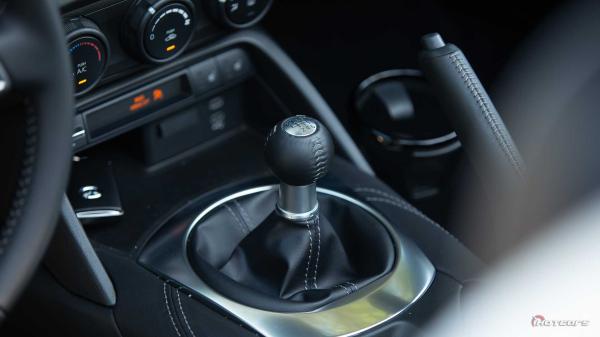
Stick shifts aren’t dead yet. Here are 11 new 2026 manuals under $40K, ranked by price, with the best picks for real drivers.
Every Miata Generation Isn’t Perfect — Here’s What To Watch For

No car is flawless, and the Miata’s near-40-year run means each generation carries its own known quirks — worth knowing before you buy, but none of them are dealbreakers.
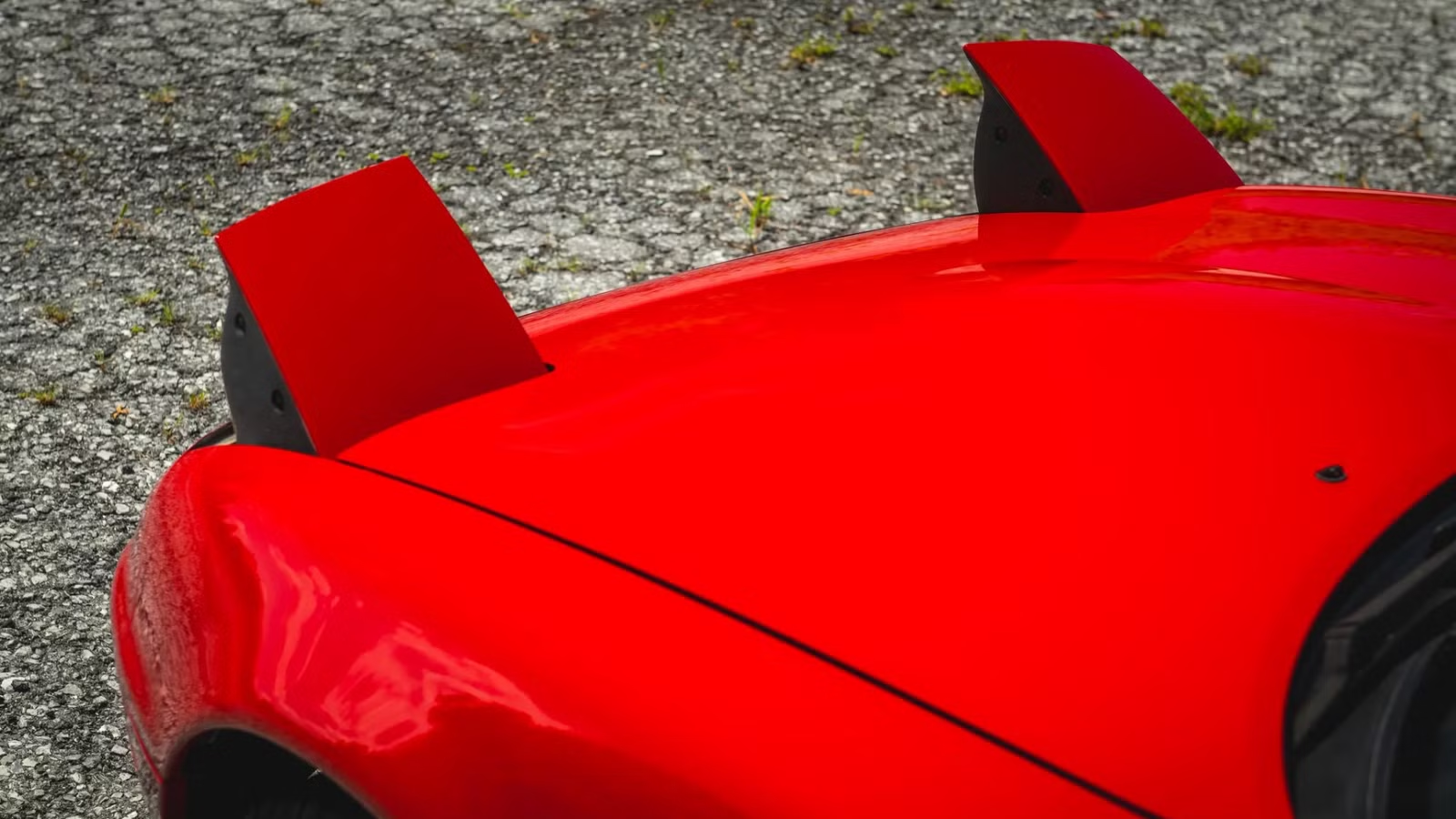
The first-generation NA (1989–1997) is famous for its pop-up headlights, and they’re also its signature weak point: the retractor motors wear out over time, and worn internal bushings or a failed relay can leave one headlight stuck down or fluttering — a known, well-documented fix in the enthusiast community, and a cheap one at that. The second-generation NB (1998–2005) ditched the pop-ups for fixed headlights and is generally regarded as the cheapest Miata generation to own long-term, though age-related wear — rust in certain climates, aging wiring — becomes the bigger concern as these cars cross the 20-year mark.

The NC (2006–2015) introduced its own quirk: a plastic coolant expansion tank that’s prone to developing hairline cracks over time. Once it fails, the cooling system loses pressure quickly, and the engine can overheat before the failure is obvious — a cheap part, but one worth checking on any used NC before a long trip.
The current ND generation (2016–present) is the most refined to drive, but early models (2016–2017) had a documented manual-transmission issue — grinding between second and third gear from a synchro defect — that Mazda addressed via a technical service bulletin and a transmission redesign starting in 2018. ND owners with the factory soft top should also know that wind and road noise is more noticeable than in a hardtop, particularly as the top’s seals age; it’s a comfort quirk rather than a mechanical one, but it’s the most common complaint owners raise.
None of these issues is expensive by car-repair standards, and none of them has moved the Miata off the top of its segment’s reliability rankings. That’s the real takeaway: even accounting for generation-specific gotchas, the “worst” Miata still outperforms most sports cars on cost and frequency of repair.
The Miata isn’t for everyone, but for those it’s built for, it’s not really a close call.
It’s best suited to someone who wants a car that rewards them on a back road, doesn’t need to haul more than one passenger or a weekend bag, and would rather spend their money on tires and track days than transmission rebuilds. It’s not a family car, and it’s not the car for someone who needs serious cargo space or all-weather, all-conditions capability without compromise — that’s a real trade-off.
But weigh that against what you get: a car engineered from the ground up to be cheap to keep alive, with three decades of data to prove it wasn’t a fluke. If you want to row through gears on a canyon road and still make your mortgage payment, this is your car. The Miata doesn’t ask you to choose between driving something that feels alive and owning something that won’t bleed you dry at the shop — it’s proof that choice was never actually necessary.

Related posts




Latest Post


No Comments