
The Harley Cruiser That Riders Never Seem to Outgrow
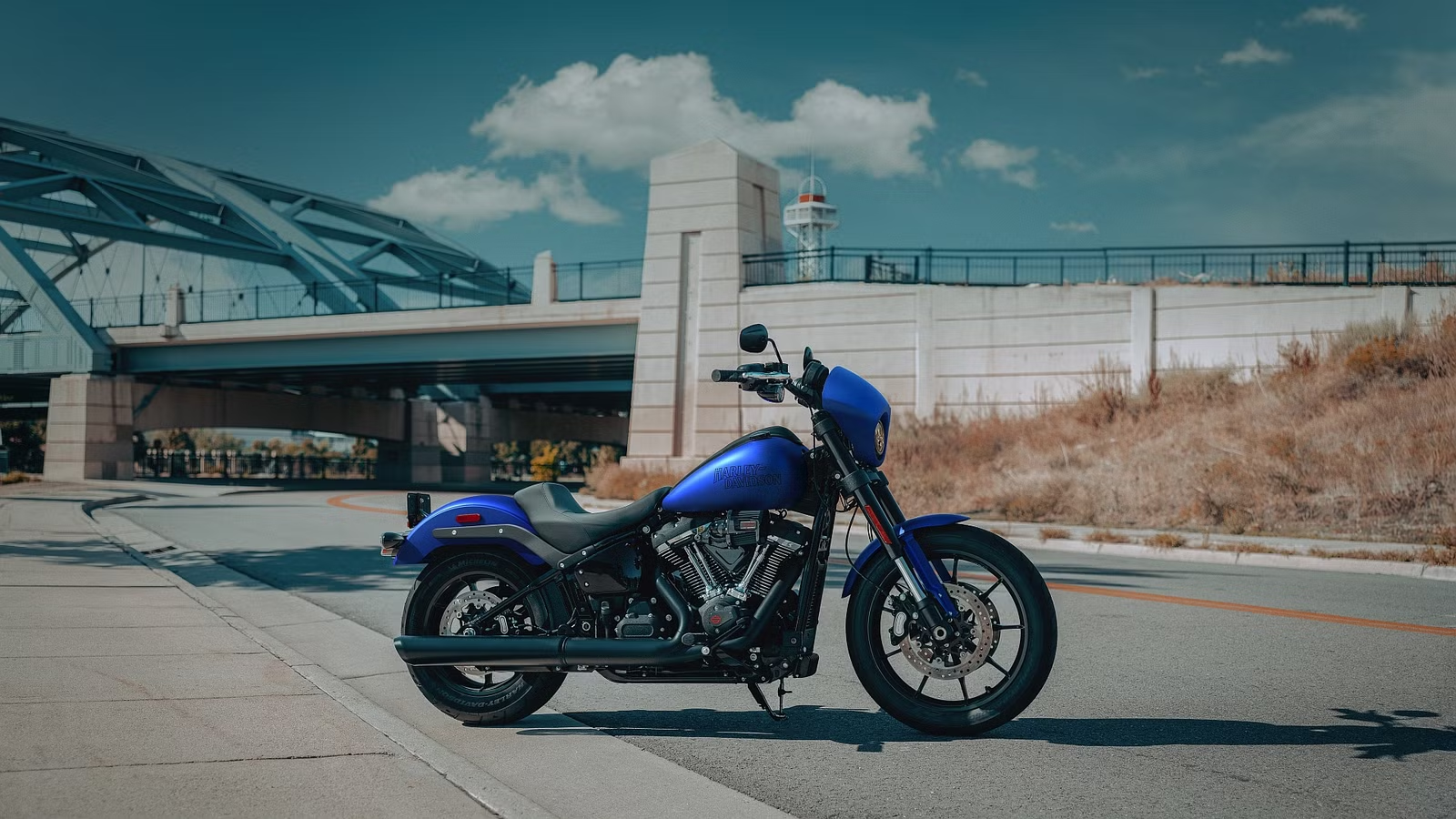
Buying your way into Harley-Davidson’s world can be as confusing as it is exciting. The lineup stretches from the compact, low-slung Nightster to the substantial Street Glide, with each motorcycle built around a different interpretation of the American cruiser. The Nightster weighs 481 pounds wet, while the Super Glide tips the scales at 656 pounds in running order, illustrating just how different the choices can be.

But choosing a Harley that you won’t outgrow isn’t simply about picking the biggest or most expensive motorcycle available. A rider’s skills can develop, but so can their priorities and riding habits. The right cruiser needs enough performance to remain interesting, enough versatility to accommodate changing needs, and enough scope for personalization to evolve with its owner. Finding that balance is what makes a motorcycle worth keeping.
Outgrowing A Motorcycle Is About More Than Wanting Something Bigger
The obvious solution to outgrowing a motorcycle sounds simple: buy something with more power, more equipment and a higher price tag. Harley-Davidson has no shortage of motorcycles that fit that description, but capability alone cannot determine whether a motorcycle remains right for its owner.
A Rider Can Outgrow A Motorcycle Without Reaching Its Limits


The funny thing about motorcycles is that you don’t necessarily need to reach a bike’s limits to outgrow it. Spend enough time riding, and you may discover that the things you once cared about most—straight-line performance, a low seat, or stripped-back simplicity—aren’t as important anymore. Your skills can improve, but more importantly, you can simply learn what you actually want from a motorcycle.
The Low Rider S Has Enough Of Everything To Grow With The Rider

And that’s where the Low Rider S enters the picture. It isn’t the most specialized Harley-Davidson cruiser, nor is it trying to be. Instead, it combines a powerful engine, sporty chassis, and useful technology in a package that gives its owner plenty of room to decide what kind of motorcycle it eventually becomes.
It Has A Lip-Smacking MSRP In 2026

At $18,999, the 2026 Low Rider S undercuts the Low Rider ST by $5,000 before additional charges. That difference matters because you don’t have to spend the extra money on touring equipment before you know you’ll need it. Keep some of that cash in the proverbial piggy bank, and if your riding eventually calls for luggage, passenger equipment or other upgrades, there’s room to build the bike around those needs. But the price is only the beginning of the story. The engine is where the S makes its case.
The Milwaukee-Eight 117 High Output Gives It Plenty Of Muscle

Twist the throttle with too much enthusiasm and the S reminds you very quickly that this is a serious performance cruiser. For 2026, the Low Rider S gets the High Output version of Harley-Davidson’s Milwaukee-Eight 117, one of three 117-cubic-inch tunes offered across the company’s cruiser range. It produces 114 horsepower and 128 pound-feet of torque, and the numbers only tell part of the story.
The Suspension Setup That Makes A 670-Pound Cruiser Feel Lighter Than It Should

The S backs up that output with hardware that makes it more willing to attack a corner than its cruiser proportions might suggest. A 43-mm inverted fork, rear monoshock with hydraulic preload adjustment, and dual front discs with four-piston calipers give the chassis the tools to deal with its performance. It’s still a 670-pound motorcycle, but the hardware gives the rider more confidence when the road gets twisty.
Modern Electronics Make The Low Rider S More Adaptable

With 128 pound-feet available, the Low Rider S doesn’t always need to deliver its performance in the same way. Its Road, Rain and Sport modes give the rider three distinct ways to approach the same motorcycle. Road keeps the response balanced, Rain tempers acceleration and increases electronic intervention, and Sport sharpens the throttle response and gives the rider more access to the engine’s performance.
Cruise Control And TPMS Add Everyday Convenience

The S also has the sort of equipment that becomes more valuable the further the ride takes you. Cruise control can take some strain out of long highway stretches when the destination is several hours and a few state lines away, while TPMS keeps an eye on tire pressures without asking the rider to reach for a gauge.
Harley’s Accessories Can Add Touring Practicality When Needed

You could ride the Low Rider S straight out of the showroom as the performance-focused cruiser it was designed to be, but you don’t have to leave it that way forever. Harley-Davidson’s accessory catalog gives owners ways to change the motorcycle as their needs evolve, while the wider aftermarket opens up even more possibilities. In other words, the S doesn’t have to be a finished product on day one.
Saddlebags And Passenger Equipment Expand Its Touring Ability

Say you spend your first year chasing corners and riding solo, then decide you want to take the S across a few states with someone on the back. A set of detachable rigid saddlebags can add 50 liters of storage, while passenger seating and backrest options make two-up riding more practical. Add a windshield or luggage rack, and the S can take on longer trips without pretending to be a Road Glide.
Where The Low Rider S Fits Among Harley’s More Specialized Motorcycles

The Low Rider S’s appeal becomes clearer when you look at the Harley-Davidson motorcycles that sit on either side of it. Some prioritize a smaller, more compact riding experience, while others are built around carrying their riders across long distances. The S doesn’t specialize quite as heavily in either direction, which leaves it with a broader range of uses.
Sportsters Offer A Smaller And More Focused Riding Experience

The Sportster family makes more sense if you want a smaller Harley with a more compact footprint and a different kind of performance. The Nightster, for example, uses the 975cc Revolution Max V-twin and weighs 481 pounds running. It’s a much easier motorcycle to move around at low speeds than the 670-pound Low Rider S, making it appealing to riders who value a lighter, more manageable Harley.
Street Glide And Road Glide Prioritize Long-Distance Touring

At the other end of Harley’s lineup, the Street Glide and Road Glide are built around covering serious distances, with fairings, integrated luggage and touring-focused equipment. They’re the obvious choice when long highway journeys are the priority, but that specialization isn’t necessary for everyone. The Low Rider S gives up some of that ready-made touring ability in exchange for a more performance-focused package, while its accessories leave the owner free to take the bike in another direction later.
Sources: Harley-Davidson

Related posts

Latest Post


No Comments