
The Harley-Davidson Engine That Collectors and Daily Riders Both Love
Some Harley-Davidsons are built to be collected. Others are built to be ridden. Finding one that genuinely satisfies both kinds of owners is considerably harder. The motorcycles collectors value most can be too old, too valuable, or too historically important for everyday use, while some of Harley-Davidson’s most practical engines lack the rarity or significance that makes collectors seek them out.

But one Harley engine found an unusually broad sweet spot. It powered motorcycles collectors still seek, while giving everyday riders plenty of reason to keep riding them.
What Makes A Harley Collectible?
When Collectible Doesn’t Always Mean Rideable
Some Harley-Davidsons become collectible because they are rare, historically important, or tied to a particularly memorable chapter in the company’s history. But collector appeal and everyday usability don’t always go together. The motorcycles most interesting to collectors can be too old, too valuable, or too temperamental for someone who simply wants to ride.

That makes the idea of an engine that satisfies both groups more complicated than it sounds. A genuinely collectible Harley needs more than an attractive badge; the motorcycle surrounding the engine needs to have earned a place in Harley-Davidson history, while the engine itself needs enough durability, simplicity, and character to remain enjoyable outside a showroom.
Why The Number Of Models Matters

There is another factor that matters: breadth. An engine used in one specialized model can become collectible along with that motorcycle, but an engine that powered several of Harley-Davidson’s most recognizable models has a different kind of significance because it becomes part of the identity of an entire generation of motorcycles.

For riders, the standard is different. Nobody commuting or taking a weekend trip wants to worry constantly about whether an older motorcycle can handle the miles, so usability means an engine that delivers useful torque, can be maintained without exotic equipment, and gives owners confidence to ride rather than preserve.
Finding The Sweet Spot Between Collectible And Rideable

The sweet spot, then, is an engine that helped create motorcycles collectors genuinely want while remaining practical enough to ride regularly. Harley-Davidson has produced several engines that come close, but finding the one that clears both bars requires looking beyond the engine itself, and at the Harley-Davidsons it helped create.
When Collectors And Riders Want Different Things
Great Harley Engines That Miss One Mark

Harley-Davidson has no shortage of engines that collectors would happily park in the garage. The Knucklehead, Panhead, and Shovelhead are deeply woven into the company’s history, and surviving examples can command serious attention, but their age and the practical demands of modern riding make regular use a different proposition.

A vintage engine can be enormously desirable precisely because it belongs to another era. That historical character is part of what makes it special, but it also means the engines that collectors value most aren’t necessarily the ones that best satisfy someone looking for an everyday motorcycle.
The Sportster Evolution Comes Close

The Evolution Sportster is a much tougher competitor. Introduced for the 1986 model year, the 883 cc and 1,100 cc versions brought the Evolution design to Harley’s Sportster line, with the 1,200 cc version following for 1988, and the engine would remain in the Sportster family for decades.

That longevity gives the Sportster Evolution a strong claim from the rider’s side. It is compact, relatively simple, mechanically accessible, and capable of providing the direct, uncomplicated Harley experience that makes older motorcycles appealing to ride, while certain Sportster models have also developed genuine collector interest.
The Advantage Of A Broader Legacy

But there is a distinction that matters. The Evolution Sportster became the heart of a remarkably long-running motorcycle family. The engine we’re looking for did something broader: It helped define several of Harley-Davidson’s most recognizable motorcycles.

One engine can make a motorcycle worth preserving. Another can become part of the reason an entire generation of Harley-Davidsons is still worth riding. That’s the engine at the convergence of collectors and riders.
The Evolution That Collectors Still Want to Ride
The Difference Is In What It Powered

The engine that best fits both sides of the argument is Harley-Davidson’s Evolution 1340. Introduced for the 1984 model year as an 80-cubic-inch Big Twin, the Evolution brought aluminum cylinders and heads, a new ignition system, and other significant design changes to Harley’s traditional 45-degree V-twin.
But its importance today isn’t simply that it was a better engine than what came before. It’s that Harley-Davidson put the 1340 in so many motorcycles that still matter.

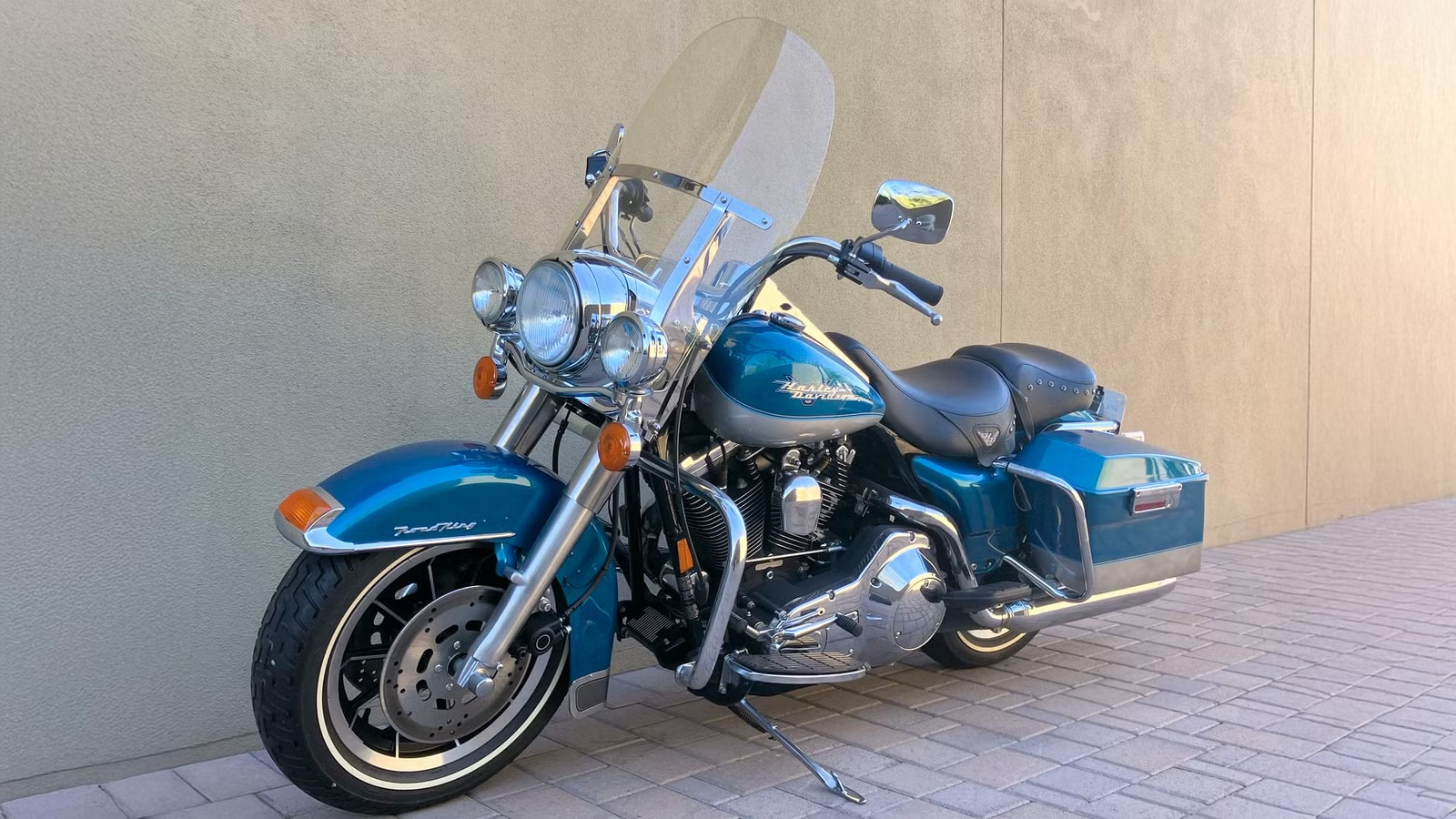
The Evolution-powered Softails, beginning with the 1984 FXST, went on to include such memorable models as the Heritage Softail, Springer Softail, Fat Boy, Bad Boy, and Heritage Springer. It also found a home in the FXR family, the Dyna line, and Harley’s Touring motorcycles, with the 1994 Road King providing one of the best examples of how the engine remained relevant late into its production life.
The Harleys That Made The Evo Collectible

That’s where the collector appeal gets stronger. A clean Evo-powered Fat Boy isn’t interesting merely because it has a 1340 engine; it’s interesting because it represents the early years of one of Harley-Davidson’s most recognizable motorcycles. An FXR equipped with an Evolution carries a different kind of significance, while an early Road King captures the end of the Big Twin Evo era.

The same engine could give a rider a stripped-down FXR, a laid-back Softail, or a full-size touring motorcycle without losing the fundamental character that made the Evolution recognizable. That breadth gave the 1340 a role in multiple important chapters of Harley’s modern history. Collectors can want the motorcycles it powered, while riders can still appreciate the engine that made those motorcycles worth riding in the first place.
The Evolution Era Isn’t Really Over
What Comes After The Evolution?

The Evolution 1340 is no longer a current-production engine, but that doesn’t mean its story ends with the last motorcycle that carried one. The engine sits at an interesting point in Harley-Davidson history: old enough to have developed genuine collector appeal, but modern enough that many of the motorcycles around it remain perfectly usable on today’s roads.

That makes today’s Milwaukee-Eight an interesting comparison. It has powered a wide range of motorcycles, from Softails to touring models, and some of today’s more distinctive versions already have the ingredients that could make them interesting to collectors later.
The Next Generation Is Already Here

The Revolution Max makes the question even more interesting. Harley-Davidson’s liquid-cooled Revolution Max platform moved into territory the company had not traditionally occupied, powering the Pan America and the new-generation Sportster S and Nightster. That doesn’t make these motorcycles future collectibles—not yet—but their significance may become clearer with time, just as it did with Evolution-powered motorcycles after their production years ended.

When the Evolution 1340 was new, nobody needed to call a Fat Boy, an FXR, or an early Road King a collectible to justify owning one. They were motorcycles meant to be ridden. That’s ultimately why the Evolution 1340 fits the title so well. Collectors can appreciate the Harley-Davidsons that gave it a place in history, while riders can appreciate an engine that never demanded to be treated like history. The motorcycles have aged into collectibles without losing the reason they were built in the first place: to be ridden.
Source: Harley-Davidson

Related posts


Latest Post


No Comments