
ALPINA’s Biggest Missed Opportunity Was Hiding In Plain Sight: The X5
Article Summary
- ALPINA designed the V8 in the E53 X5 4.6is, yet never got to sell an ALPINA X5 of its own.
- A 500 PS supercharged E70 ALPINA X5 would have filled the 200 PS gap between the X5 4.8i and the X5 M.
. - Priced below the XB7, an ALPINA X5 would likely have outsold the XB7, B6 Gran Coupe, and B8 Gran Coupe in the US.
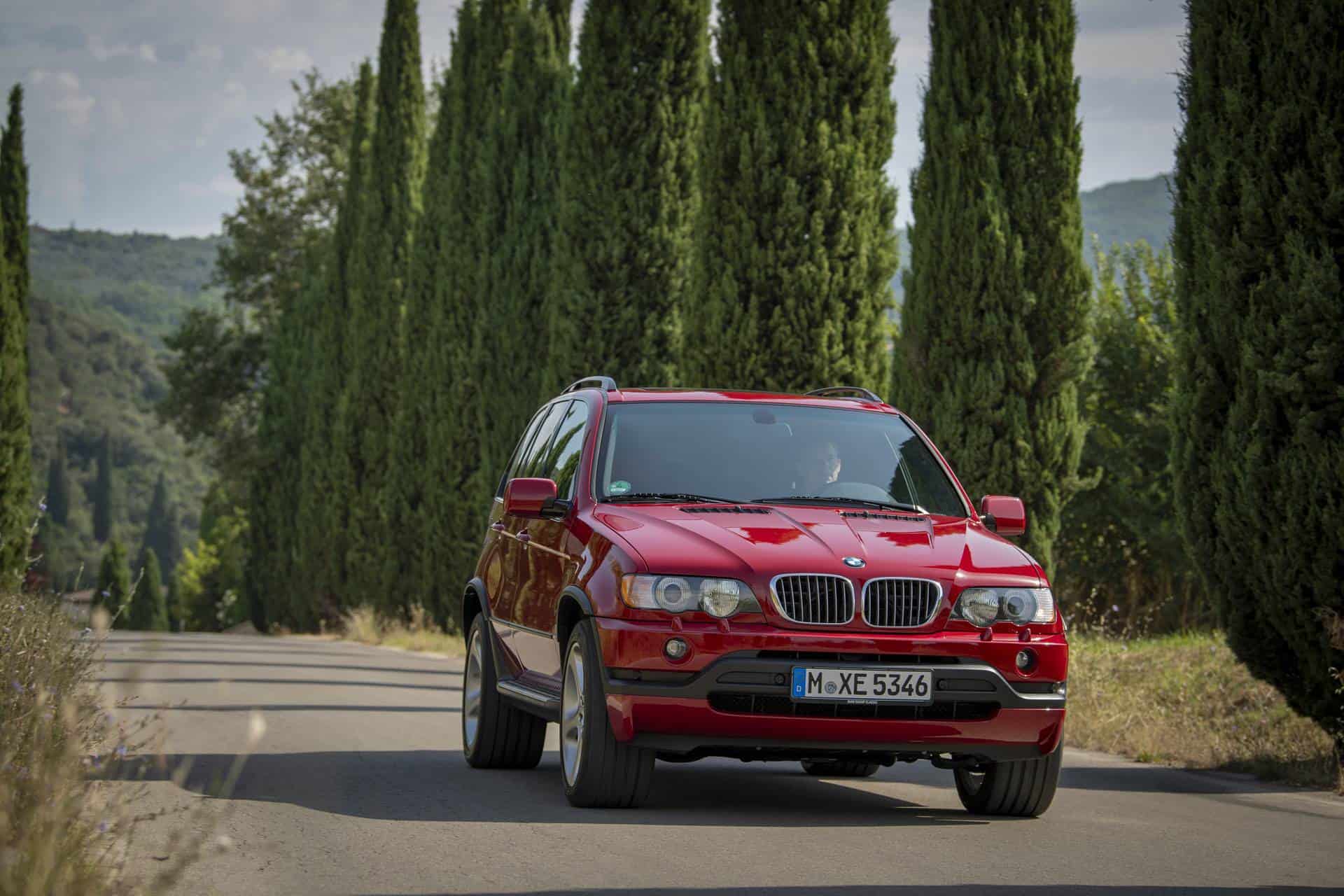
In 2001, BMW wanted a faster X5 and didn’t have one, so it borrowed ALPINA’s. The 4.6-liter V8 in the E53 X5 4.6is started life as the engine ALPINA developed for the E39 B10 V8, and BMW put it into production as the M62B46. ALPINA did the engineering and BMW sold the SUV. Nobody thought to put the ALPINA badge on it, and 25 years later that still annoys me. Of all the ALPINAs that never got built, the X5 is the one I’d bring back if I could only pick one. It isn’t the most exotic idea on the list. It’s the most obvious one, which somehow makes it worse.
Buchloe Tried Weirder Things Than This
Nobody has shown an ALPINA X5 prototype in public, and I haven’t found evidence that one existed. I wouldn’t bet much against it, though. This is the company that pulled the three-cylinder out of an i8, reworked the rear subframe, and fitted the 2.0-liter four-cylinder from the M135i, for somewhere around 460 hp combined. Keeping it alive took two extra intercoolers ahead of the front wheels and a different eight-speed automatic. ALPINA finished one prototype before the cost of recalibrating the software and crash-testing the car ended the project. I covered that story in 2020, and I still think about that car more than I should.

Then there’s the MINI. In the early 2000s, ALPINA built an R53 Cooper S called the “Lux,” with dark blue trim outside and Alcantara on nearly every surface inside. It would have cost too much to sell, so ALPINA dropped it and moved on to the E63 6 Series. Both cars turned up at ALPINA’s 60th anniversary gathering at the Penzing air base last year.
A company willing to build a luxury MINI and a four-cylinder i8 almost certainly sketched an X5 at some point. If nobody in Buchloe did, somebody in Munich should have asked.
The XB7 Is Great, And It’s Still The Wrong ALPINA

I have a soft spot for the XB7. The cabin is as nice as anything BMW sells, and it drives with a calm the regular X7 never quite finds. BMW never built an X7 M, so a three-row V8 flagship with 631 hp (612 hp at launch) was an easy call for America. I get why it exists. But the XB7 started north of $150,000, or even more for a special edition, and most people shopping at that level don’t need a third row. They need an X5. It was BMW’s first SUV, and it’s still the one people actually buy, so an ALPINA version would have cost less and reached far more buyers. Think of the XB7 as a tuxedo: perfect for the gala, pointless on a Tuesday. The ALPINA X5 would be the navy suit you end up wearing all week.
ALPINA’s sedans in the US make the same case. The B8 Gran Coupe had 612 hp and started at $139,900 plus $995 destination. Like the B6 Gran Coupe before it, it was a beautiful four-door coupe sold to a country that buys crossovers. ALPINA only built about 2,000 cars a year worldwide, and an X5-based model could have taken most of that allocation without trying. I think it would have outsold the B6 Gran Coupe, the B8 Gran Coupe, and the XB7 here.
Where It Would Have Sat
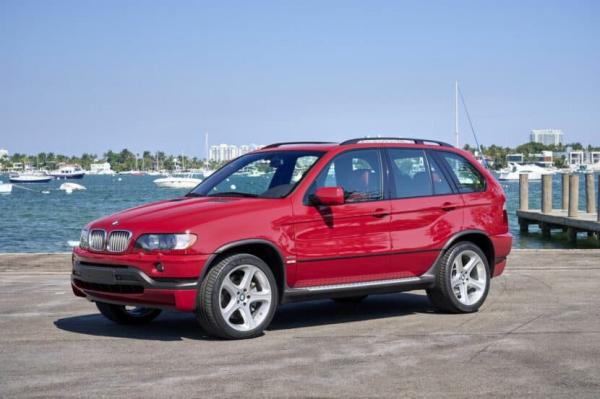
The E53 complicates my argument a little, because BMW half-built this car itself. The 4.6is had 20-inch wheels, 315-section rear tires, and enough pace that the press called it the unofficial X5 M. BMW’s product manager said at the time that an M badge didn’t feel right on it. He had a point. The 4.6is was stiff, and it was loud about being fast.
ALPINA would have gone the other way. My pick is the 4.8-liter V8 from the B10 V8 S, rated at 375 hp and 510 Nm (376 lb-ft), the same engine that later powered the Z8-based Roadster V8. ALPINA would have calibrated it to put the torque where you actually drive. Then it would have added softer springs, its own dampers, wheels with some sidewall, and Switch-Tronic buttons on the steering wheel. The result would have been about as quick as the 4.6is and much easier to live with.
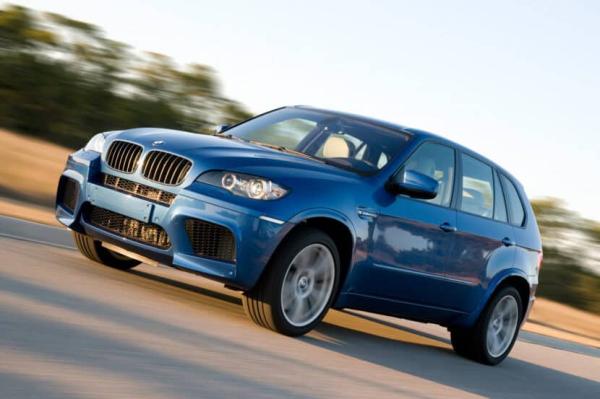
The E70 X5 is where the gap gets hard to ignore. The top regular V8, the 4.8i, made 355 PS (about 350 hp). The X5 M arrived later with 555 PS. That left 200 PS of empty space, and filling that kind of space was ALPINA’s whole business.
The engine was already on the shelf: the supercharged 4.4-liter N62 from the E65 B7, E60 B5, and E63 B6, rated at 500 PS (493 hp) and 700 Nm (516 lb-ft). The B7 was sold new through US BMW dealers, so the engine wasn’t a stranger here. Put it in an E70 with ALPINA’s comfort-first suspension tuning, and you’d have an X5 a step behind the M in a straight line and far nicer to spend eight hours in.
The Spec Sheet I’d Order
ALPINA used to name its cars by displacement (B10 4.6, B12 5.7), so I’d call it the ALPINA X5 4.8. Mine would be an E53 with the B10 V8 S engine, tuned for torque and smoothness rather than a bigger number on the spec sheet. It would be painted ALPINA Green, though ALPINA Blue is just as correct, and I’d tick the box for the deco stripes. It would sit on 20-spoke ALPINA Classic wheels sized for ride quality rather than the showroom.
Inside, it would get a LAVALINA leather steering wheel with Switch-Tronic buttons, blue ALPINA gauges, and a numbered build plaque. Outside, it would wear ALPINA script on the tailgate and sills, with an exhaust that stays quiet until you’re past half throttle. If BMW wanted to stay closer to the original 4.6is, a 4.6 in ALPINA Blue would do just fine.
BMW owns ALPINA outright now. The new BMW ALPINA brand launched earlier this year, a 7 Series-based car is expected next, and a second-generation X7 will likely follow later in the decade. The most expensive car comes first, again. There’s still room for an X5 in that plan. Until then, I’d settle for a clean E53 4.6is on a set of ALPINA Classic wheels, and I’d probably tell people it was the real thing.

Related posts

Latest Post


No Comments