
Acura Built The Wagon Everyone Says They Want, Then America Barely Bought It
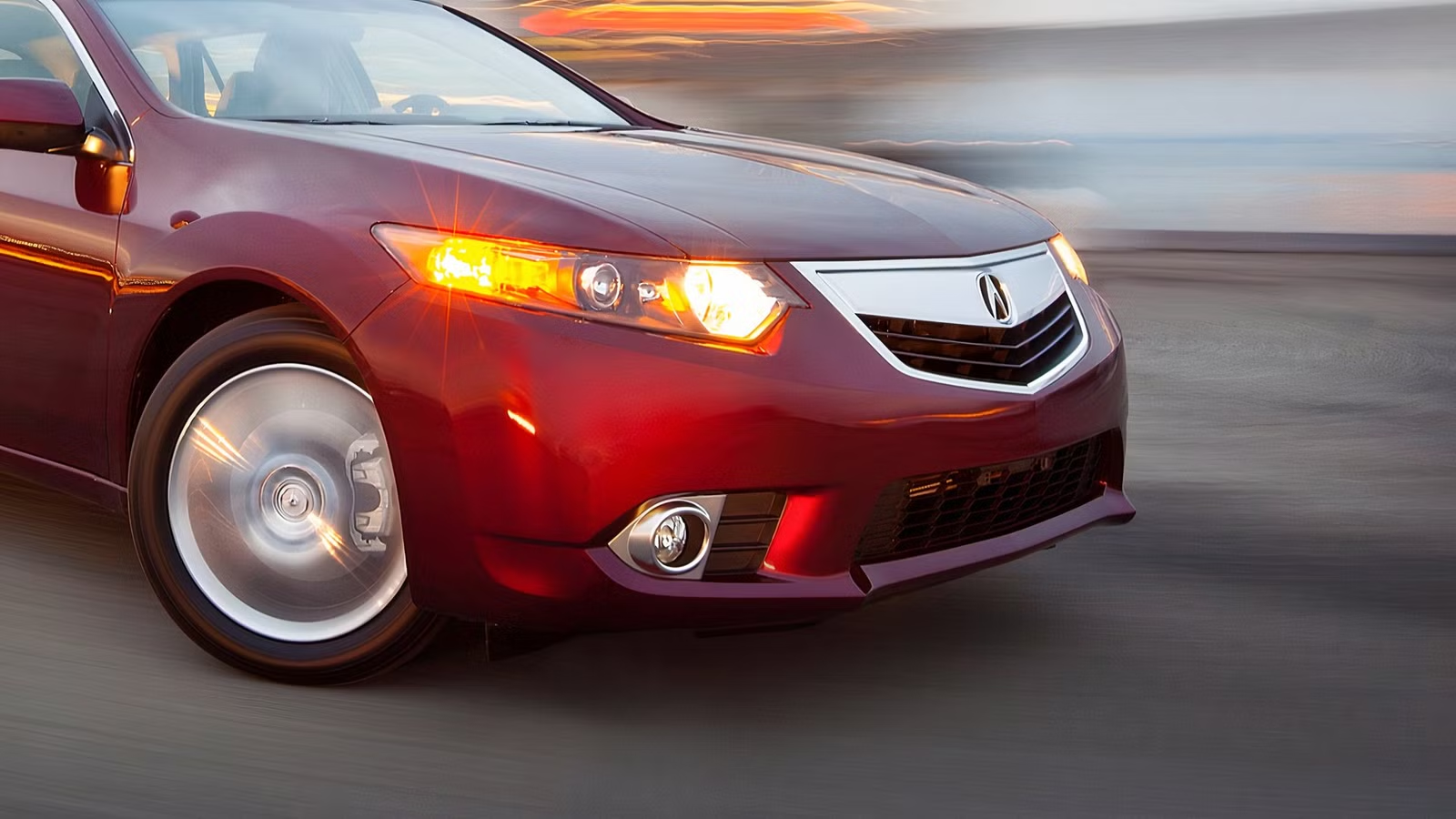
Car enthusiasts have a funny relationship with wagons: the moment one disappears, everyone starts asking why nobody builds them anymore. Put one on a dealer lot, though, and the love can get strangely quiet. HotCars has looked back at plenty of forgotten station wagons, and Acura has spent decades building practical cars without automatically turning them into SUVs. Acura once tried that formula with a premium wagon offering useful cargo room, decent fuel economy, and familiar Honda engineering. America barely bought it.
Acura’s Luxury Wagon Found Just 10,188 U.S. Buyers

Acura’s mystery wagon didn’t exactly come roaring out of the gate. According to American Honda’s year-end figures, the wagon sold just 126 copies during its brief 2010 debut window, rose to 3,210 in 2011, and peaked at 4,234 in 2012.
Then the floor dropped out. American Honda’s published figures show sales falling from 4,234 in 2012 to 1,976 in 2013, less than half, then to 640 in 2014 and just two wagons in 2015—enough to fit the year’s nationwide total in a two-car garage. Across its full U.S. run, the wagon found only 10,188 buyers.
That’s what makes the story more interesting than a car simply aging out of the market. Funny how some wagons only become must-haves once you can’t buy them new anymore, and plenty of wagons Americans overlooked earned their strongest following after production ended. But this one wasn’t an ancient oddball or some expensive, limited-production experiment. It was a straightforward premium wagon with a conventional powertrain and an everyday job to do. The sales say buyers weren’t interested. What they don’t explain is why — because on paper, this thing made a surprising amount of sense.

So Why Did This Acura Wagon Look Like Such An Easy Win?

Start with the engine. Acura’s wagon used a 2.4-liter i-VTEC four-cylinder making 201 horsepower, paired with a five-speed automatic. By 2013, it carried EPA ratings of 22 mpg city, 30 highway, and 25 combined. Acura’s own 2013 pricing and EPA sheet put the base MSRP at $31,860, or basically $32,000 before destination. That wasn’t bargain-car money, but it also wasn’t priced like a tiny-volume European exotic wearing a long roof.
It was also a real wagon, not a hatchback with optimistic marketing. Cargo capacity measured 31.5 cubic feet behind the rear seats and 66.2 cubic feet with them folded, while overall length came to 189.2 inches. In other words, it offered substantially more room for luggage, bikes, strollers, or whatever else owners needed to haul without turning the driver’s seat into an SUV perch. That’s still the core appeal of the body style. The Mercedes-AMG E63 S Wagon makes the same basic case from a much faster end of the market: you can have useful cargo capacity without giving up a lower, more car-like package.
The equipment list didn’t hurt, either. Leather seating, heated front seats, a moonroof, dual-zone climate control, Bluetooth connectivity, and premium audio all fit the entry-luxury brief. Acura’s original launch material pitched the wagon as a practical, efficient alternative for buyers with growing families or active lifestyles, and the company expected 30 mpg on the highway from the start. That all sounds completely reasonable. Maybe too reasonable. Because once you finally put a name to this thing and look at what Acura didn’t offer, the sales story gets more complicated.
The Unexpected Wagon Was The Acura TSX Sport Wagon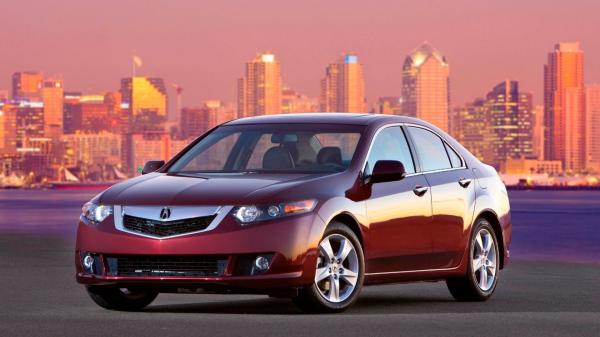
The mystery car was the 2011-2014 Acura TSX Sport Wagon. Acura unveiled it on March 31, 2010, at the New York International Auto Show before adding it to the TSX lineup for the 2011 model year. The company’s own world-debut announcement described it as practical, luxurious, technically advanced, and fun to drive. None of that was a wild stretch. Underneath, this was essentially the wagon-bodied companion to Acura’s established entry-luxury sports sedan, with the same 201-hp four-cylinder doing the work.
Then you look at the order sheet. The wagon came to U.S. buyers with one basic mechanical setup: 2.4-liter four-cylinder, five-speed automatic, and front-wheel drive. The TSX sedan had more interesting choices. Acura offered a six-speed manual in the sedan lineup, and buyers could also step up to a 3.5-liter V6 producing 280 horsepower. The wagon got neither. There was no U.S.-market all-wheel-drive option waiting farther down the page, either. The useful body style was there. Several of the things that might have made enthusiasts rush toward it weren’t.
The Manual Was Right There—Just Not In The Wagon

That manual matters because Acura had already spent years teaching enthusiasts to care about its gearboxes. The Acura RSX Type-S built much of its appeal around a high-revving engine and a tightly geared six-speed, and even today’s Integra keeps a six-speed manual alive for buyers who still want one. Yet when Acura had a wagon sitting in the same TSX family as a manual-equipped sedan, it didn’t let wagon customers have that transmission. If you wanted the long roof, the automatic came with it.
The automatic itself wasn’t the problem. For plenty of luxury-wagon buyers, it was probably the more logical choice. But choice is the point. Choosing the wagon’s cargo space meant accepting the four-cylinder automatic, while the V6 and six-speed manual remained sedan-only. Acura had the ingredients scattered around the same model line, then declined to combine them in the version enthusiasts would later wish they had bought.
None of that proves a manual, V6, or AWD system would have rescued sales. There isn’t evidence showing thousands of people walked into Acura showrooms, asked for those options, and left when they couldn’t get them. But it does change the easy hindsight narrative. America didn’t receive the full enthusiast wish-list wagon and reject it. It received a handsome, useful, premium, front-drive automatic wagon that came tantalizingly close. There’s a difference.
Then The Crossover Gap Became Impossible To Ignore

Acura buyers didn’t leave much room for interpretation. In 2012, the TSX Sport Wagon had its best year with 4,234 sales, while the RDX moved 29,520. A year later, the wagon dropped to 1,976 and the RDX jumped to 44,750 — more than 22 crossovers for every wagon. American Honda’s 2013 year-end sales report puts the contrast in one table: wagon sales down 53.3 percent, RDX sales up 51.6 percent.
The RDX wasn’t winning with one hand tied behind its back, either. Acura’s 2013 RDX launch specs listed a 273-hp 3.5-liter V6, a six-speed automatic, and available AWD, giving shoppers more power and an all-weather option the wagon couldn’t match. That practical crossover formula stuck around, with the RDX later appearing among commuting SUVs built around everyday use.
The Wagon Became Cooler After It Was Gone

That’s the irony. The TSX Sport Wagon is easy to love now because it’s low, useful, naturally aspirated, and uncommon. Nostalgia also gets one huge advantage over a dealer: it never has to close a sale.
To be fair, Acura never gave the wagon the manual, V6, or AWD hardware that could have turned it into the full enthusiast fantasy. So this doesn’t prove wagon fans are all talk, but it does show that automakers count signatures, not comments. If another premium wagon showed up tomorrow, online praise would matter less than the number of people who actually buy one.
Sources: Acura

Related posts



Latest Post


No Comments