The Japanese Car That Proves High Mileage Doesn’t Have To Mean High Maintenance
8 minutes reading
Monday, 21 Sep 2026 01:00 0 8 autotech
New car prices in the U.S. continue to climb in 2026, along with elevated fuel costs. Including long-term maintenance costs, Americans are struggling with the increased total cost of ownership. High interest rates expand monthly auto loan payments, placing heavy financial strain on household budgets.
In response, the market is showing a significant shift away from high-end premium models towards more cost-effective sedans and crossovers. Japanese brands have mastered long-term dependability and low costs since they arrived in the U.S. One specific compact sedan outclasses every other option in the segment, while still offering a comprehensive level of comfort.
How Toyota Keeps Its Cars Dependable In The Modern Age
Link Image
Toyota maintains low long-term running costs in the U.S. through disciplined manufacturing and conservative engineering. This approach relies on the Toyota Production System, which is centered on continuous improvement. This system also ensures quality in the process by halting assembly whenever an abnormality occurs. Stopping defects at the production line prevents structural flaws from reaching the consumer, minimizing mechanical failures over decades of vehicle operation.
Toyota’s engineering choices prioritize proven durability over unvalidated innovation. Lower stress parameters on engine internals, over-engineered drivetrain elements, and conservative electronic integration reduce component wear. High parts commonality across product lines lowers replacement component pricing and simplifies independent maintenance.
This manufacturing predictability translates into minimal unexpected repair expenses, slow component degradation, and exceptional resale value. Consumers have developed considerable trust in Toyota thanks to its consistently high reliability at high mileage.
The Toyota Camry’s Low Long-Term Ownership Costs
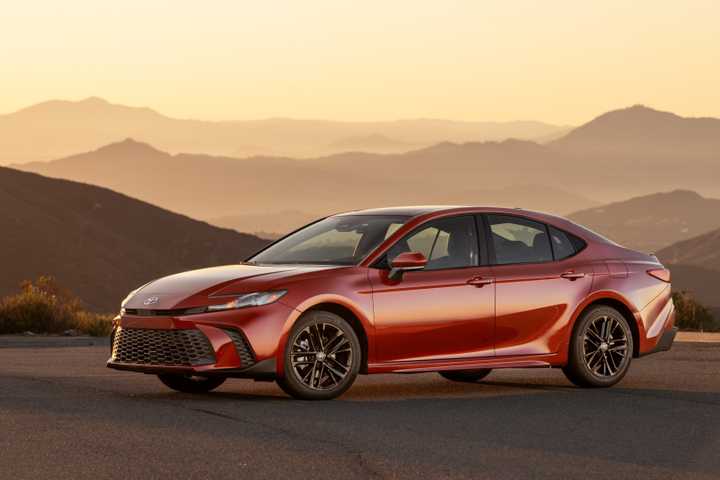
Front 3/4 action shot of 2026 Toyota Camry driving on roadToyota
There aren’t any 10-year ownership cost estimates available for the 2026 Toyota Camry, but we can find a baseline figure using its five-year results. According to Edmunds‘ True Cost To Own calculator, you can expect a new base front-wheel-drive 2026 Toyota Camry LE to cost you $29,966 over the course of five years. This includes $9,348 in depreciation, $4,504 on insurance, $2,605 on maintenance, and $601 on repairs. Your taxes and fees will also be incredibly low, with the calculator showing that you’re only likely to spend $1,982.
If you opt to finance the base 2026 Camry, this will add $6,118 to your ownership costs, while fuel will cost you $4,808, based on average driving distance in the U.S. According to CarEdge, you can expect to spend $36,433 on your Camry over the same period, which includes $14,274 on depreciation, $4,530 on fuel, and $1,512 on maintenance.
If you extend your ownership to 10 years, CarEdge data shows that maintenance and repair costs will total $4,580. This makes the Camry $1,385 cheaper to maintain over a decade than the average sedan. Your risk of a major repair during these 10 years remains low at 12.28 percent. Furthermore, the Camry will experience $19,670 in total depreciation after a decade, leaving you with an estimated residual value of 43.6 percent from its original purchase price.
The Sedan Holds Onto Its Value Well
Shot of 2026 Toyota Camry lineupToyota
Another way for us to analyze average hybrid depreciation rates is by looking at the 2026 Toyota Camry LE’s estimates, as calculated by CarEdge. The results indicate that the model will lose about 60 percent of its value and be worth $11,348 after 10 years of ownership and regular use.
By typical depreciation standards, this is a fairly attractive figure that vastly contrasts with the one that Edmunds depicts. We also have to consider that this is a best-case scenario for HEV ownership costs in the U.S., as the Camry is a well-trusted model among consumers, specifically thanks to its low running costs, minimal maintenance requirements, and impressive value retention.
Refueling Costs Are Impressively Low
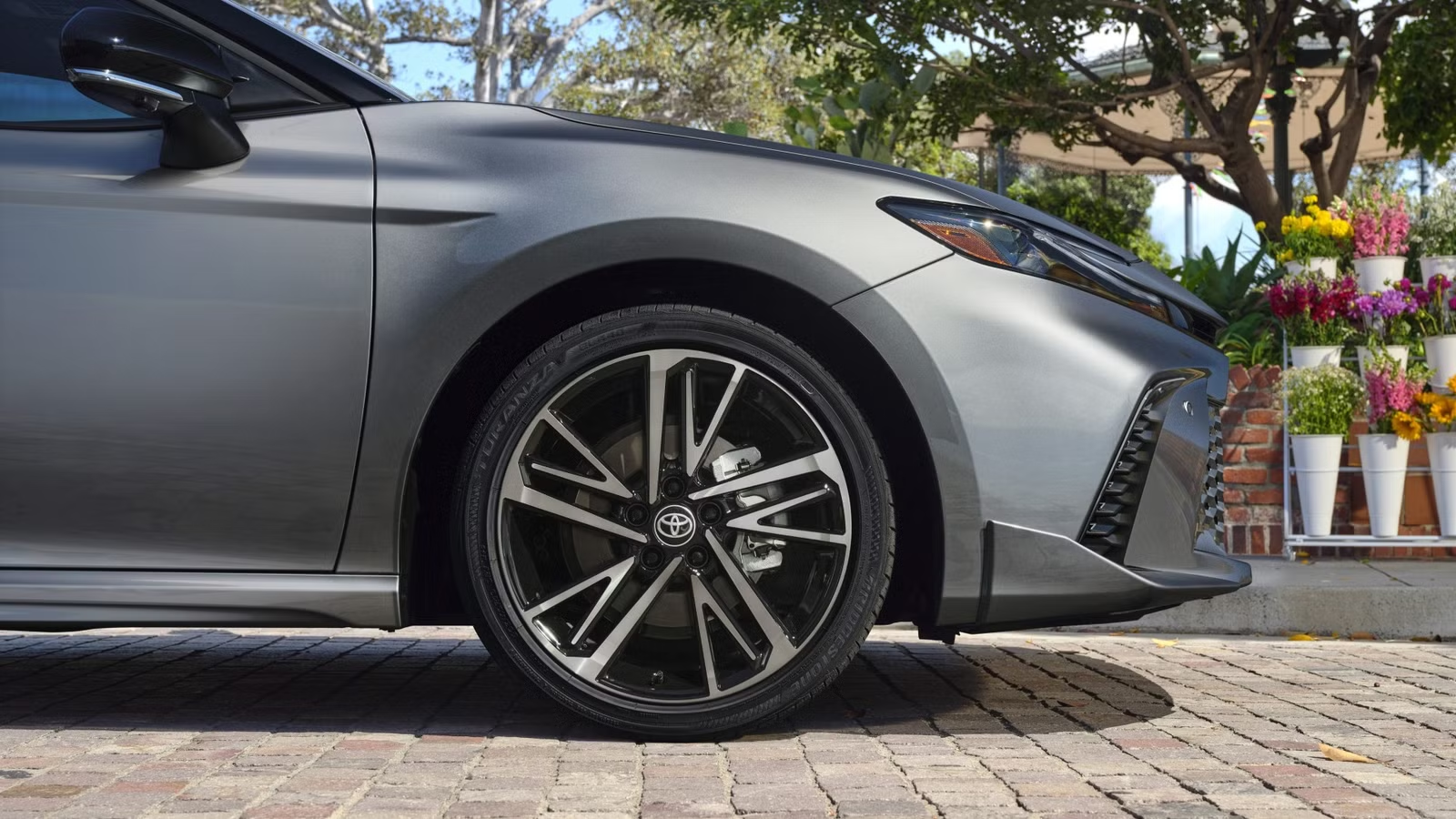
Close-up shot of 2026 Toyota Camry front endToyota
The front-wheel drive LE is the most efficient model, returning a 52/49/51 MPG consumption result on the city/highway/combined cycle with a 663-mile range claim from the 13-gallon tank. The agency also indicates that this will save you up to $5,000 in fuel costs every five years and costs $2.01 to drive 25 miles.
The all-wheel-drive XSE is the least frugal model, but this is only by a fractional amount. The EPA indicates that it returns a 43/43/43 MPG result with a 572-mile range claim and suggests that this will save you up to $3,750 in fuel costs every five years and cost $2.38 to drive every 25 miles.
The 2026 Toyota Camry’s Amazing Reliability Standards
Rear 3/4 action shot of the 2026 Toyota Camry in blue being drivenToyota
When it comes to reliability, there are few cars currently on the market that can match the 2026 Toyota Camry. iSeeCars gives the Camry range an 8.2/10 overall score, including 8.6/10 for reliability, 8.6/10 for retained value, and 8.0/10 for safety. The publication indicates that the model will run for 13.1 years or 171,901 miles without encountering any noteworthy mechanical issues, and has a 31.8 percent probability of hitting 200,000 miles. Many examples of older Camry models featuring the same drivetrain have well surpassed 300,000 miles in recent years.
In terms of depreciation, the publication indicates that the model will lose $9,992 or 34.3 percent of its initial sale price after five years or 60,000 miles, which is a bit less than the average competitor in the midsize hybrid sedan segment. J.D. Power gives the 2026 Toyota Camry model year an 82/100 consumer-verified overall score, including 80/100 for quality and reliability, 82/100 for the driving experience, 92/100 for resale, and 76/100 for the dealership experience.
How To Keep The Camry Dependable Over 10 Years
Front action shot of 2026 Toyota Camry in silver being drivenToyota
You must maintain the 2026 Toyota Camry at specific intervals to ensure optimal vehicle reliability. The manufacturer schedules service every 5,000 miles or six months. The first interval requires a tire rotation, fluid level adjustment, and multipoint inspection. You need an engine oil change and a new cabin air filter every 10,000 miles. Major service intervals occur at 15,000 and 30,000 miles. These milestones require new engine air filters alongside intensive brake and suspension checks. RepairPal reports an average annual maintenance cost of $388 for the Camry. Kelley Blue Book highlights that the standard ToyotaCare program covers all scheduled maintenance costs for the first two years or 25,000 miles.
Toyota offers a very comprehensive online parts catalog for all of its models, but unfortunately, it does not list the 2026 Camry’s replacement battery pack, so there’s no way for us to tell you how much this part will cost you directly from the manufacturer. Based on online testimonials and information provided by some dealers, you can expect to pay somewhere around $3,000 to have the HEV battery pack replaced when the time comes.
Bear in mind that Toyota’s HEV systems last for years, with some owners declaring their packs to still be going strong after well over 15 years or 150,000 miles of driving. Toyota covers the Camry’s entire HEV battery pack for any manufacturer-related defects over a 120-month or 150,000-mile period, while all related systems will be covered for 96 months or 100,000 miles, reflecting the Japanese brand’s commitment to its tried-and-tested gasoline-electric hybrid drivetrain technology.
Toyota’s Comprehensive Standard Warranty
Close-up shot of 2026 Toyota Camry engine bayToyota
The 2026 Toyota Camry is backed by a standard three-year or 36,000-mile bumper-to-bumper limited warranty and a five-year/60,000-mile powertrain warranty. As a hybrid-exclusive model, it also includes a 10-year or 150,000-mile hybrid battery warranty and an eight-year or 100,000-mile warranty on related hybrid components. Routine maintenance follows a 5,000-mile or six-month interval, primarily involving tire rotations and multipoint inspections, while synthetic oil changes are typically required every 10,000 miles or 12 months.
These services are covered for the first two years or 25,000 miles at no cost through the ToyotaCare program. Regarding safety, a significant recall currently affects approximately 51,644 Camry units from the 2025 and 2026 model years due to a loose bolt in the power inverter, which can cause a loss of power or, in rare cases, an electrical fire. Owners of affected vehicles produced between August and November 2025 should contact their dealer for a free inspection and repair.
The Benefit Of A Competitive Pricing Entry Point
Profile action shot of 2026 Toyota Camry in silver being drivenToyota
Pricing is a key reason the Camry continues to set new sales records and dramatically surpass the rest of Toyota’s electrified catalog. Toyota kicks the range off at $29,600 for the base LE front-wheel drive model, making it the most competitively priced hybrid vehicle in the segment.
The most expensive Camry option is the XSE, which starts at $36,000. Toyota offers the all-wheel drive system across all trims for an additional $1,525. All of these prices exclude the brand’s $1,295 destination fee. There are some optional extras available across all trims, but they are few and far between, as the brand prefers to take a more defined five-trim pricing strategy.
The Camry Maintains Strong Loyalty Among American Buyers
2026 Toyota Camry Rear 3/4Toyota
The 2026 Toyota Camry continues its tenure as a cornerstone of the American automotive sedan segment, functioning as a primary volume-seller for the Japanese company. This is despite Toyota adopting an SUV and crossover-focused strategy. Toyota markets this model to a broad demographic of pragmatic buyers, including daily commuters and growing families who prioritize long-term value, reliability, and low maintenance costs over the rugged image of an SUV.
Toyota has pivoted the current-generation model’s strategy to focus more on electrification by adopting a hybrid-only powertrain offering. This evolves the Camry into a leader in efficiency and environmental consciousness without sacrificing its core reputation for durability. Toyota also manages to maintain a competitive entry price and offers optional all-wheel drive across every trim level.
Base Trim Engine
2.5-liter Four-Cylinder Hybrid
Base Trim Transmission
CVTi-S CVT
Base Trim Drivetrain
Front-Wheel Drive
Base Trim Horsepower
184 HP @6000 RPM
Base Trim Torque
163 lb.-ft. @ 5200 RPM
Make
Toyota
Model
Camry
Segment
Midsize Sedan
Sources: Toyota, The EPA, iSeeCars, Edmunds, CarEdge, the NHTSA, and J.D. Power.













No Comments