The Japanese Sports Car That’s Surprisingly Cheap To Own
8 minutes reading
Sunday, 6 Sep 2026 10:00 0 28 autotech
Most cheap sports cars are a trap. The sticker looks like a gift, the test drive feels like a heist, and then the car spends the next two years draining your account through a straw. Cracked trim, a thirsty engine, parts that only one shop in the state can find. The fantasy curdles quickly, and the bargain you bragged about becomes the reason you dread the mailbox.
One rear-drive Japanese coupe refuses to play along. It still sells for pocket money, it sounds far more expensive than its badge suggests, and it has spent two decades proving that cheap to buy and cheap to keep can live in the same car.
Front 3/4 action shot of 2000 Honda S2000 driving on roadBring A Trailer
The trouble with a cheap performance car is that the purchase price is only the deposit. Everything after it is the real bill, and that bill is where most bargains fall apart.
The Hidden Ownership Costs Behind A Low Sticker Price
The front 3/4 view of a red 2012 Chevrolet Corvette Grand Sport Coupe.Bring A Trailer
A low asking price hides a long tail of costs. Insurance on a two-door with a strong engine runs higher than the same buyer expects. Consumables like tires, brakes, and clutches arrive on a sports car’s schedule, not a commuter’s.
Then there is labor, because a coupe with tight packaging and specialist parts turns a routine job into an expensive afternoon. Buy the wrong cheap sports car, and the affordable sticker is the last cheap thing about it.
Reliability Separates A Bargain From A Breakdown
A front three-quarter shot of a Boxter SBring a Trailer
The deciding factor is not how fast a used sports car is. It is whether it breaks, and how much it costs when it does. The Porsche Boxster is the cautionary tale here.
The first-generation 986 is one of the cheapest ways into a Porsche, yet RepairPal pegs its average repair bill at around $952 a year, and its intermediate shaft bearing is a well-documented failure that can take the whole engine with it. A car can be cheap to buy and still be a money pit. The one that follows is neither.
The Nissan 350Z Stays Cheap Long After You Buy It
2007 Nissan NISMO 350Z front 3/4 shotNissan
The car is the Nissan 350Z, built from 2003 to 2009 on the Z33 platform, and it remains one of the last genuinely affordable ways to own a real rear-drive sports car. Under the long hood sits a naturally aspirated 3.5-liter V6 making between 287 and 306 horsepower depending on the year. It is quick, it is loud in the right way, and it feels like it should cost far more than it does.
The prices tell the story. Running early cars from 2003 to 2005 trade between about $7,000 and $10,000, while clean 2007 and 2008 examples sit closer to $15,000 to $20,000. For the money, few cars offer this much genuine sports-car hardware. Next to a budget alternative to a used 911, the Z looks almost too sensible.
Real-World Cost Of Ownership Versus Its Rivals
Profile shot of 2005 Nissan 350Z in silver parkedBring A Trailer
Ownership is where the 350Z pulls ahead. RepairPal lists its average annual upkeep at about $452, below the figure for the average car on its books and under the $518 it assigns the later 370Z. Set that against the Boxster’s $952 and the gap is impossible to miss. The Honda S2000 makes a different point.
It is just as reliable and costs roughly the same to maintain, at around $456 a year, but clean examples have climbed to $15,000 to $20,000 and beyond. The S2000 is no longer cheap to buy. The 350Z is the rare sports car that is still cheap to buy and cheap to keep at the same time, which is exactly what makes it a driver’s car you can live with. The numbers look good on paper — but the real test is what lives under the hood, and whether an engine from 2003 can still be trusted in 2025.
The VQ35 V6 Is Built To Go The Distance
Close-up shot of 2005 Nissan 350Z engine bayBring A Trailer
The heart of the case is the engine. Nissan’s VQ35 took a spot on Ward’s 10 Best Engines list for five straight years from 2002 to 2006, and it has spent the two decades since earning a reputation for old-school V6 longevity. The same basic engine hauls Maximas, Muranos, and Pathfinders past high mileage without drama, and plenty of them clear 200,000 miles on basic maintenance, with some owners reporting well past 250,000. Because it is naturally aspirated, there is no turbo to cook, and because it uses a timing chain rather than a belt, there is no expensive belt service waiting on the calendar. This is an engine that belongs on any list of cars that hit 200,000 miles without major repair.
Know the variants before you shop. Cars from 2003 to 2004 use the original VQ35DE with 287 horsepower. The 2005 and 2006 Rev-Up version revs harder and lifts output to around 300 horsepower. From 2007, the revised VQ35HR arrives with dual intakes, a stronger head, a 7,500-rpm redline, and 306 horsepower. All three are strong. The latter HR is the most refined of the family.
Cheap Parts And DIY-Friendly Maintenance
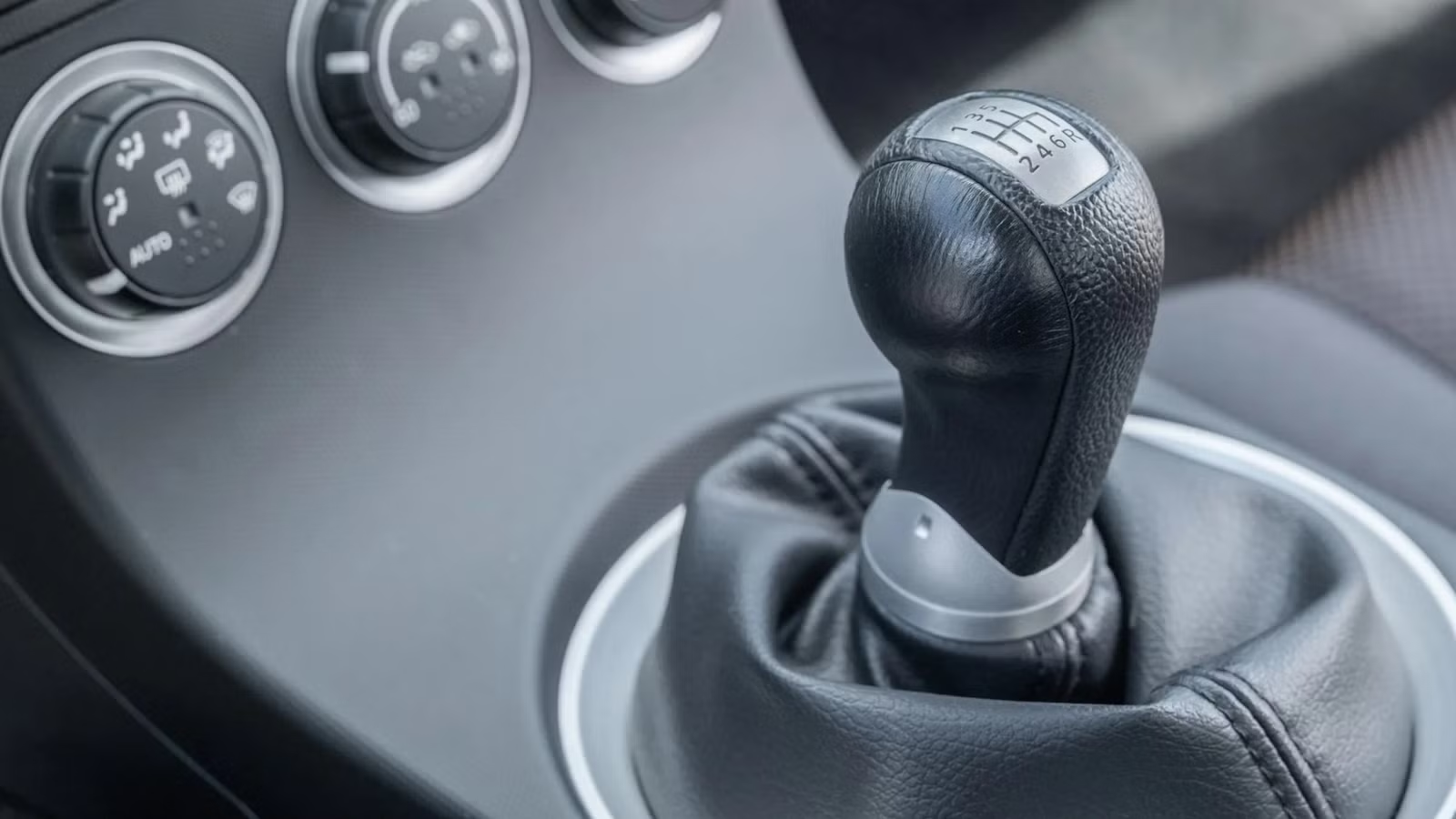
Nissan 350Z wheel close-up shotNissan
Sharing an engine with half of Nissan’s lineup in the 2000s has a happy side effect: parts are everywhere and they are cheap. The aftermarket is enormous, the forums are deep, and most jobs are within reach of a competent home mechanic with a weekend and a socket set. Nissan’s V6 sits among the brand’s most durable engines precisely because it is simple and well-supported.
One honest note keeps this accurate. The VQ35 uses mechanical valve lash adjustment rather than self-adjusting hydraulic lifters, so valve clearance is a scheduled inspection item rather than a fit-and-forget system. In practice the clearances rarely drift, and most owners go the life of the car without ever touching them, but the check belongs on the maintenance chart and a thorough buyer will ask about it.
Everyday 350Z Ownership Won’t Drain You
2008 Nissan 350z profile shot parkedNissan
Day to day, the 350Z behaves itself financially. It is not an economy car, and no one should pretend otherwise: it returns around 20 mpg combined and asks for premium fuel. Everything else stays reasonable. Tires and brakes are ordinary sports-car consumables rather than exotic-priced ones, insurance on a two-decade-old coupe is gentle, and the clutch, when it eventually wears, tends to last somewhere between 60,000 and 80,000 miles. None of it stings the way a European rival’s bills do.
Depreciation Has Bottomed Out, So Values Hold
Three-fourths photo of Nissan 350Z parked against a monotone wallBring-A-Trailer
Here is the part that turns the 350Z from a cheap toy into a smart buy: the money you put in is no longer leaking away. Values have not just stopped falling, they have started to climb. CarGurus data shows average prices up roughly eight percent over the past year, and clean HR cars in that $15,000 to $20,000 band keep pushing higher.
Enthusiast buyers have caught on, and the market has quietly moved the Z from disposable used sports car to appreciating modern classic. Owning one now looks less like spending and more like buying one of those sports cars that hold their value, which is the strongest argument a cheap car can make for long-term ownership.
The 350Z Isn’t Perfect, But It’s The Smart Enthusiast’s Bargain
None of this makes the Nissan 350Z flawless, and buying one sight-unseen is still a way to lose money. The Rev-Up engines in 2005 and 2006 manuals are known to drink oil, so check levels and history carefully. The clutch and its concentric slave cylinder wear together and are best replaced in one go to avoid pulling the gearbox twice. High-mileage cars can weep from the differential pinion seal and whine if the fluid has been ignored. Early 2003 to 2005 cars are prone to chewing through rear tires when the alignment and suspension bushings are tired. Add the 20-mpg thirst and the aging cabin plastics, and this is clearly a used sports car with used-car needs.
Buy the best-kept example you can find, though, and every one of those caveats becomes a checklist rather than a warning. For a genuine rear-drive, naturally aspirated sports car that sounds expensive, drives like it costs double, and refuses to bankrupt you in the keeping, nothing else from Japan does it for this money. The 350Z is not just cheap to own. It is the rare bargain that stays one.






No Comments