
BMW iX3 Crushes Its Biggest Rivals In A Range Test, And It’s Not Even Close
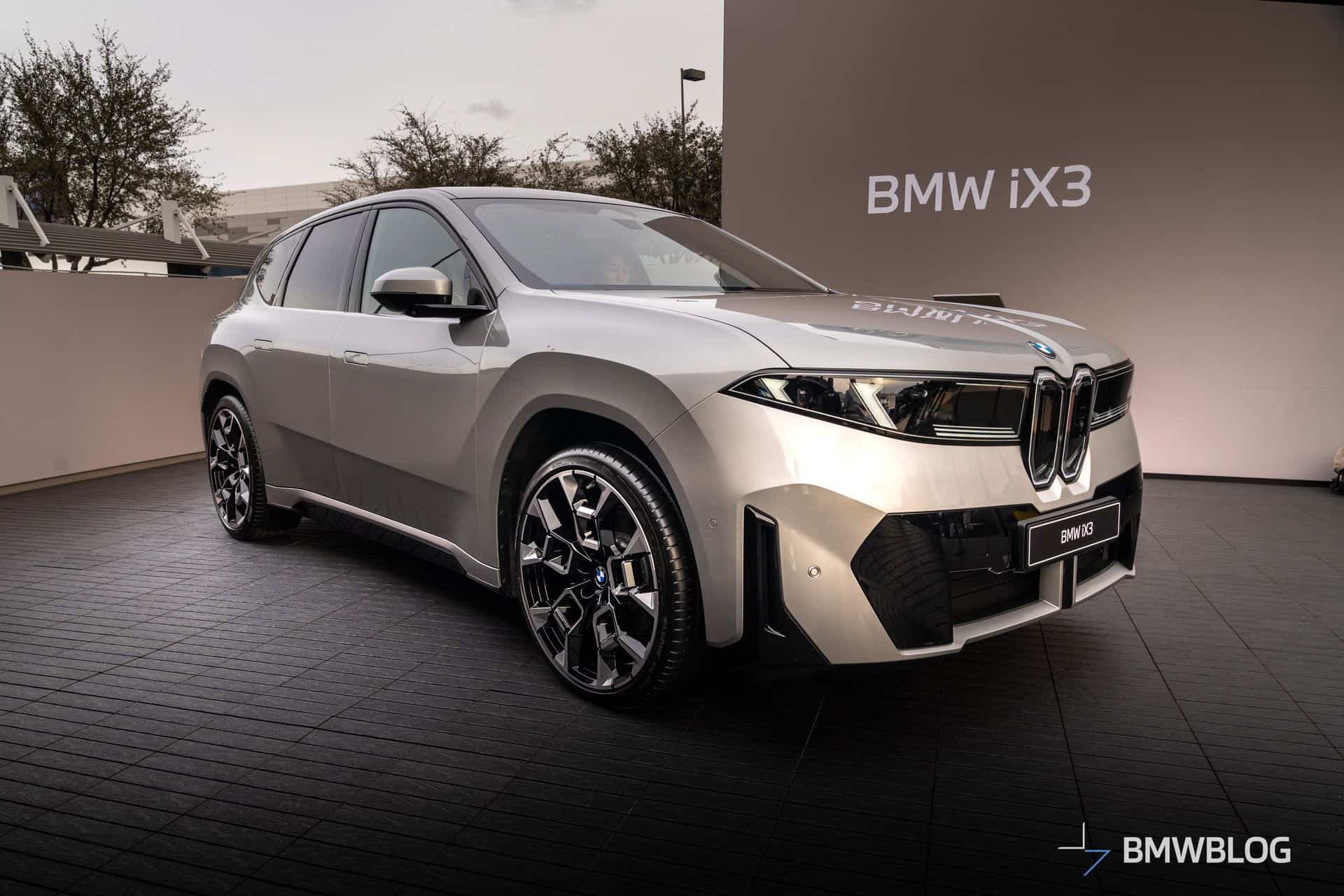
iX3
The Neue Klasse SUV went farther than its official EPA estimate, covering 436 miles on a single charge. Neither the Mercedes GLC nor Volvo EX60 came particularly close.
Article Summary
- It traveled 44 miles farther than the Mercedes GLC and 84 miles more than the Volvo EX60.
- The iX3 exceeded its EPA-estimated range of 392 miles by 11.2%.
- Its 436-mile result puts it ahead of several other posh EVs, including the Audi Q6 E-Tron and Porsche Macan.
BMW’s Neue Klasse offensive is already off to a promising start, and the new iX3 has another reason to celebrate. In Edmunds’ real-world electric vehicle range test, the 2027 iX3 50 xDrive comfortably outperformed two of its biggest rivals, the Mercedes-Benz GLC EV and Volvo EX60. It also traveled significantly farther than its official EPA range estimate.
The electric SUV covered an impressive 436 miles (702 kilometers) before running out of battery. That’s 44 miles (71 kilometers) more than the Mercedes and 84 miles (135 kilometers) farther than the Volvo. In other words, neither competitor even broke the 400-mile barrier, let alone kept up with the iX3.

More importantly, BMW’s first electric SUV of the modern Neue Klasse era exceeded its EPA-estimated range of 392 miles (631 kilometers) by 44 miles, representing an 11.2% improvement over the official figure. That’s an impressive result, especially since EPA estimates are generally more conservative than the WLTP figures used in Europe and the CLTC numbers used in China.
Range isn’t the only area where the Neue Klasse SUV impressed. Edmunds measured energy consumption at 28.3 kWh per 100 miles, well below the EPA estimate of 32 kWh. That’s about 11.6% better than the official figure, suggesting the iX3 uses its battery energy particularly well. It also narrowly beat both rivals on efficiency. The Mercedes GLC recorded 28.4 kWh per 100 miles, while the Volvo EX60 needed 28.8 kWh to cover the same distance.
How Edmunds Does Range Tests

Edmunds uses a mixed driving cycle consisting of 60% city driving and 40% highway driving, with an average speed of 40 mph. The test cars also stay within 5 mph of posted speed limits, run their climate control in automatic mode at 72 degrees Fahrenheit (22 degrees Celsius), and use their most efficient driving settings.
This approach differs from simply driving on the highway at a constant speed until the battery runs dry, but it arguably better represents everyday driving conditions.
The BMW iX3 Also Beat The Audi Q6 E-Tron And Porsche Macan
The iX3 also shines when compared with other rivals in the segment tested by Edmunds. The Audi Q6 E-Tron managed 337 miles, while the Porsche Macan 4 Electric covered 352 miles. That puts the BMW 99 miles ahead of the Audi and 84 miles ahead of the Porsche.
Looking back, the Edmunds result is hardly the first time the iX3 has shown off its long-range chops. BMW itself previously drove one from its Debrecen factory in Hungary to Munich, covering 1,007.7 kilometers (626.1 miles) without stopping to recharge. A Chinese-market long-wheelbase version subsequently went even farther, completing a 1,030.2-kilometer (640-mile) journey with 5% battery remaining. Independent tests have also been encouraging, with Bjørn Nyland recording 749 kilometers (465 miles) at a constant 90 km/h (56 mph).
All of which suggests BMW may have finally found the cure for range anxiety. If the iX3 is already this impressive, the i3 sedan should fare even better in real-world tests, thanks to its more aerodynamic shape. In fact, the long-wheelbase version for China has already covered 1,213 kilometers (754 miles), albeit under specific test routes and driving conditions. Even so, electric vehicles, and not just BMW’s, are increasingly becoming long-distance cruisers.
Source: Edmunds

Related posts



Latest Post


No Comments