-
 Bring a Trailer
 -
 Bring a Trailer
 -
 Bring a Trailer

The Hummer V8 That GM Stuffed Into A Compact Chevy Truck Is One Of The Underrated Engine Bargains In The Used Market
5 minutes reading
Sunday, 20 Sep 2026 12:00 0 12 autotech
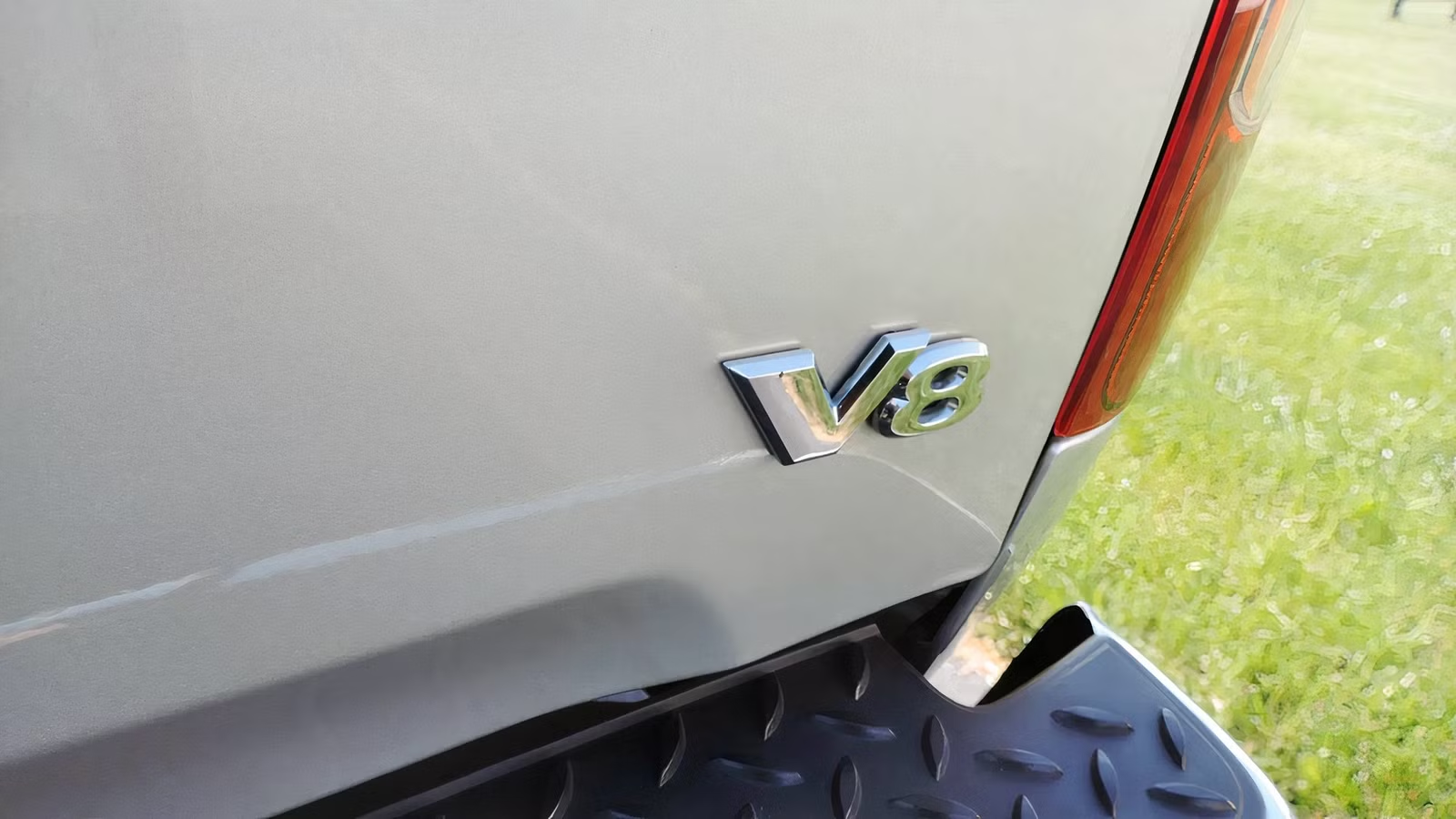
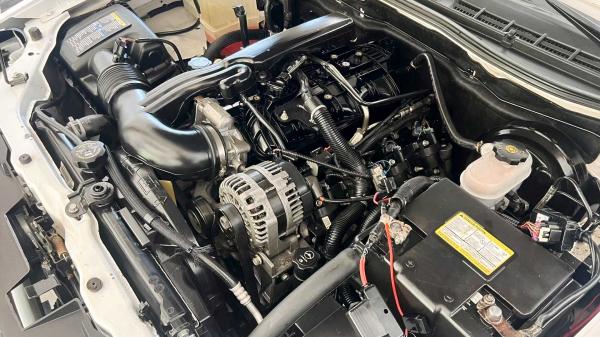
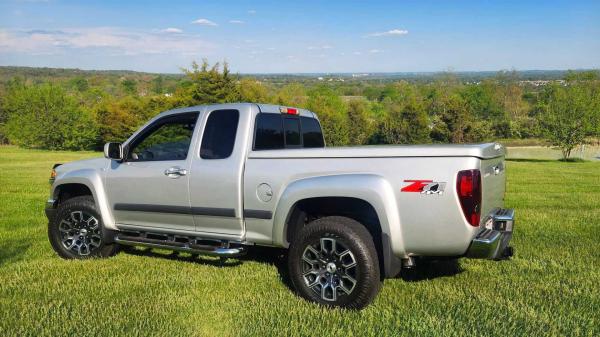
Modern trucks have gotten enormous. The 2026 Chevrolet Colorado starts at $32,400, weighs in at well over 4,000 pounds, and offers exactly one engine: a turbocharged four-cylinder. That’s a long way from what Chevy quietly built between 2009 and 2012 — a compact Colorado stuffed with a 5.3-liter LS V8 sourced directly from surplus Hummer H3 inventory after GM shuttered the brand. Three hundred horsepower, 320 lb-ft of torque, a curb weight that’s roughly half a modern Colorado’s, and a used asking price that currently sits between $10,000 and $20,000 depending on condition and mileage.

39 autotech
Most people have never heard of it. That’s exactly the point. The V8 Colorado is one of the rarest factory small-block installations ever to leave a production line, built in limited numbers across four model years and then largely forgotten when the nameplate went on hiatus. As compact-truck buyers grow increasingly frustrated with the size and complexity of today’s pickups, this lightweight, V8-powered oddity is attracting a serious second look.
Why A Surplus Hummer Engine Ended Up In A Compact Truck
The Colorado and the Hummer H3 were closer relatives than most people realize. Both shared a platform and several components when the H3 launched for 2006, which meant the 5.3-liter V8 developed for the Hummer was already a known quantity on the Colorado’s chassis. When GM declared bankruptcy and eliminated the Hummer brand as part of its broader consolidation, it was left with a stockpile of V8s that had been earmarked for H3 production. The most practical solution was to route them into the Colorado. GM worked through its excess engine inventory; Chevy gained a higher-margin, top-spec truck to sell. Both sides of the ledger worked out.

40 autotech
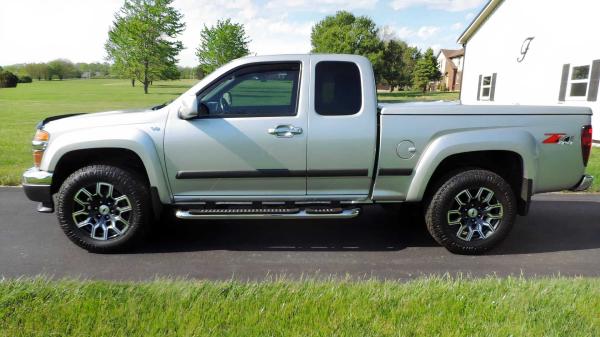
Production ran from the 2009 through 2012 model years, with all V8-equipped Colorados coming exclusively in 4WD 3LT trim with an automatic transmission — no manual, no two-wheel drive, no base or mid-spec configurations. Cab choices were limited to extended or crew cab. Because the 3LT was the top trim, these trucks came loaded: powered driver’s seat, upgraded stereo, sliding rear window, Bluetooth, and a tachometer were all standard. The constraint in the package was the point — GM wasn’t building a stripped work truck, it was building a performance variant with a specific buyer in mind.

The 5.3-liter V8 carried two internal designations across the production run. The 2009 model year used the LH8, which is the simpler of the two — no active fuel management (AFM), no variable valve timing. It’s a straightforward Gen IV small-block. Starting with the 2010 model year and continuing through 2012, the engine became the LH9, which added variable valve timing and flex-fuel compatibility.
For buyers, the distinction matters in a few ways. The LH8’s lack of AFM means fewer potential headaches from the cylinder-deactivation system, which has a documented history of issues in other GM applications. The LH9’s variable valve timing adds a small refinement benefit and the flex-fuel capability, but the core performance figures — 300 hp and 320 lb-ft of torque — are the same across both variants. Either engine sits on the Gen IV small-block architecture, which is one of the most extensively supported platforms in aftermarket history. A camshaft upgrade and a free-flowing exhaust can push output well past 400 horsepower without touching the ECU or fighting encrypted software — a meaningful advantage over any current-generation pickup.
What The Used Market Looks Like Right Now
Because only a few thousand V8 Colorados were produced across four model years, pricing is inconsistent. Kelley Blue Book average figures place most examples in the $10,000–$15,000 range, but low-mileage examples — particularly those that surface through auction sites or private sales — have sold for well over $20,000. The market is thin enough that patience is required: these trucks don’t appear often, and when a clean one does surface, it tends to move quickly.
The only real factory competitor in this segment is the Dodge Dakota V8, which offered a similar proposition — a compact truck with a V8 engine — but never quite matched the Colorado’s power output or the LS engine’s tuning pedigree. For buyers who want a factory LS installation without the cost and complexity of a swap, the Colorado V8 is essentially the only game in town at this price point.
Before buying, a pre-purchase inspection is worth every dollar. These trucks are now 14 to 17 years old, and many were used hard. Rust, chassis damage, and worn suspension and braking components are the primary concerns. A solid example at the right price is a genuine find; a neglected one at a bargain price can become expensive quickly.
The irony of the V8 Colorado’s moment is that GM built it almost by accident — a practical solution to an inventory problem — and then largely moved on. Today, with compact trucks growing heavier and more expensive every generation, that accidental creation looks increasingly intentional. A lightweight, factory-LS truck for under $15,000 is a difficult argument to dismiss.

Related posts





Latest Post

48 minute ago
6 autotech

48 minute ago
5 autotech


No Comments