
The Motorcycle With More Personality Than Power
What grabs the headlines today are high horsepower figures, quickshifters, and electronics that promise to save the rider from himself or herself. This focus on more speed all the time has led to motorcycles that lack soul, especially at legal speeds. You’re not going to be riding your 200-horsepower streetfighter on the limit of adhesion from one stoplight to another or on your favorite back road over the weekend. The sad truth is, if a machine is too capable for the road it’s on, it feels anodyne, but there is hope: there is one truly engaging roadster that chooses to do things differently in 2026.
Platform-Shared Neo-Retros Frequently Lack Genuine Engine Punch

The modern retro roadster segment is the antithesis of the streetfighter segment. The products here ignore futuristic, angular plastic panels for authentic classic looks paired with modern reliability. Unfortunately, many of these roadsters fall victim to platform sharing; they therefore turn out to be sterile commuters under attractive retro looks. This stems from the perception that roadster buyers do not mind the products offering period-correct performance that matches the looks. The ideal roadster does not fall into this trap, choosing to deliver great straight-line performance from its engine.
Usable Street Performance Demands Premium Chassis Components

While motorcycles have always been known for incredibly high specific output, true mechanical character is more dependent on how an engine delivers its power. A naked bike like a roadster offers lots of low-end torque, which is a lot more relevant in street riding. When it is paired with high-spec chassis components, it allows you to have aggressive fun in the corners as well. Pair this with the right tires and brakes, and you have a recipe for a motorcycle that can be enjoyed to its limit on the road.
Triumph Took A Roadster To The Racetrack Without Killing What Makes It Special

When it comes to roadsters, no manufacturer does it better than Triumph. It has been manufacturing large-capacity parallel-twin roadsters for an incredibly long time. Its roadster designs have inspired a whole generation of neo-retro roadsters and continue to set the benchmark for fit, finish, and torque. Recently, it took a whole new direction by equipping one of its roadsters for duty at the racetrack. It did not change the nature of the engine, which means it hasn’t lost the essence of what makes a roadster so wonderful. For those who like them, this is the motorcycle with more personality than power.

The Triumph Speed Twin 1200 RS Is A Win For Feel Over Specs

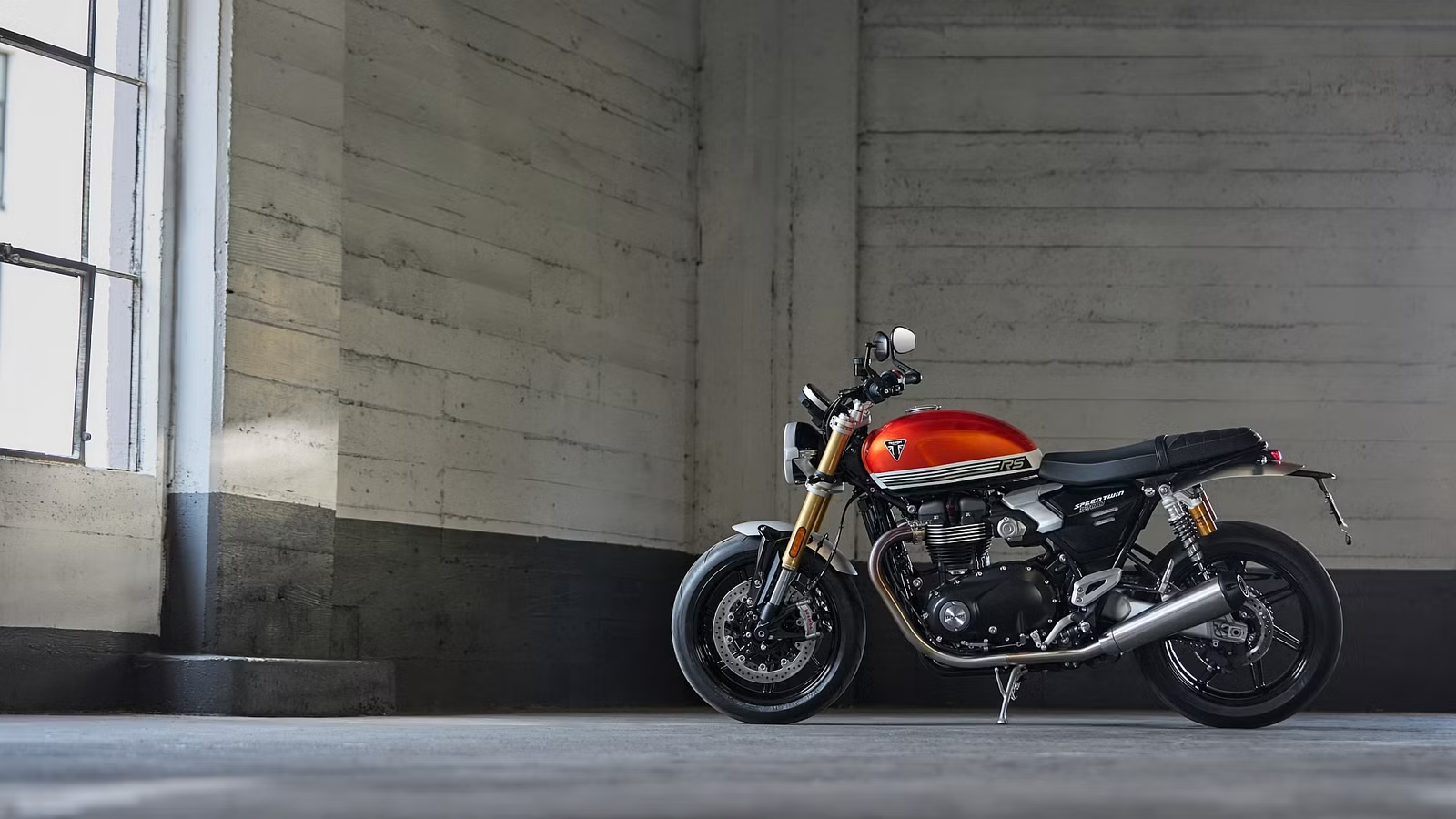
The Triumph Bonneville series is an extremely popular neo-retro standard bike range. The Speed Twin series is just as storied, and takes it a step further to the sporty end of things with its café racer intentions. The Speed Twin 1200 RS distills that spirit into something unique: a café racer with everything wonderful about retro bikes, mated with new-age suspension, brakes, and electronics. It is brimming with low-end torque, a chassis that loves corners, and looks that would make a grown man weak in the knees. This Speed Twin makes a great case for having both beauty and brawn, and it replaces the Thruxton in the lineup as the sporty retro product of choice.
A $17,000+ Price Tag Means It Commands A Premium In The Roadster Segment

The Speed Twin 1200 RS has a base price of $17,195. That makes it almost $2,000 more expensive than the regular Speed Twin 1200, but it isn’t the most expensive variant of the Speed Twin 1200. That honor goes to the TFC variant, which costs a whopping $21,995. At over $17,000, the Speed Twin 1200 RS also competes with liter-class sportbikes, which have the highest power figures in the industry. That’s where its personality comes in; this Triumph isn’t about speed alone. So what exactly does $17,000 buy you that a 200-horsepower inline-four can’t deliver? The answer starts with what Triumph did to the engine.
A High-Compression 1,200cc Twin Delivers Instant Low-End Punch


This is currently Triumph’s largest parallel-twin engine at 1,200 cc. It looks like an old air-cooled engine, but nothing could be further from the truth. The Speed Twin 1200 RS has a different state of tune from the regular Speed Twin; while it retains the 270-degree firing order and liquid cooling, it features a notably high 12.1:1 compression ratio. The result is 103.5 horsepower at 7,750 RPM and 83 pound-feet of torque at 4,250 RPM, making it one of the most powerful retro-styled bikes today. These figures might look modest, but that torque figure helps it move along particularly well.
Power is sent through a six-speed gearbox with an assist-and-slipper clutch and a final chain drive to the rear wheel. A two-way quickshifter is a rare addition to a Triumph modern classic style of motorcycle. The performance that you get from the Speed Twin 1200 RS is worthy of the RS moniker. Sure, it might not be as quick as a modern sportbike with a three-cylinder or four-cylinder engine. But once again, this motorcycle is not about outright speed; it is about the sensations it provides when you open the throttle.
Öhlins Shocks And Brembo Stylemas Elevate The Classic Steel Frame

The Speed Twin 1200 uses a tubular steel cradle frame, which is an old-school design that makes it feel mechanical in the best way. This is a nod to its retro design, but Triumph hasn’t skimped on any of the other chassis components. The swingarm is a two-sided aluminum one, and the 17-inch alloy wheels are cast aluminum items as well. The front suspension is a Marzocchi 43 mm inverted fork, while the rear suspension is by Öhlins. Despite them being twin rear shocks, they are adjustable for preload, compression, and rebound damping. There is 4.7 inches of travel available at the front and 4.8 inches at the rear.

The brakes are similarly high-quality items: twin 320 mm floating discs at the front, gripped by Brembo Stylema M4.30 radial calipers. At the rear, there’s a 220 mm fixed disc gripped by a Nissin two-piston floating caliper. Tubeless radial tires are fitted to the alloy wheels. This is a curious mix of extremely modern components and traditional looks, with the ultimate combination being the liquid-cooled engine that looks air-cooled. It rides and handles like a modern motorcycle, albeit one with a little more mass than we’re used to in a sportbike today.
A Low 31.6-Inch Seat Height Offsets The 476-Pound Curb Weight
The Speed Twin 1200 RS is nearly 31 inches wide with a 55.1-inch wheelbase. The seat height is 31.6 inches, which is a little on the low side for a naked bike, but this is a big wide parallel-twin engine, so you’re going to feel its width because of that. It also weighs 476.2 pounds wet, which is significantly more than is typical in a modern motorcycle. The fuel tank holds 3.8 gallons. At a Triumph-claimed 53.5 MPG, the Speed Twin 1200 RS should be able to go nearly 200 miles on a single tank of gas. Ride it hard, and that fuel consumption figure can increase significantly.
Lean-Sensitive Safety Electronics Are Present, But It Maintains A Clean Retro Aesthetic

The Speed Twin 1200 RS is a thoroughly modern motorcycle under its desirable neo-retro skin, which reinforces the feeling that this is a modern classic. It has the LCD and TFT combination instrument display unique to Triumph, with Bluetooth and navigation available as optional features. It also has a USB-C charging port available in the cockpit. Additionally, cruise control, TPMS, and heated grips are on the options list. The riding electronics are a complete suite with the by-wire throttle and six-axis IMU. There are three ride modes, the third being Sport, which is unique to the RS, along with cornering ABS and cornering traction control. The traction control can be switched off. The two-way quickshifter is unique to the family of parallel-twin engines at Triumph.
High Price Is The Speed Twin 1200 RS’s Achilles Heel

The Speed Twin 1200 RS is no doubt a quality product with a lot of history behind it, but at its price of over $17,000, it is a hideously expensive proposition. Triumph hasn’t made things easier for itself by offering items like Bluetooth connectivity, navigation, and TPMS as optional features. The twin rear shocks give it a very desirable retro look, but the reduced travel means that the ride can be very harsh at low speed. The high curb weight gives it a heftiness that makes it very stable on the highway, but will eat away at confidence at low speeds and in parking lots, especially in combination with the seat height. The compact wheelbase means it will turn smartly, but if you’re looking for scalpel-like handling, this is not the motorcycle for you.
Distinct European And Japanese Rivals Offer Competing Retro Philosophies

As a neo-retro motorcycle with modern underpinnings, this Triumph has some truly interesting competition, beginning with the BMW R 12 nineT. It uses a twin-cylinder engine as well, but it is air- and oil-cooled, is BMW’s preferred boxer twin laid out longitudinally, and has shaft drive. Premium electronics and features accompany it, but it also carries a premium price when you add the striking fairing, making it worth the upgrade.

If you’re on a budget, the Kawasaki Z900RS is a competitor that will deliver far more value. This is a thoroughly modern motorcycle underneath the skin with an inline four-cylinder engine, but the focus is on torque rather than outright power. It also gets quality suspension components with the SE variant, and it never stops feeling special when in the form of the Z900RS Café. The SE makes it quite expensive compared to the base variant.

Finally, there’s the Yamaha XSR900. Like the Kawasaki, it is a modern naked bike underneath, and it has one of the great engines of our time in its CP3 crossplane inline-three engine. It also has a full electronics suite just like the Kawasaki, but unlike the Kawasaki, the fairing is not currently available in the US market, though it has been confirmed for 2027.
Source: Triumph USA

Related posts
Latest Post



No Comments