
The Toyota RAV4 Years Worth Buying And The Ones To Avoid
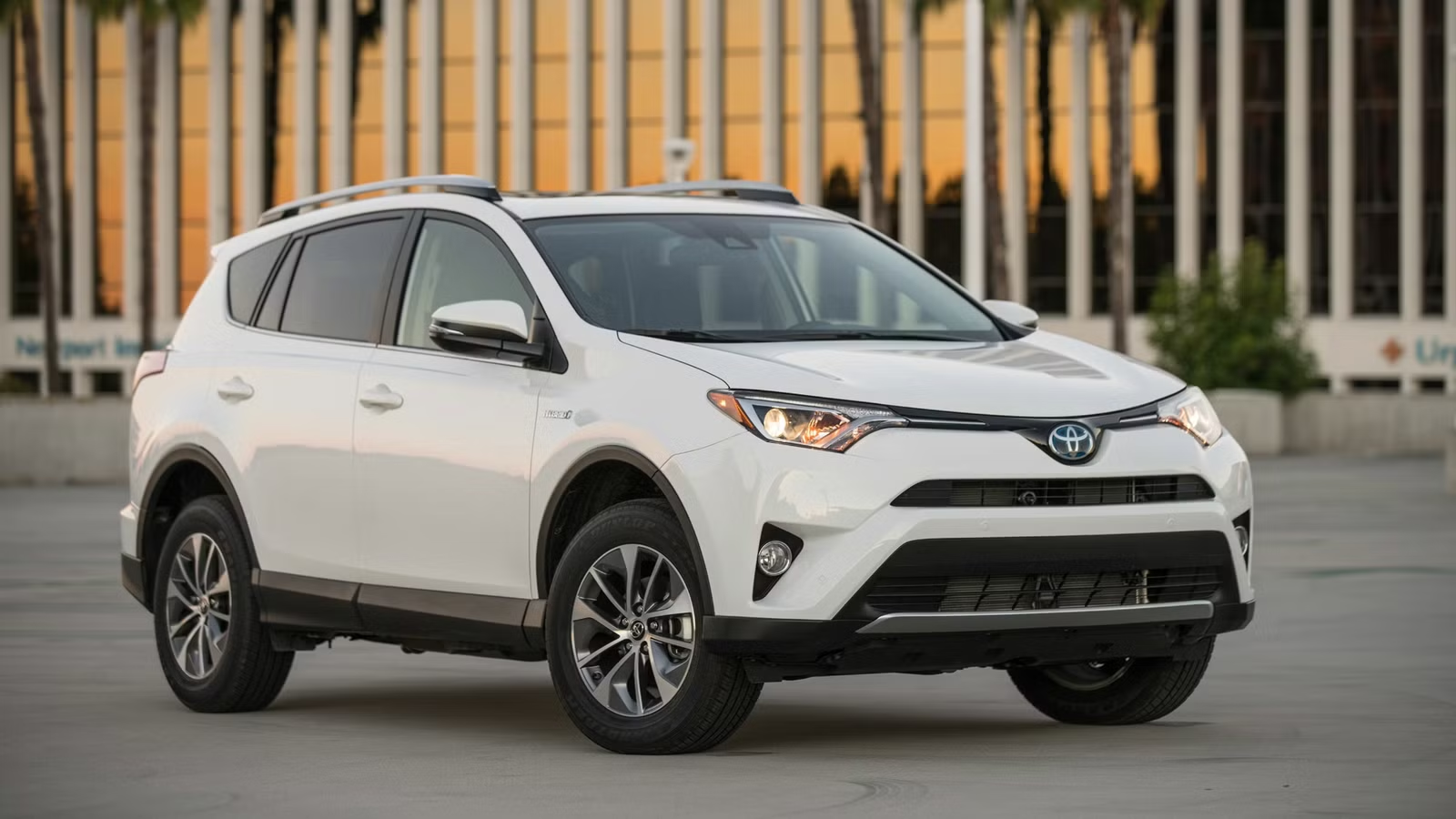
The Toyota RAV4 has spent decades building a reputation for being one of the safer bets in the used SUV market. But that doesn’t mean every RAV4 is equally desirable. Like almost every long-running nameplate, some model years have proved considerably better than others.

The differences become particularly important when shopping for a used car. A RAV4 that has already survived 100,000 miles without major problems can be a fantastic buy, while another year with the same badge may have documented engine, transmission, or fuel-system concerns that could turn a bargain into an expensive repair bill. That makes choosing the right model year more important than simply searching for the newest RAV4 that fits the budget.
Looking at owner complaints, recalls, Toyota’s own technical service information, and the changes introduced with each generation reveals several clear patterns. Here’s what prospective buyers should know before handing over their money.
The RAV4’s Reliability Story Has Changed With Each Generation

The RAV4’s reliability reputation is not based on every generation being flawless. Instead, Toyota has generally followed a familiar pattern: a new generation introduces new technology and engineering changes, while later model years benefit from Toyota ironing out early problems.
The first-generation RAV4 debuted in 1996 and established Toyota’s compact SUV formula, combining car-like road manners with practical four-wheel-drive capability. The second generation followed in 2001 with more space, improved refinement and a broader range of configurations. Both generations are now old enough that condition, rust, mileage and maintenance history are likely to matter more than model-year differences, making a thorough inspection essential when considering either as a used purchase.
The third-generation RAV4 arrived in 2006 and brought larger dimensions and a more powerful 2.4-liter four-cylinder engine. Unfortunately, the early years of this generation are among the RAV4’s most problematic. Owner-complaint data shows particularly high numbers for 2006, 2007 and 2008, with the 2007 model year standing out. CarComplaints identifies excessive oil consumption as the most-reported RAV4 problem overall, with the 2007 model year particularly associated with it. Toyota also issued technical service information concerning excessive oil consumption on vehicles equipped with the 2AZ-FE engine, with production changes made to reduce the problem.
The fourth-generation RAV4 arrived in 2013. While it brought a more modern design and improved refinement, the 2013 model year accumulated more complaints than several subsequent years. The main issues the fourth-generation RAV4 faced included transmission shudder in early models, infotainment glitches, and a 12V battery-related fire risk affecting 2013–2018 vehicles. However, by 2014 and 2016, complaint figures had fallen considerably in several datasets, making the later examples more appealing.
Then came another major change for 2019. Toyota introduced an all-new fifth-generation RAV4 with a new 2.5-liter Dynamic Force engine and 8-speed automatic transmission. On paper, it was a substantial improvement. In practice, the first model year introduced a few issues that make the 2019 worth treating differently from later fifth-generation RAV4s.
Toyota issued a technical service bulletin for 2019 RAV4s experiencing hesitation when accelerating from a slow roll, with an ECM software update designed to address the issue. There were also multiple recalls affecting early fifth-generation vehicles, including fuel-system and engine-related campaigns.
The Toyota RAV4 Years Worth Buying Used
The 2011 and 2012 RAV4s are among the more attractive choices for buyers who want an older SUV without stepping into the problematic early years of the third generation. By this point, Toyota had had several years to work through the issues that affected the 2006–2008 models. Complaint data also show a significant improvement compared with those earlier years. NHTSA complaint data compiled by RoadVitals puts 2011 at 287 complaints and 2012 at 266, compared with much higher totals for 2008 and the particularly problematic 2007 model year. They’re also mechanically straightforward by modern standards. That matters when buying a vehicle that may already have more than 100,000 miles on the odometer.
The 2011 and 2012 RAV4 are a sweet spot in the third generation due to their tested engineering, relatively simple mechanicals, and fewer complaints compared to the early years. However, buyers should still keep certain factors in mind. Age-related wear, suspension components, rust, oil consumption and maintenance history are more important here than chasing a particular trim.
If your budget stretches into the fourth-generation RAV4, the 2015 and 2016 model years offer a particularly compelling combination of age, reliability and modern equipment. By this point, the fourth-generation platform had already been on the market for several years, meaning buyers weren’t taking on the same first-year risk associated with the 2013 redesign. Complaint figures are also relatively restrained compared with several other RAV4 years. One NHTSA-derived dataset records 302 complaints for 2015 and 251 for 2016.
The 2016 model is particularly interesting for hybrid shoppers because it represents the early years of the fourth-generation RAV4 Hybrid, giving buyers the opportunity to combine Toyota’s hybrid system with the mature XA40 platform.
A mature platform with comparatively low complaint levels makes the 2015 and 2016 model years an appealing choice, offering a good balance between modern features and mechanical simplicity. However, buyers should still carefully review the vehicle’s service history, as low complaint numbers are no guarantee that an individual RAV4 has been properly maintained.
The final two years of the fourth-generation RAV4 are another strong option for used buyers. By 2017, the platform was well established, while Toyota had added updates and continued improving the RAV4’s equipment and safety technology. The 2018 model also avoids the first-year issues associated with the completely redesigned 2019 RAV4.
The 2017 and 2018 RAV4 stand out as relatively reliable late fourth-generation models, with 311 and 327 NHTSA complaints respectively, while the 2019 model saw a sharp increase to roughly 875–900 complaints during its first year of the fifth-generation redesign. The late-production fourth-generation RAV4 benefits from a mature platform and fewer reported problems than several surrounding model years, but its age means condition and maintenance history can ultimately matter more than the model year itself.
If you’re shopping for the newer fifth-generation RAV4, the 2020 model year and later are generally more attractive than the launch-year 2019. The fifth-generation RAV4 brought a completely new platform, engine, and transmission combination, so buying the first year of production naturally carries more risk. The 2019 model’s complaint profile reflects this: one database identifies it as the RAV4’s worst model year, particularly because of transmission complaints. By comparison, the later fifth-generation vehicles benefit from Toyota having had time to address early production issues. A recent analysis of RAV4 complaint data also shows a dramatic drop from 2019’s complaint level to 2022, for example.
The 2020 model year and later provide a better starting point for the fifth-generation RAV4, offering newer technology and a more refined platform without the added concerns associated with the generation’s launch year. Buyers should still confirm that all recall campaigns have been completed and pay close attention to transmission behavior, fuel-system concerns, and the vehicle’s software and service history.
If there’s one group of RAV4 model years that deserves serious caution, it’s the 2006–2008 vehicles. The 2007 RAV4 has accumulated particularly high numbers of owner complaints, while 2008 also ranks poorly. CarComplaints identifies excessive oil consumption as a major issue, while NHTSA-derived datasets show 2006–2008 as a particularly troublesome window.
The oil-consumption issue is particularly concerning because it isn’t the sort of defect a casual test drive will necessarily reveal. A vehicle can drive normally while consuming oil at a rate that eventually contributes to engine damage. Toyota’s own technical documentation confirms that certain RAV4s equipped with the 2AZ-FE engine could experience excessive oil consumption and that Toyota changed the piston assembly to reduce it. The safer bet is to skip these model years unless they come with an exceptional maintenance history and clear documentation confirming that the relevant engine work or repairs have been completed.
The 2013 RAV4 isn’t necessarily a disaster, but it is harder to recommend when later fourth-generation examples exist. It was the first year of the redesigned generation, and complaint data shows 2013 sitting noticeably above the following 2014–2016 models in some databases. That’s important because the price difference between a 2013 and a later example may not be large enough to justify accepting the additional risk. Potential buyers should approach cautiously. If a similarly priced 2015 or 2016 is available, the newer example is usually the more compelling choice.
The 2019 RAV4 is perhaps the most interesting “avoid” year because it looks so tempting on paper. The all-new generation offers a modern design, improved technology, a new 2.5-liter engine, and an 8-speed automatic transmission. Yet owner-complaint data paints a much less comfortable picture, with CarComplaints rating 2019 as the worst RAV4 model year and identifying transmission problems as its worst category.
Toyota also issued a technical service bulletin specifically addressing hesitation during low-speed acceleration on 2019 RAV4s. The fix involved updating the engine-control software. Certain 2019–2020 RAV4s were also included in safety recall campaigns, including one involving an engine condition that could potentially lead to a stall. The early fifth-generation RAV4s aren’t an automatic no, but don’t buy one without checking its VIN, recall history, transmission behavior, and service records.
The 2020 RAV4 is much harder to label a “bad” year compared with the 2019, but it still deserves more scrutiny than later fifth-generation examples. Complaint data remains higher compared with several later model years, and Toyota’s recall documentation shows that certain 2019–2020 RAV4s were affected by safety campaigns. That doesn’t mean buyers should automatically reject every 2020 RAV4. Instead, it makes the VIN check particularly important. A well-maintained 2020 with documented recall completion can make sense, but buyers should avoid paying a premium over a later model simply because it is newer than a fourth-generation RAV4.
What To Check Before Buying Any Used RAV4
Even the “best” RAV4 model year can become a terrible used-car purchase if the individual vehicle has been neglected. Checking the VIN for open recalls should be the first step. NHTSA’s recall system allows buyers to search by VIN and determine whether a specific vehicle has unrepaired safety recalls. Importantly, NHTSA states that recalls do not expire.
A 2016 RAV4 with 150,000 miles and impeccable maintenance can be a better purchase than a neglected 2019 with half the mileage. Check maintenance records for evidence of regular oil changes, transmission servicing where applicable, cooling-system maintenance, and replacement of worn items.
Test the transmission from cold. Don’t limit the test drive to a quick trip around the block. Pay attention to hesitation, harsh engagement, delayed shifts, shuddering, or unusual noises. This is particularly important on the 2019 RAV4 given Toyota’s documented low-speed hesitation bulletin.
Check for oil consumption. This is especially important on older RAV4s, particularly the 2006–2008 model years. Ask the owner how often they need to add oil between services and look for signs of leaks or blue exhaust smoke. A vehicle that constantly needs topping up deserves further investigation.
Get a pre-purchase inspection. A professional inspection can uncover problems that a model-year guide can’t. Have the mechanic inspect the suspension, brakes, steering, drivetrain, engine leaks, underbody condition, and signs of previous accident repairs. On older RAV4s, overall condition can matter more than the difference between two adjacent model years.
So, Which Toyota RAV4 Should You Actually Buy?
For most used buyers, the answer isn’t simply “buy the newest RAV4 you can afford.” The smarter strategy is to target the middle or later part of a generation, where Toyota has already had time to address early production problems.
For an affordable older RAV4, the 2011–2012 models make sense. For buyers wanting a newer fourth-generation SUV, the 2015–2018 RAV4s are arguably the sweet spot. And for shoppers who want the latest fifth-generation design, 2020 and newer are more attractive than the launch year 2019.
The years that require the most caution are 2006–2008, largely because of documented oil-consumption concerns; 2013, because it was the first year of a new generation; and 2019, because of its elevated complaint rate and documented low-speed hesitation issue.

That doesn’t mean you should automatically reject a well-maintained 2019 or assume every 2007 RAV4 will fail. Used-car buying is ultimately about the specific vehicle in front of you. But when two RAV4s have similar mileage, condition, and price, choosing the better-documented model year can give you a meaningful head start.
The Toyota RAV4’s reputation for reliability is well-deserved, but it shouldn’t be mistaken for a guarantee that every model year is equally dependable. The best used RAV4s tend to be later examples of each generation. The 2011–2012, 2015–2018, and 2020—and newer models offer some of the strongest combinations of reliability, age, features, and ownership value.
At the other end of the spectrum, buyers should think carefully before purchasing a 2006, 2007, or 2008 RAV4, particularly when the vehicle has a history of oil consumption. The 2013 and 2019 model years also deserve additional scrutiny because they represent first-year redesigns with more reported problems than the surrounding years.
Ultimately, the model year is only the starting point. A clean title, complete maintenance history, completed recalls and a successful pre-purchase inspection can help ensure the RAV4 you choose delivers the practicality and reliability buyers expect from a used SUV.
Sources: Toyota, CarBuzz, Edmunds, CarComplaints, NHTSA, SCRIBD

Related posts





Latest Post


No Comments