
Forget The Gold Wing—This Japanese Tourer Out-Comforts It For Less
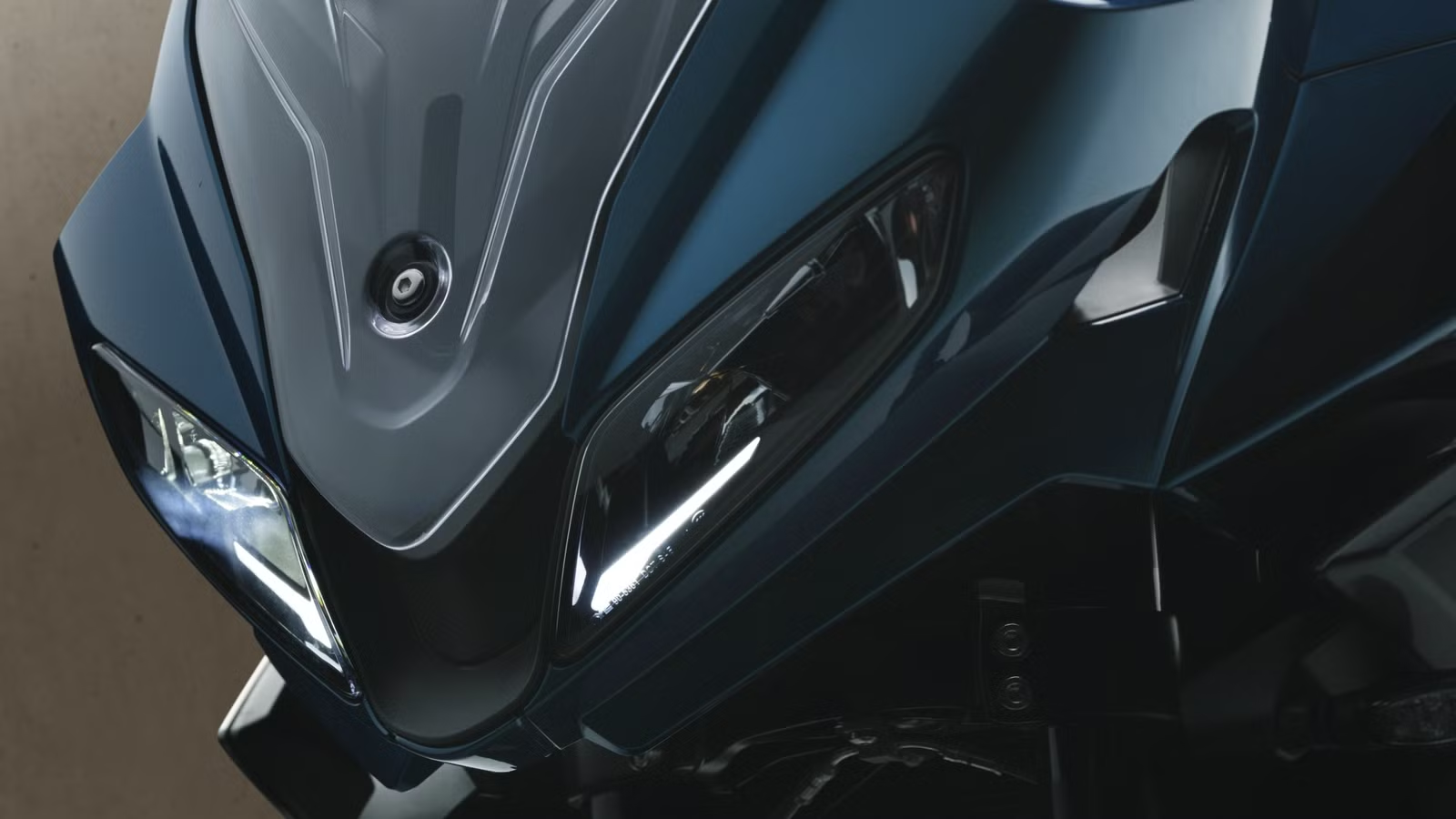
Long-distance touring motorcycles have traditionally sold themselves on big everything (engines, big fuel tanks, and physical bulk). But displacement alone doesn’t determine whether you’ll still want to be on a motorcycle after several hours in the saddle. Ergonomics, wind protection, suspension, usable performance, range, and rider aids can matter far more once the odometer starts piling on miles. And one recently updated middleweight makes that argument particularly well.
A Big Engine Can Have Repercussions On A Tourer

There’s a perfectly good reason why so many touring motorcycles come with four-digit displacement figures. A big engine makes effortless highway speed easier, gives you plenty of shove when passing with a passenger and luggage aboard, and rarely needs to be worked particularly hard. Add a substantial chassis, generous bodywork, and a huge fuel tank, and you’ve got a motorcycle that’s very good at shrinking hundreds of miles into a single afternoon.
But all that motorcycle doesn’t disappear when the interstate ends. Weight becomes much more noticeable in parking lots, traffic, steep driveways, and tight mountain switchbacks. Bigger engines can also drink more fuel, while larger and more sophisticated motorcycles tend to command correspondingly larger prices. If you’re mostly traveling solo and aren’t regularly crossing states with half your house packed into the luggage, some of that capability can become excess capacity you’re carrying everywhere.
Comfort Starts With Everything Around The Engine

Spend six or eight hours riding and horsepower quickly becomes only one line on a much longer checklist. A neutral riding position keeps your wrists and back happier. A decent windscreen reduces the constant pressure of highway airflow. Good suspension prevents rough pavement from slowly beating you into submission, while a supportive seat, useful fuel range, cruise control, and practical luggage options eliminate little annoyances that become considerably bigger after a few hundred miles.

That creates an interesting sweet spot for middleweight sport-tourers. Their engines can comfortably maintain highway speeds and provide enough passing performance to keep things entertaining once the road starts twisting, but the motorcycles themselves don’t necessarily inherit the physical bulk of full-size touring machines. Done properly, the result isn’t merely a smaller alternative. It can be the more sensible motorcycle for riders who want one machine to commute, tour, and have some fun on.
Middleweight Sport-Tourers Have Become Serious Mile-Munchers

Middleweight motorcycles used to come with an implied upgrade path. You bought one because it was affordable and approachable, rode it for a while, then supposedly graduated to something bigger. That logic has become increasingly difficult to defend. Modern middleweights have ride-by-wire throttles, sophisticated rider aids, quickshifters, cruise control, connectivity, adjustable windscreens, serious luggage options, and engines putting out numbers that would’ve been superbike territory not all that long ago.
For riders who primarily stick to pavement and spend most of their time traveling alone, a lighter road-focused middleweight can cover an enormous amount of ground without demanding much in return. And if you’re still thinking an engine somewhere around 600cc automatically means beginner-bike performance, the latest generation of machines makes a pretty convincing argument otherwise.
The Triumph Tiger Sport 660 Makes A Strong Case For Downsized Touring

That brings us to the Triumph Tiger Sport 660, which starts at $10,445 in the U.S. Triumph has substantially reworked its smallest Tiger Sport for the new model year, and the centerpiece is an upgraded 660cc liquid-cooled DOHC inline-three. It now produces 94 horsepower at 11,250 rpm and 50 pound-feet of torque at 8,250 rpm, while Triumph says 80 percent of its peak torque is available throughout a broad portion of the rev range.
Triumph didn’t get there with a software tweak and a new sticker. The triple now breathes through three individual 44 mm throttle bodies, while revised cylinder-head components and higher-lift camshafts help it breathe more freely upstairs. The redline climbs to 12,650 rpm, giving the engine a much stronger top-end without throwing away the flexible delivery that makes a triple useful on normal roads. It’s a substantial performance upgrade without requiring Triumph to move the bike into a larger displacement class.

That matters because the Tiger Sport isn’t trying to win an adventure-bike cosplay contest. It’s a road-focused sport-tourer built around 17-inch cast-aluminum wheels, with a 120/70 front and 180/55 rear tire setup. The tubular-steel perimeter frame and twin-sided steel swingarm remain relatively straightforward, which suits a motorcycle whose job is less about conquering remote trails and more about making an ordinary Tuesday commute and a 500-mile Saturday equally reasonable.
Comes Armed With Touring Hardware That Actually Matters

The electronics package now looks far more appropriate for that mission. Cruise control is standard, as is a quickshifter for clutchless up-and-down changes. Sport joins Road and Rain for three available riding modes, while a six-axis IMU supports optimized cornering ABS and switchable optimized cornering traction control. There’s also all-LED lighting, self-canceling indicators, and a combined LCD and color TFT instrument cluster.
Suspension comes from Showa, with 41mm upside-down separate-function cartridge forks up front and a rear monoshock with remote hydraulic preload adjustment. Both ends provide 5.9 inches of wheel travel, giving the Tiger Sport enough compliance for broken pavement without turning it into a tall off-road machine. The rear preload adjuster should also make compensating for a passenger or luggage considerably less annoying than reaching into the chassis with a tool.

Its 32.9-inch seat height is manageable for the category, and Triumph offers a lower accessory seat that drops it to 31.9 inches. Michelin Road 5 tires reinforce its pavement-first priorities, while twin 310mm front discs with Nissin two-piston calipers handle braking duties. Braided brake lines and span-adjustable levers round out a chassis package aimed at usability rather than chasing exotic componentry for the sake of a spec-sheet flex.
The 2026 Update Fixes One Of The Old Tiger Sport 660’s Biggest Touring Limitations
Perhaps the most important upgrade, though, doesn’t add any horsepower. Triumph enlarged the fuel tank to 4.8 gallons, directly addressing one of the areas that previously made its smallest sport-tourer less convincing for genuinely long rides. More fuel means fewer interruptions, and that’s exactly the kind of improvement that becomes increasingly valuable when your destination is several states away rather than across town.
Triumph also reshaped the bodywork and radiator cowls, while the adjustable windscreen can be repositioned one-handed to alter wind protection. Integrated pannier mounts are already built into the motorcycle, and Triumph offers optional luggage including panniers, a top box, and additional carrying solutions. There’s a proper passenger seat with integrated grab handles too, so two-up touring remains part of the equation rather than an afterthought.

Standard My Triumph connectivity brings phone pairing, media controls, and turn-by-turn navigation prompts to the display, while available equipment includes heated grips, tire-pressure monitoring, auxiliary power, a USB charger, and additional lighting. Maintenance intervals stretch to 10,000 miles or 12 months, whichever comes first, and Triumph backs the bike with a two-year unlimited-mileage warranty. Those aren’t glamorous upgrades, but they’re exactly the details that make ownership easier when you’re actually piling on miles.
Source: Triumph Motorcycles

Related posts



Latest Post


No Comments