
The 2027 Silverado’s New Software Is GM’s Biggest Tech Bet in Years
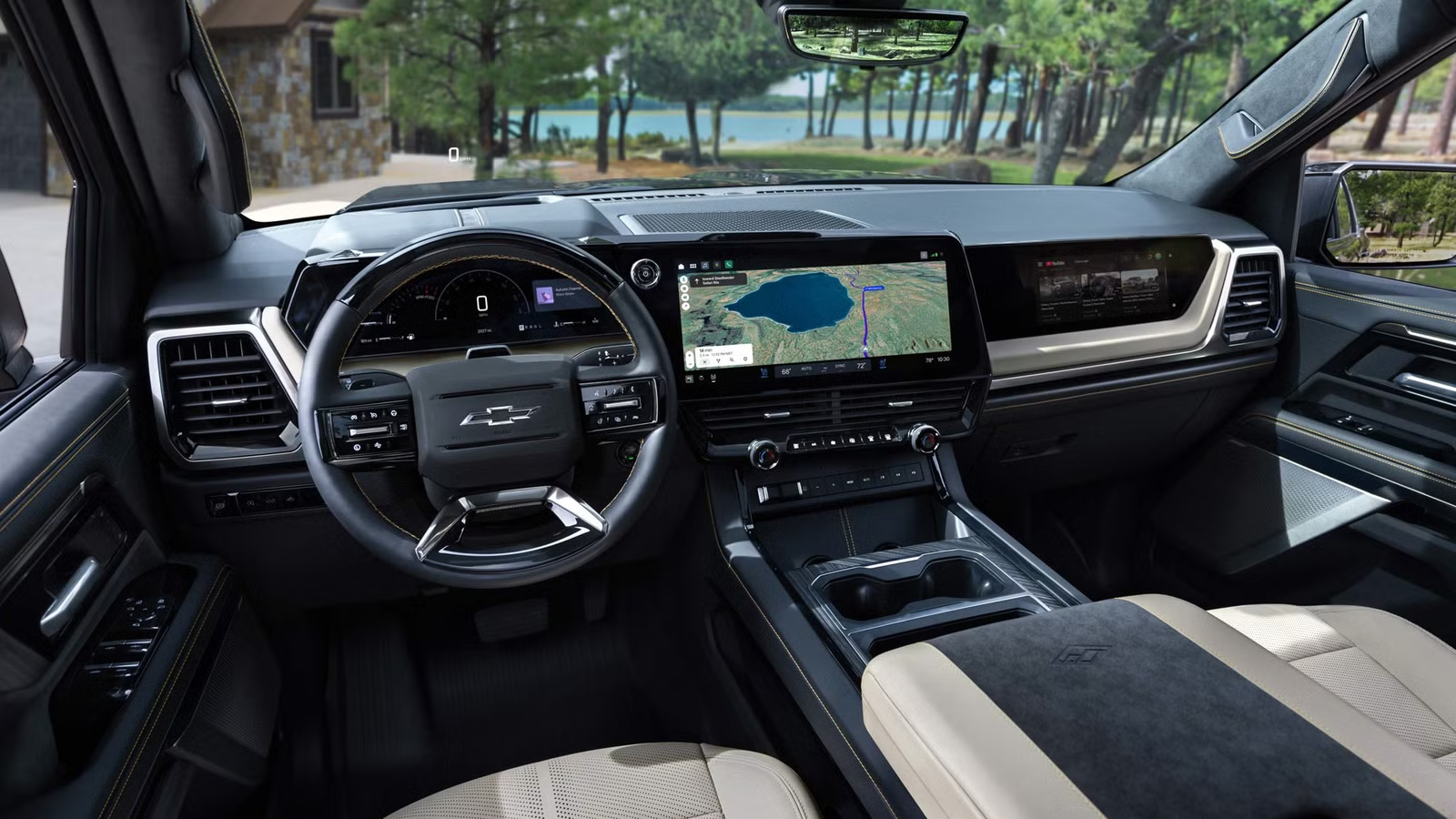
GM announced a completely redesigned in-vehicle software platform debuting on the 2027 Chevrolet Silverado and GMC Sierra — and it’s a meaningful departure from how truck infotainment has worked for the past decade. Rather than dropping drivers into a grid of app icons, the new system opens on a split-view home screen that keeps Google Maps front and center alongside a smaller, editable widget card for audio, vehicle status, or trailering data.

The timing is deliberate. GM says infotainment now ranks among the top three purchase drivers for new truck buyers — a shift that wasn’t true even a few years ago. With the Silverado and Sierra accounting for nearly one in three vehicles GM sells, launching this redesigned platform on its highest-volume trucks is both a statement of confidence and a signal of where the company’s software strategy is heading.
A Home Screen Built Around Where Drivers Already Are
The core philosophy behind the new UI is simple: stop making drivers hunt. Colin McCormick, GM’s group product manager for projection, profiles, and Google built-in systems, put it plainly in a walkthrough with Autoblog: “We don’t drop you into an app launcher. The intention is that there’s a reliable, comfortable, known place that you’re going to land every time you start up your vehicle, rather than just an app launcher that you’ll have to decide which place you want to go.”

Tapping either the map or the widget card expands it into a full experience with an animated transition — no hard app launches, no mode-switching. A notification shade, borrowed directly from the Android and iPhone playbook, pulls down from the top of the screen with quick toggles for mic muting, driver profile switching, and app notifications. Apple CarPlay and Android Auto are integrated into the same visual framework rather than treated as a separate mode, sitting in the large card where native navigation would otherwise live. As GM’s Executive Director for Connected Apps and Services Mike Wahlstrom described it, the goal is for drivers to feel like they’re “interacting with a single experience rather than moving from room to room inside a house.”
The Instrument Cluster Now Knows What You’re Doing

The cluster is no longer a static gauge layout. It shifts its entire display depending on the driving mode: a standard view, a stripped-down minimalist view showing just speed and essentials, dedicated trailering and off-road layouts, and a new 3D sensor visualization that renders what the truck’s cameras and sensors are actually detecting — other vehicles, pedestrians, crosswalks, lane markings.
That last view was built with Super Cruise in mind. GM says customers have now logged over a billion miles on its hands-free driving system, but first-time users consistently reported anxiety about releasing the wheel. McCormick’s team heard the feedback and designed the 3D view to address it directly. “For the sake of confidence in the system, they want to see what the vehicle’s seeing,” he said, adding that it’s become his own most-used cluster view. The visualization works whether or not Super Cruise is active.
Trailering Gets Automatic Profile Detection and Routing

For truck owners who tow, the new system treats trailering as a first-class feature rather than a buried submenu. Plug in a trailer and the UI adapts on its own: the cluster switches to a trailering layout, a dedicated card appears on the center screen tracking brake gain and tire pressure (on equipped trailers), and Google Maps switches to trailer-aware routing that accounts for height and weight restrictions to route around low overpasses.
The setup burden that used to frustrate returning towers is largely gone. If a trailer profile is saved to a driver’s GM account, it loads automatically when that trailer is connected. “If you have it saved to your GM profile, that trailer profile would get ported over when you go in and plug it in,” McCormick said. Hardware support includes a dedicated hitch-view camera for hitching without a spotter and underbody terrain cameras for off-road obstacle visibility. A phone app feature rounds it out, letting owners run a full trailer light check — brake, turn signal, reverse, running lights — from their phone rather than walking back and forth to the hitch.
Smaller Changes That Add Up for Daily Drivers

A few refinements address complaints that showed up repeatedly in GM’s customer research. Incoming phone calls no longer take over the entire screen — they arrive as a smaller overlay, and an accepted call shrinks to a persistent icon and timer at the top, leaving navigation or trailering views intact underneath. McCormick noted this came up constantly from drivers managing a trailer while navigating. One caveat: Android Auto benefits from deeper native integration since both run on Android, while Apple CarPlay calls can still surface differently. GM says it’s in ongoing conversations with Apple to close that gap.
Higher-trim trucks gain a front passenger display hidden behind an articulating trim panel, capable of running Amazon Music, Disney+, Hulu, YouTube, and a web browser. Polarized technology keeps the content visible only from the passenger seat. The driver retains control through a center-screen entertainment app, with the ability to see what’s playing, lock the display, or push audio to the cabin speakers. Physical controls remain for HVAC, defrost, and trailer brake gain — functions drivers need to find by feel. Garage door remotes now support more than three presets and gain geolocation, surfacing the right remote automatically when the truck pulls into the driveway.
A Platform Built to Scale Beyond These Two Trucks

GM describes the new UI as a scalable software and design framework adaptable across its lineup, though the 2027 Silverado and Sierra are the only confirmed launch vehicles for now. Over-the-air updates will continue adding features after purchase. The decision to debut the platform on GM’s best-selling trucks rather than a lower-volume model was intentional. “Normally when we launch changes like this, we’ll do it on a smaller architecture,” McCormick said. “But I think this kind of shows how confident we are in this adaptability and the cohesiveness between projection and the native system, that we’re willing to put it on our bread and butter.”

Related posts





Latest Post


No Comments