
The Most Reliable Japanese Hybrid SUV From 2024
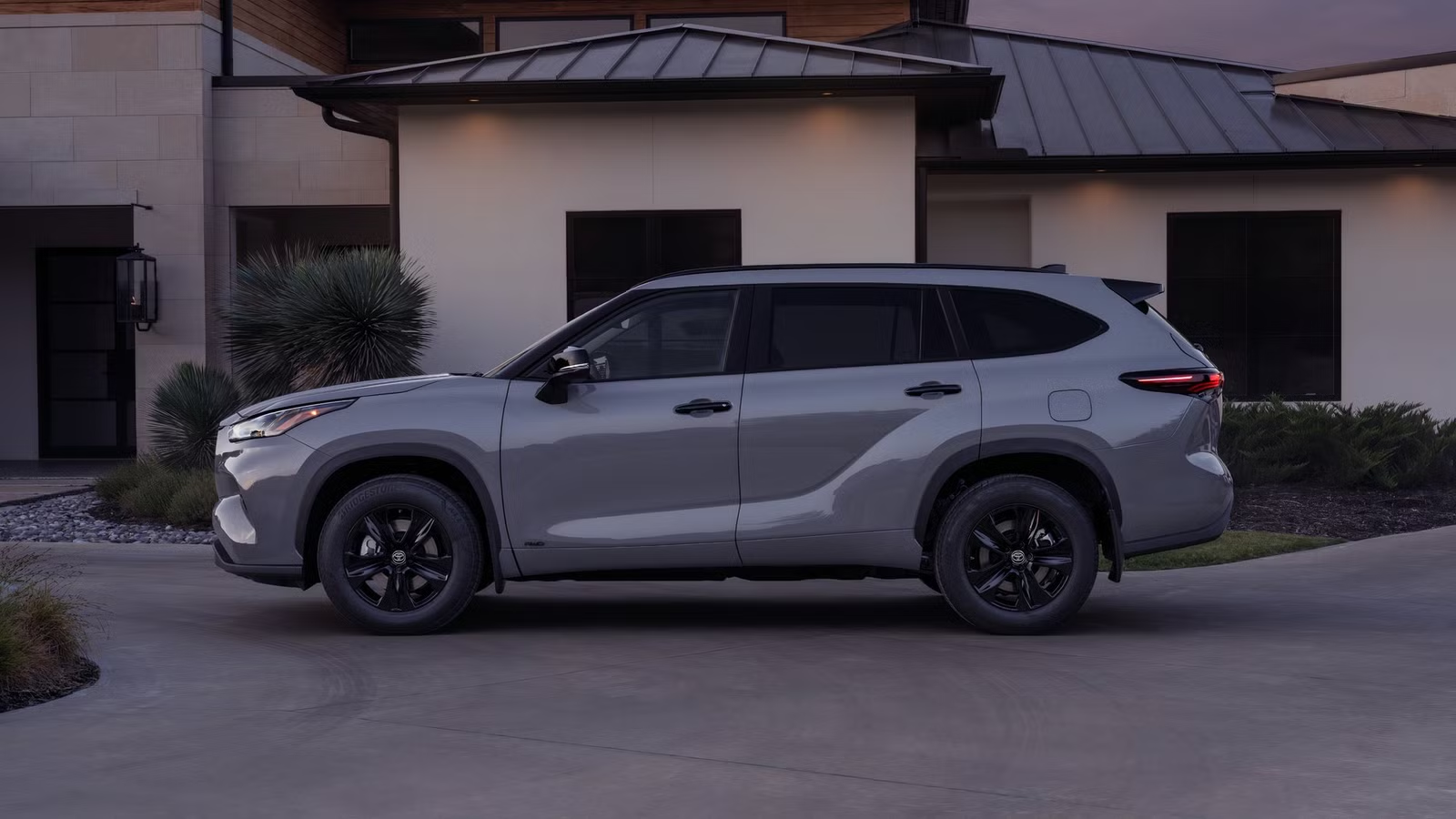
Hybrid SUVs have never been more capable — or more competitive. As Japanese automakers continue to push the boundaries of efficiency and long-term dependability, one question keeps coming up among buyers: which hybrid SUV actually delivers on its promises year after year? The hybrid SUV segment is crowded with strong contenders, but when you stack them against each other on reliability, real-world fuel economy, and ownership satisfaction, one nameplate keeps rising to the top. If you want a hybrid SUV that earns its reputation rather than just claiming one, read on.

Picture a hybrid SUV that doesn’t just meet your expectations for dependability — it redefines them. Whether you’re threading through city traffic, covering highway miles on a family road trip, or simply prioritizing a vehicle built to last, the right Japanese hybrid SUV makes that choice easy.
The Toyota Highlander Hybrid Was The Most Reliable Japanese Hybrid SUV In 2024
The Toyota Highlander Hybrid has been a fixture in the SUV market since its debut in 2005, seamlessly blending the versatility of an SUV with the fuel efficiency of a hybrid. Over the years, it has evolved to meet the changing needs and preferences of consumers, maintaining its status as a top choice for families and eco-conscious drivers alike. The Highlander Hybrid’s journey began as one of the first hybrid SUVs, setting the standard for others to follow. Toyota’s commitment to innovation and sustainability is evident in the Highlander’s continuous improvement in design, technology, and performance. Each generation has brought gains in fuel economy, safety features, and interior comfort, keeping it competitive in an increasingly crowded segment.

The Highlander Hybrid’s appeal lies in its ability to deliver a spacious, comfortable ride alongside advanced technology and the peace of mind that comes with Toyota’s reputation for reliability. The latest model continues to build on that legacy, offering an even more refined driving experience underpinned by mature, proven hybrid technology. That combination of practicality, efficiency, and durability has cemented the Highlander Hybrid’s place as a go-to choice for drivers who want a dependable, eco-friendly SUV without compromise.
It Scored 9.2 / 10 On Reliability

The 2024 Toyota Highlander Hybrid garnered significant acclaim in the automotive world, particularly for its exceptional reliability. Earning an impressive 9.2 out of 10 on iSeeCars, this model underscores Toyota’s longstanding reputation for building dependable vehicles that stand the test of time. That high score reflects its consistent ability to deliver a worry-free ownership experience.
The Toyota Highlander Hybrid routinely outranks many of its competitors. It has won awards for best hybrid SUV overall, best family SUV, and safest hybrid SUV. Strong standard safety features make it an especially compelling choice for families, and its exceptional blend of efficiency and comfort keeps it among the best hybrid SUVs on the market.
Its Hybrid Powertrain Produces 265 Horsepower

The 2024 Toyota Highlander Hybrid boasts a powertrain engineered for both efficiency and confident everyday driving. At its heart lies a 2.5-liter four-cylinder gasoline engine paired with an electric motor. While Toyota doesn’t disclose the electric motor’s specific output, the combined system generates a healthy 265 horsepower and 310 pound-feet of torque. That output is channeled through an electronically controlled continuously variable transmission (ECVT) that routes power to all four wheels via Toyota’s Electronic On-Demand All-Wheel Drive (AWD) system.
Complementing the gasoline engine is a battery pack optimized to maximize range in electric-only mode during short commutes and low-speed maneuvering — Toyota keeps the exact capacity close to its chest, but the real-world results speak for themselves. The 2024 Highlander Hybrid truly shines when it comes to fuel efficiency.
According to EPA estimates, it achieves an impressive 36 MPG in the city and 35 MPG on the highway, translating to a combined fuel economy of 36 MPG. The Highlander Hybrid also carries a Super Ultra Low Emission Vehicle 30 (SULEV30) rating.
Performance Specifications
|
Engine |
2.5-liter four-cylinder and electric motor |
|
Transmission |
ECVT |
|
Horsepower |
265 hp |
|
Torque |
310 lb-ft |
|
Driveline |
AWD |
|
Towing Capacity |
3,500 lbs |
|
0-60 MPH |
7.2 seconds |
|
Fuel Economy |
36 MPG (combined) |
Toyota Reliability You Can Depend On

Toyota’s legendary reliability isn’t magic — it is meticulous engineering. The automaker prioritizes high-quality materials, rigorous testing, and continuous improvement throughout a vehicle’s lifecycle. The Highlander Hybrid exemplifies this approach. Toyota’s preference for proven technology over unvetted features reflects its commitment to minimizing potential problems. The Toyota Production System (TPS) — which emphasizes efficiency and continuous improvement through practices like just-in-time manufacturing — empowers employees to identify and address issues proactively, reinforcing trust in every vehicle that rolls off the line.
Durability is another cornerstone of the Highlander Hybrid’s character. Its components are engineered to handle more stress than typical operating conditions demand. That over-engineering may not produce the flashiest feature list, but it does produce a vehicle that’s far less likely to leave you stranded. Toyota also mines owner data throughout the Highlander Hybrid’s life cycle to catch emerging issues early and incorporate fixes into future models — a continuous feedback loop that keeps reliability improving generation over generation.
The 2024 Toyota Highlander Hybrid isn’t just a spacious, fuel-efficient SUV; it’s a tangible expression of Toyota’s commitment to building vehicles that last. From high-quality components to a design philosophy centered on longevity, every element is calibrated to make it a dependable companion for the long haul.
What Sets The Highlander Hybrid Apart

In a crowded market, the 2024 Toyota Highlander Hybrid stands out for its trifecta of reliability, efficiency, and features. Toyota’s reputation for quality shines through in the Highlander Hybrid’s proven powertrain and meticulous manufacturing processes, which together deliver a genuinely trouble-free ownership experience. On the efficiency front, this hybrid SUV sips fuel, achieving impressive combined mileage thanks to its well-integrated electric motor and gasoline engine working in harmony.
But the Highlander Hybrid isn’t purely utilitarian. It offers a comfortable interior with available features like captain’s chairs and a user-friendly infotainment system that make every journey more enjoyable. If you’re searching for a reliable, fuel-efficient, and well-equipped used hybrid SUV, the 2024 Toyota Highlander Hybrid deserves a closer look.
When New, It Started At $40,970

The 2024 Toyota Highlander Hybrid strikes a balance between affordability and features. While the base MSRP of $40,970 (when new) sat higher than some rivals, Toyota’s reliability record changes the long-term calculus: fewer repairs and lower ownership costs over time can more than offset the initial price premium. The Highlander Hybrid’s strong fuel economy adds further savings at the pump. Higher trim levels unlock desirable upgrades like captain’s chairs and premium audio, though they come at a steeper price.
2024 Toyota Highlander Hybrid Trim Levels And Pricing (New And Used)
|
When New In 2024 |
KBB Fair Purchase Prices In 2026 |
|
|
LE |
$40,970 |
$35,800 |
|
LE Nightshade |
$41,970 |
$39,600 |
|
XLE |
$44,120 |
$41,400 |
|
XLE Nightshade |
$45,120 |
$41,700 |
|
Limited |
$48,225 |
$45,400 |
|
Platinum |
$51,425 |
$46,800 |
Toyota, in general, prioritizes building vehicles that last. While some manufacturers offer lower sticker prices, higher repair frequency can quickly erode those initial savings. The Highlander Hybrid embodies Toyota’s long-term value philosophy, making it a package worth considering well beyond the showroom floor.
Trims And Packages
The 2024 Toyota Highlander Hybrid offers a range of trims to suit different needs and budgets:
- LE: The base trim starts strong with 18-inch wheels, an 8-passenger seating configuration (second-row bench), and a user-friendly infotainment system. It prioritizes practicality and delivers the core hybrid experience.
- XLE: The XLE takes things a step up by adding amenities like heated front seats, a sunroof, and a larger touchscreen. It also offers the option for second-row captain’s chairs, reducing passenger capacity to seven but increasing comfort.
- LE Nightshade & XLE Nightshade: These special editions add a dose of style with blacked-out exterior accents, unique wheels, and a sporty interior. They’re cosmetic upgrades over the standard LE and XLE trims.
- Limited: Geared towards luxury, the Limited pampers you with perforated leather seats, a JBL sound system, and a digital rearview mirror. It also boasts a standard panoramic moonroof and heated second-row seats.
- Platinum: The top-of-the-line Platinum goes all out with a heads-up display, a 12.3-inch touchscreen, and a bird’s-eye view camera system. It offers the ultimate in comfort and technology.
As you move up the Highlander Hybrid trim ladder, you’re essentially paying for increased comfort, convenience, and technology. The LE and XLE offer a great balance of value and functionality, while the Nightshade editions add a touch of personality. For those seeking a more premium experience, the Limited and Platinum deliver on that front in full.
Sources: Toyota, EPA, KBB

Related posts


Latest Post


No Comments