
Bristol Fighter Returns With Dodge Viper V10, 525 HP
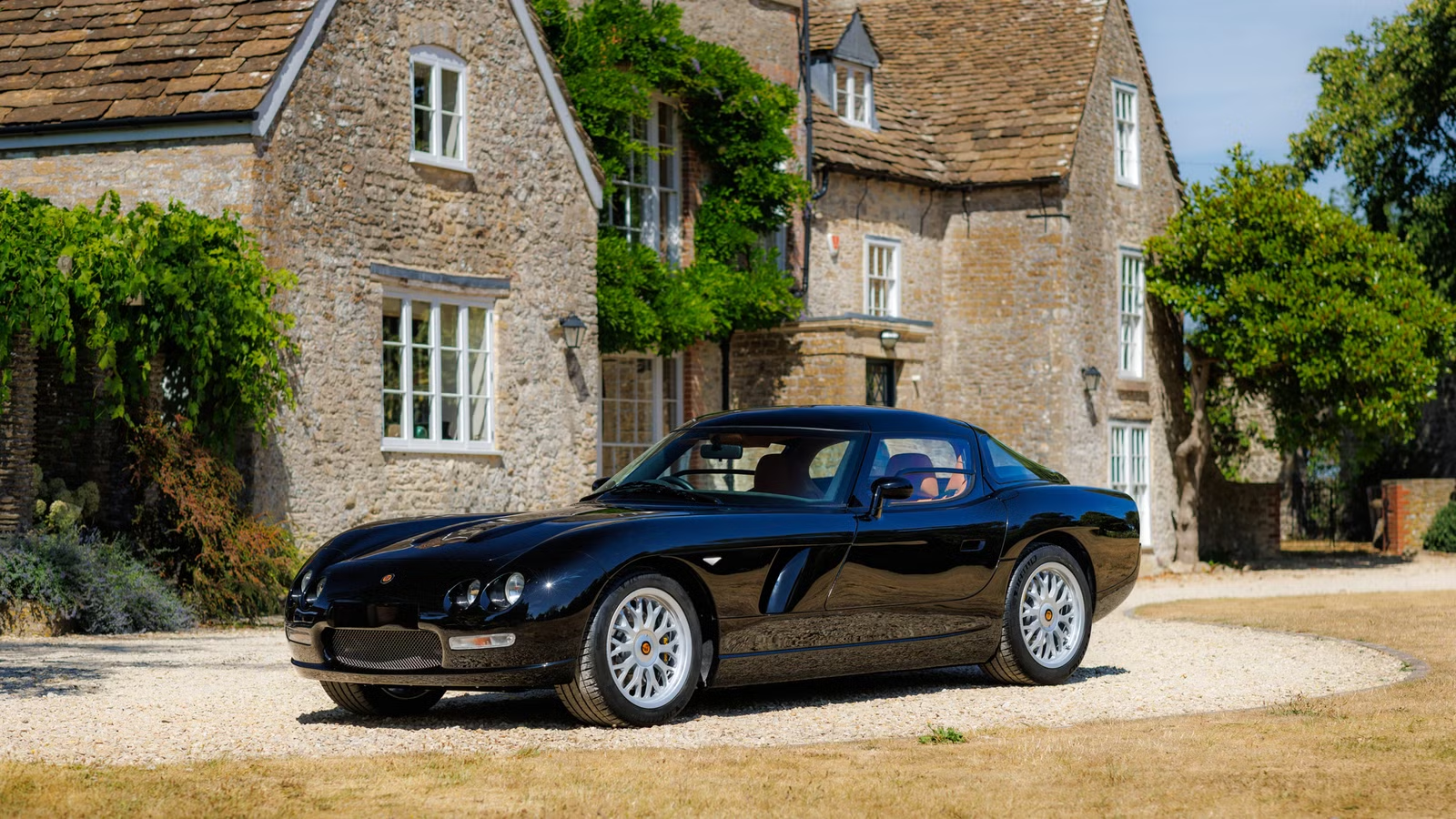
The Dodge Viper is gone, but its engine refuses to die quietly. At Salon Privé on September 7, Bristol Cars unveiled a freshly completed Bristol Fighter — built from an original unused chassis that had been sitting dormant since the company collapsed in 2011 — and stuffed under its gull-wing doors is the same 8.0-liter V10 that powered the Viper in its prime. It’s one of the more unlikely engine-resurrection stories in recent memory, and the timing couldn’t be more pointed: Bristol’s 80th anniversary, a concours lawn at Blenheim Palace, and a supercar the world had written off twice over.

Five original Fighter chassis survived Bristol’s 2011 shutdown, along with the engineering drawings and parts needed to complete them. The newly revived Bristol Cars Group Ltd., led by owner Paul King and chairman Richard Hackett — who worked closely with longtime Bristol boss Tony Crook during the Fighter’s original development — is finishing all five. The first, finished in black over tan and configured in right-hand drive, is the car that debuted at Salon Privé. The remaining four will be built to order, with buyers able to specify right- or left-hand drive.
Specs That Still Land Hard in 2026
The Fighter’s numbers were startling when the car first appeared in the early 2000s, and they hold up. The naturally aspirated V10 produces 525 horsepower in standard form, with a 600-hp uprated version available for buyers who want more. Bristol claims a top speed of 210 mph — remarkable for a hand-built British GT car that packages all of this into a chassis roughly the size of a period Porsche 911. The aluminum body, shaped by former Brabham Formula One engineer Max Boxstrom, carries a drag coefficient of 0.28, and a six-speed manual was standard issue on the original cars.

Bristol is also planning a twin-turbocharged Fighter T variant with a claimed 1,012 horsepower. That figure is eye-watering for any era, let alone for a continuation car built from two-decade-old chassis drawings. Pricing for all variants is available on request only — which, given the rarity and the specialist labor involved, is a reliable signal that these will not be cheap.
From Bristol Aeroplane Company to Viper V10: A Brief History
Bristol’s path to the Viper V10 is one of the odder lineages in the enthusiast world. The company was founded in 1945 from the remains of the Bristol Aeroplane Company, which needed something for its workers to build after wartime aircraft production wound down. The Bristol 400 launched in 1946, based on a prewar BMW chassis and engine — a natural fit given Bristol’s previous role as the UK importer for BMW. Those BMW-derived inline-sixes defined the marque’s early years and even found their way into AC Cars’ Ace sports car until 1961, when AC went looking for more power and eventually ended up partnering with Carroll Shelby to build the Cobra.
Bristol, meanwhile, pivoted to American V8s from Chrysler, powering a series of stately, secretive grand tourers for four decades. The Fighter, introduced in the early 2000s, was a sharp departure — a low-slung, aerodynamically shaped supercar that swapped the Chrysler V8 for the Viper’s V10. It was Bristol’s most ambitious car and, as it turned out, its last. Only around 15 examples were completed before the company entered administration in 2011. A subsequent revival attempt produced the Bristol Bullet concept in 2016 — powered by a BMW V8 — but it never reached production.
The Last New V10 You Can Actually Buy
Here’s the context that makes the Fighter’s return genuinely significant beyond nostalgia: with the Viper gone from Stellantis’s lineup and the Lamborghini Temerario moving to V8 power, the Bristol Fighter could realistically be the last new V10 car available for sale in America. That’s a narrow window, and Bristol is threading it with five cars.
U.S. buyers aren’t shut out, either. Bristol says the newly completed Fighters qualify for the federal Show or Display exemption, which allows historically or technologically significant low-volume vehicles to be imported and driven up to 2,500 miles per year until they reach the 25-year threshold for unrestricted import. It’s not a daily driver arrangement, but for the collector buying one of five cars carrying the last gasps of the Viper V10, that’s probably not the point.
What Bristol does after these five are delivered remains an open question. Paul King has described the Fighter completion as the first stage of a broader return to British car production, but no next model has been announced. For now, the marque that spent 15 years as a ghost story in enthusiast circles is building cars again — and doing it with one of the greatest engines the American performance world ever produced. Gearheads who’ve mourned the Viper’s exit should be watching closely.

Related posts
Latest Post


No Comments