
1956 Corvette Dual-Quad Barn Find Surfaces in Original Condition
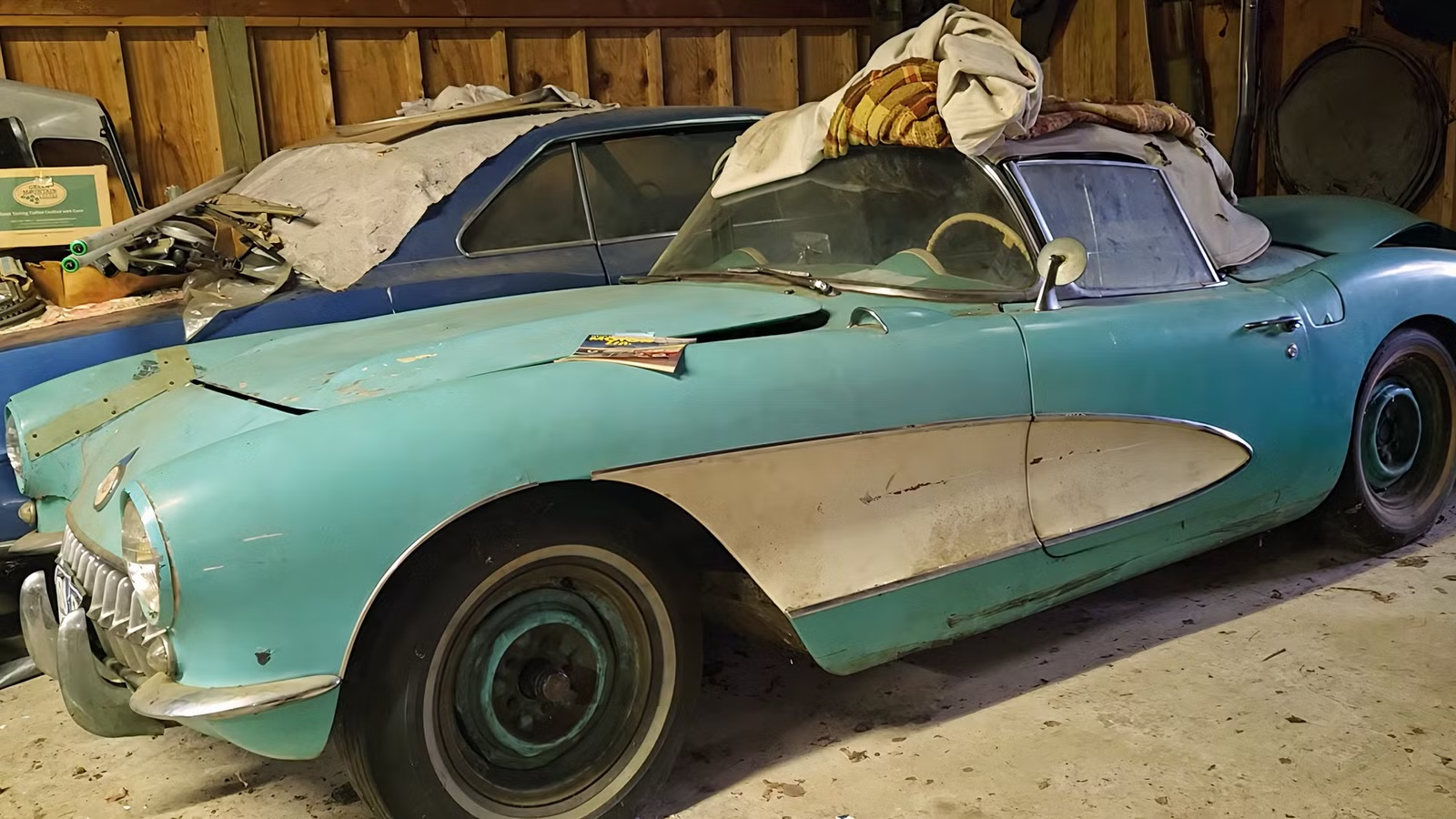
A 1956 Chevrolet Corvette with its factory dual-quad 265-cubic-inch V8 has emerged from decades of barn storage in remarkably original condition — still wearing factory Cascade Green, still running the original drivetrain, and still carrying the documentation that makes it a legitimate collector target. This is the kind of survivor that gearheads spend careers hunting.

Of the 3,467 Corvettes built in 1956, only 3,080 left the factory with the dual-quad setup — a $172.20 option that pushed output to 225 horsepower and transformed the C1 from a stylish cruiser into a genuine performance machine. This particular car pairs that engine with the Powerglide two-speed automatic, a combination that host Steve Magnante puts at exactly 1,570 units for the model year. That’s a narrow slice of an already short production run.
Why 1956 Was the Year the Corvette Got Serious
The C1’s early reputation problem is well documented. The original Blue Flame inline-six was underpowered, the two-speed automatic made it feel sluggish, and critics were quick to dismiss the car as a styling exercise. The 265 small-block arrived for 1955 and delivered 195 horsepower — a 26% jump over the six — but 1956 was the year Chevrolet committed fully to the performance argument.

For ’56, the Corvette received a redesigned body with proper roll-up windows and a more modern convertible top. The Blue Flame was gone entirely, leaving the 265 V8 as the only powerplant. Chevrolet offered it two ways: a single four-barrel carb, or the dual-quad setup — two four-barrel carburetors feeding the same 265-cubic-inch block. The dual-quad option wasn’t just a numbers bump. It was Chevrolet signaling that the Corvette belonged in the same conversation as the European Sports Cars it was supposed to challenge. The 225-horsepower rating backed that up.
The Numbers That Make This Barn Find Exceptional
The dual-quad engine at $172.20 was the headline option, but this Corvette’s original owner didn’t stop there. The Powerglide automatic added $188.30. An AM radio tacked on another $198.90. The power folding top cost $107.60. Total options spending came to nearly $700 — roughly a 22% premium over the base price. That’s not a buyer who stumbled into a Corvette; that’s someone who ordered exactly what they wanted.
The Powerglide pairing is worth noting on its own. A three-speed manual was the other transmission choice in 1956 — the four-speed wouldn’t arrive until 1957 — and the automatic is sometimes dismissed as the softer pick. But with only around 1,570 dual-quad Powerglide cars built, it’s actually the rarer drivetrain combination. Numbers-matching survivors with this specific pairing are genuinely hard to find.
What Decades in a Barn Actually Left Behind

The Corvette shows the honest wear of long-term storage: weathering on the exterior, a notable fender bender that left visible damage, and the general patina that comes with sitting untouched for what appears to be decades. None of that is surprising, and none of it changes the fundamental assessment.
What matters is what the barn preserved. The factory Cascade Green paint is intact and original. The interior is unaltered and described as complete and in reasonably good shape. The drivetrain — dual-quad V8, Powerglide, all of it — is original. This is a time capsule, not a parts car. It will clean up nicely as a patina survivor without needing a full Concours restoration to be presentable, and the case for leaving it unrestored is strong. Documented, unrestored dual-quad C1s carry their own collector premium precisely because so few survived without someone deciding to repaint them.
What This Signals for the C1 Collector Market

Barn-find C1 Corvettes with documented rare-option provenance are no longer sleeper buys. The combination of a short 1956 production run, a factory high-performance option chosen by a well-optioned original buyer, and an unrestored drivetrain puts this car in a category that serious collectors are actively chasing. The dual-quad 265 isn’t just a spec — it’s proof that the original owner understood what the Corvette was becoming in 1956, and paid accordingly.
The broader barn-find market has been rewarding exactly this kind of discovery. Survivors with factory documentation and original paint commands premiums that restored examples often can’t match, because the story is verifiable. Whether this Corvette goes to auction or stays with its current owner, the fact that it surfaced intact — dual-quad engine, Powerglide, Cascade Green, and all — is the find that C1 hunters hope for every time they push open a barn door.
It’s unclear whether the current owner plans to sell or keep the car, but the collector community should be watching. A dual-quad 1956 Corvette survivor this original doesn’t surface often — and when it does, it deserves to be back on the road, patina and all.

Related posts


Latest Post


No Comments