
This Forgotten American Luxury Car Has Jumped 53 Percent In Value

The classic car market has a strange sense of humor. Spend decades preserving a rare muscle car with the right engine, three carburetors and a four-speed manual, and it may still lose money. Meanwhile, an enormous luxury sedan that most younger enthusiasts could not identify at a car show can quietly become the smarter investment. Jay Leno and automotive appraiser Donald Osborne recently compared three American classics from three different decades to discover how their values had changed over the past five years. The lineup included serious V8 power, wild 1950s styling and enough chrome to interfere with nearby radio signals. However, the biggest winner was the oldest, slowest and least valuable car of the bunch.
The 1947 Buick Roadmaster Gained Roughly 53 Percent
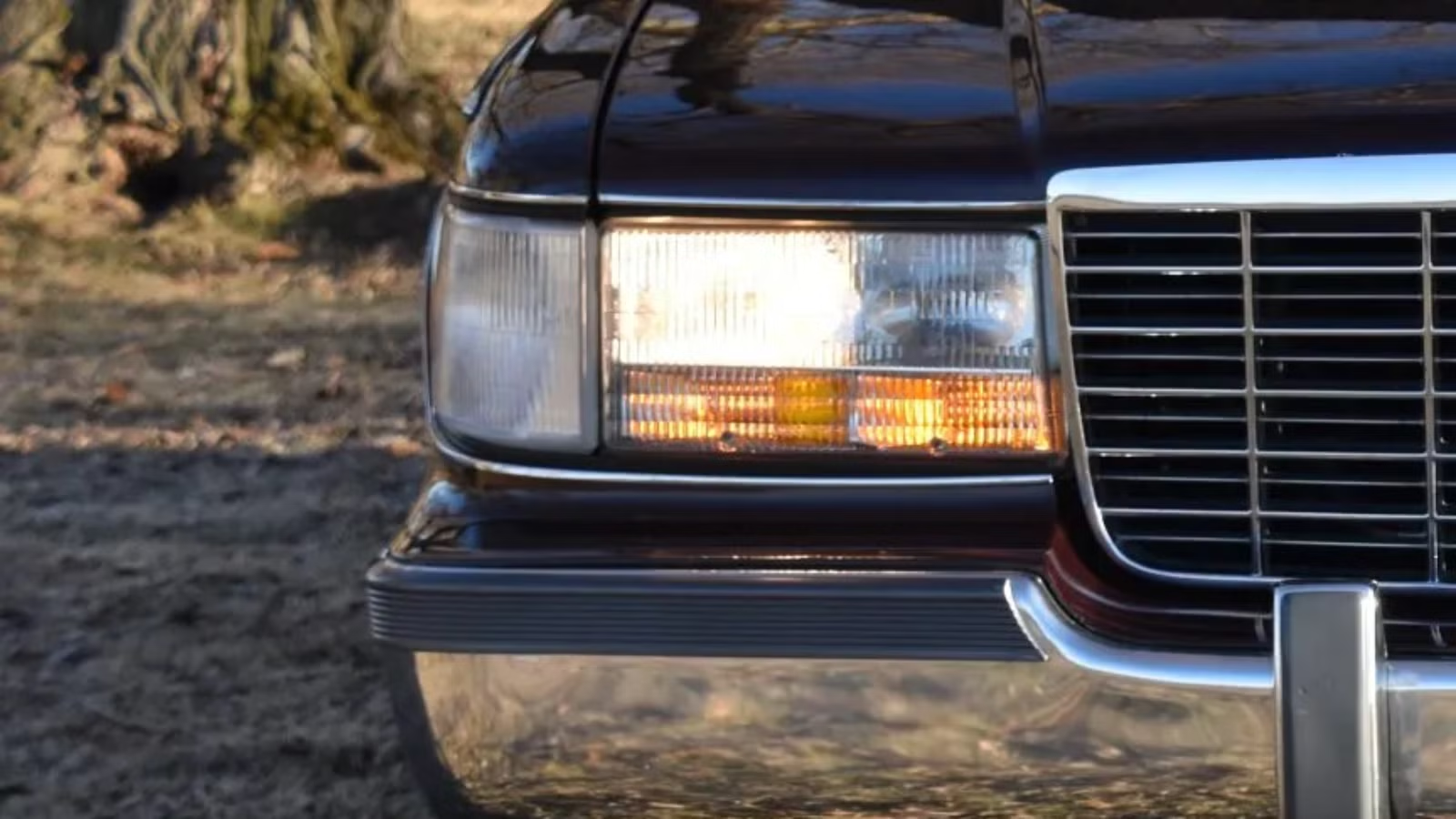
The surprise winner was a 1947 Buick Roadmaster from the Audrain Automobile Museum. According to Osborne’s appraisal, a comparable example might have cost approximately $27,500 five years ago. Today, finding one of similar quality could require around $42,000.
That represents an increase of approximately 53 percent, or $14,500. It is especially impressive because neither Jay nor Donald expected the Buick to be the most valuable car in the group. That honor still belongs to the 1966 Oldsmobile 442, but the Buick absolutely flattened it when percentage growth entered the conversation.

This particular Roadmaster has covered only 33,000 miles and remains largely original. Some sections of its enormous body have been repainted, but the cabin has survived without being ripped apart and made shinier than a casino lobby. That originality matters because collectors increasingly want classics that still feel like the cars that left the factory.

The Roadmaster’s design dates back to the 1942 model year, before American civilian automobile production was interrupted by World War II. Yet it looks surprisingly modern for its age. Its long hood hides Buick’s Fireball straight-eight engine, connected to a manual transmission. It is not remotely quick by modern standards, but it delivers the kind of relaxed 35-mph cruising experience that lowers your blood pressure without requiring a meditation app.
This Buick Was Almost A Cadillac Without The Showing Off

The Roadmaster occupied a fascinating position in General Motors’ old hierarchy. It was technically below Cadillac, but it offered nearly the same presence, equipment and luxury without announcing to the entire neighborhood that its owner had recently discovered money.
Osborne explained that many collectors consider immediate pre-war and post-war Buicks equal to, or sometimes better than, comparable Cadillacs. A new Roadmaster cost approximately $2,200 in 1947, while a Cadillac Series 62 sedan was around $2,800. That difference was serious money at the time, but Buick buyers still received a huge, beautifully styled luxury car.
Jay also pointed out how advanced American automobiles once appeared beside many European alternatives. While some expensive European cars still used six-cylinder engines, manual transmissions and hand-cranked windows, high-end American machines were adopting V8s, automatic transmissions, air conditioning and power accessories.
The Buick name also carried money without looking too flashy. It was the car for someone doing well who did not need to arrive everywhere accompanied by trumpets. The Roadmaster even lived up to its wonderfully confident name. Nobody calls a modern crossover the Roadmaster because it would immediately be bullied by this thing in a parking lot.
A Rare Oldsmobile Muscle Car Somehow Lost Value

The Buick’s victory becomes much more shocking when compared with the other cars. A beautiful 1956 DeSoto Fireflite Sportsman increased from approximately $55,000 to $65,000, representing a respectable gain of around 18 percent. Its Virgil Exner styling and 330-cubic-inch Hemi V8 have helped younger collectors notice a brand many people had almost forgotten.
The 1966 Oldsmobile 442 should have destroyed both of them. It packed the rare L69 option with three Rochester two-barrel carburetors, a four-speed manual and dual exhaust. Jay considered it the most desirable and usable car of the trio, praising its performance, comfort and ability to handle modern traffic.

Yet the 442 dropped from an estimated $85,000 to $75,000 over the same five-year period. That is a loss of approximately 12 percent while the Buick jumped 53 percent.
The Roadmaster is still worth less overall, and this exceptional 33,000-mile example cannot represent every 1947 Buick. However, it proves that collector demand does not always follow horsepower or conventional desirability. Sometimes the smartest classic in the room is the giant old Buick everyone walked past to reach the muscle car.

Related posts



Latest Post


No Comments