
Jay Leno Drives The Six-Cylinder NASCAR Monster That Humiliated Detroit’s V8s
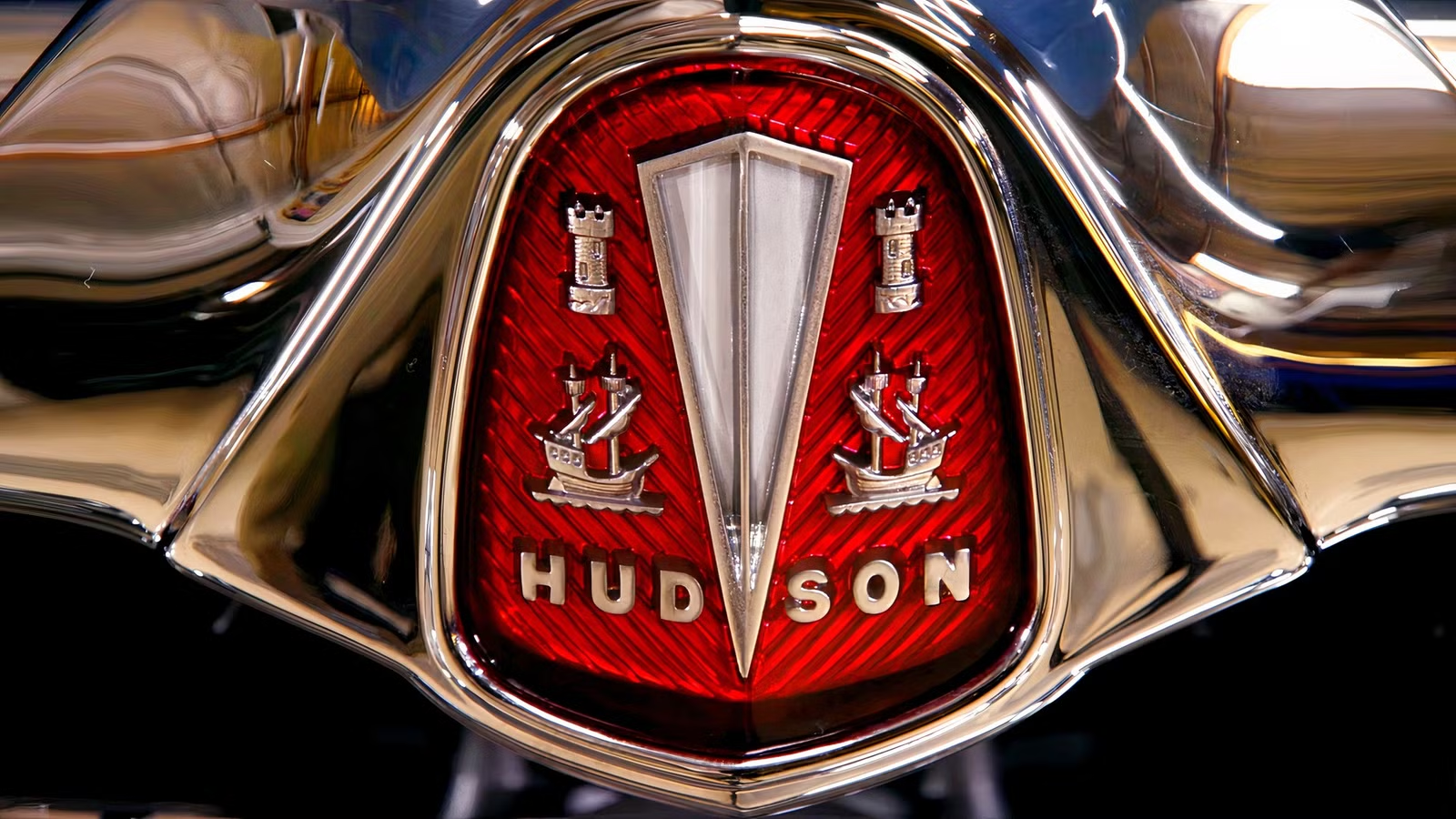
Before Detroit became obsessed with stuffing increasingly enormous V8s into everything, one strange-looking six-cylinder bruiser was already beating the snot out of America’s fastest stock cars. It sat lower, cornered harder, and carried enough chrome to blind anyone brave enough to challenge it.

Jay Leno is already a serious Hudson fan, but even he was stunned when this 1953 Hornet Convertible Brougham rolled into his garage. Owned by Chris Duhon and restored by Steve Stratis and a team of Chicago-area craftsmen, the incredibly rare convertible was not merely cleaned up and repainted. It was rescued from an abandoned restoration as a giant puzzle scattered across cardboard boxes, then rebuilt over three and a half painstaking years.
This Hudson Hornet Arrived In Hundreds Of Pieces
Stratis had never restored a Hudson before taking on this monster, and the project did not exactly arrive with friendly instructions. The disassembled parts were stuffed into boxes, little was labeled, and figuring out where everything belonged required help from Hudson specialists and club members around the country.

Then came the chrome. Stratis initially tells Leno the car has around 310 exterior chrome pieces, while another 103 pieces were involved in the convertible top assembly. Many had been painted silver during an earlier restoration attempt, forcing the team to strip, repair, and plate them properly. Even at $100 per component, the chrome bill alone becomes the sort of number best hidden from a spouse.

The interior created another headache. Matching the original leather, vinyl, and colors reportedly took nearly a year. Tiny pieces that most restorers would ignore were repaired or recreated, including switches, badges, trim, and mechanical components. The result is so clean that Leno calls it possibly the finest restored Hudson he has ever seen.
According to Duhon, Hudson produced only around 130 convertibles for 1953, with perhaps 10 surviving today. Those numbers have not been independently confirmed, but there is no denying that this is an exceptionally scarce machine.
The Six-Cylinder Hornet Became A NASCAR Bully
The Hornet’s shape was not merely some designer getting funky with a pencil. Hudson’s famous “step-down” construction placed the passenger compartment between the frame rails instead of sitting it on top of them. That created a lower center of gravity and helped the big Hudson carve through corners while taller rivals leaned over like overloaded fishing boats.
Under the hood sits Hudson’s massive 308-cubic-inch flathead inline-six with the desirable Twin H-Power setup. Two single-barrel carburetors help it produce 170 horsepower, which was serious muscle for 1953. A silky four-speed GM Hydra-Matic sends that power to the rear wheels, allowing drivers to cruise with only two pedals during an era when an automatic still felt like witchcraft.
The Hudson could not always match newer overhead-valve V8s on the straights, but it clawed the time back through the bends. Hornets became dominant forces in early NASCAR competition, proving that chassis balance and usable torque could beat a bigger cylinder count.
The car even has an ingenious backup for its hydraulic brakes. If the hydraulic system fails and the pedal drops far enough, a mechanical rod linkage activates the rear brakes. It is simple, clever, and exactly the kind of forgotten engineering detail that sends Leno into full car-nerd mode.
Jay Leno Says It Drives Like A Modern Car

Once Leno gets the Hudson onto the road, the expensive restoration stops being a static museum display. He immediately praises how smoothly it rides, how confidently it handles, and how strongly that old flathead pulls when both carburetors open.
The radial tires make a huge difference, giving the Hudson better braking and cornering than period-style rubber. Leno says the car feels ready to drive across the country and can comfortably hold 65 mph on the freeway. That is mighty impressive for a 73-year-old convertible carrying enough chrome to alter nearby radio signals.

He also loves how exposed the open cabin feels, comparing the experience to riding in a toboggan. Modern convertibles surround their occupants with thick doors, tall dashboards, and layers of safety equipment. The Hudson leaves everyone hanging out in the breeze with a panoramic view of that enormous hood.
This Hornet might have only six cylinders, but it comes from a time when clever engineering could beat brute force. After three and a half years of work, it is once again doing exactly what made Hudson famous: cruising beautifully, cornering confidently, and making Detroit’s old V8 obsession look slightly overrated.

Related posts

Latest Post


No Comments