
The Underrated Motorcycle That’s Impossible To Outgrow
There is a point in motorcycling where “more” stops meaning “better.” More horsepower can make a bike intimidating, more electronics can make it complicated, and more displacement can turn a Sunday ride into a lesson in restraint. But some naked bikes manage to grow with their owners rather than simply frighten the living daylights out of them every time. From the moment you ride them out of the showroom, you can weave through traffic easily, cruise on a highway, attack a winding road, and do it all at a skill level you bring. But as you ride, the bike adapts to you, always playing by your rules, yet always keeping itself interesting.
Why Big Naked Bikes Keep Getting Better
The Category That Turned Raw Power Into Everyday Performance

Big naked motorcycles have changed dramatically. What was once essentially a stripped-down sport bike has evolved into a serious performance category of its own. Machines such as the BMW S 1000 R, Ducati Streetfighter V4 S, KTM 1390 Super Duke R, and Yamaha MT-10 SP bring enormous power to an upright chassis, while retaining enough usability to make them plausible road motorcycles.
The appeal is obvious: there’s no fairing hiding the machinery, no need to wring the engine to the top of the rev range, and usually a much more commanding riding position than a conventional supersport. These motorcycles can feel almost civilized at modest speeds, yet their performance ceiling sits somewhere beyond what most public roads can realistically explore.

But the question remains: Can a rider buy one for its performance and discover that the bike has enough depth to be calm enough for someone just upgrading to the liter-class, yet still have enough oomph to keep the experienced rider entertained?
The Technology That Makes 180 HP Manageable On Public Roads


The trick with an oversized naked motorcycle is avoiding the trap of making it so extreme that the road becomes an afterthought. The Ducati Streetfighter V4 S and the KTM 1390 Super Duke R demonstrate just how far this category can go, while bikes like the MT-10 SP offer a more everyday interpretation of massive performance.
Power is easy, but usable power is much more compelling. A large engine is only part of the recipe. Today’s performance nakeds need throttle control, high-end suspension, braking power, and electronic assistance to allow their performance to be accessed rather than merely advertised.

This is why the best bikes today feel so different from older high-powered machines. Modern rider aids manage traction, front-wheel lift, and even braking, allowing the rider to decide how much power they want to unleash. One bike threads this needle more convincingly than most — and it does it with a three-cylinder engine that no competitor has matched.
The Speed Triple 1200 RS Does What No Other 180-HP Bike Can
How A Three-Cylinder Engine Gives The Speed Triple A Personality Its Rivals Can’t Match

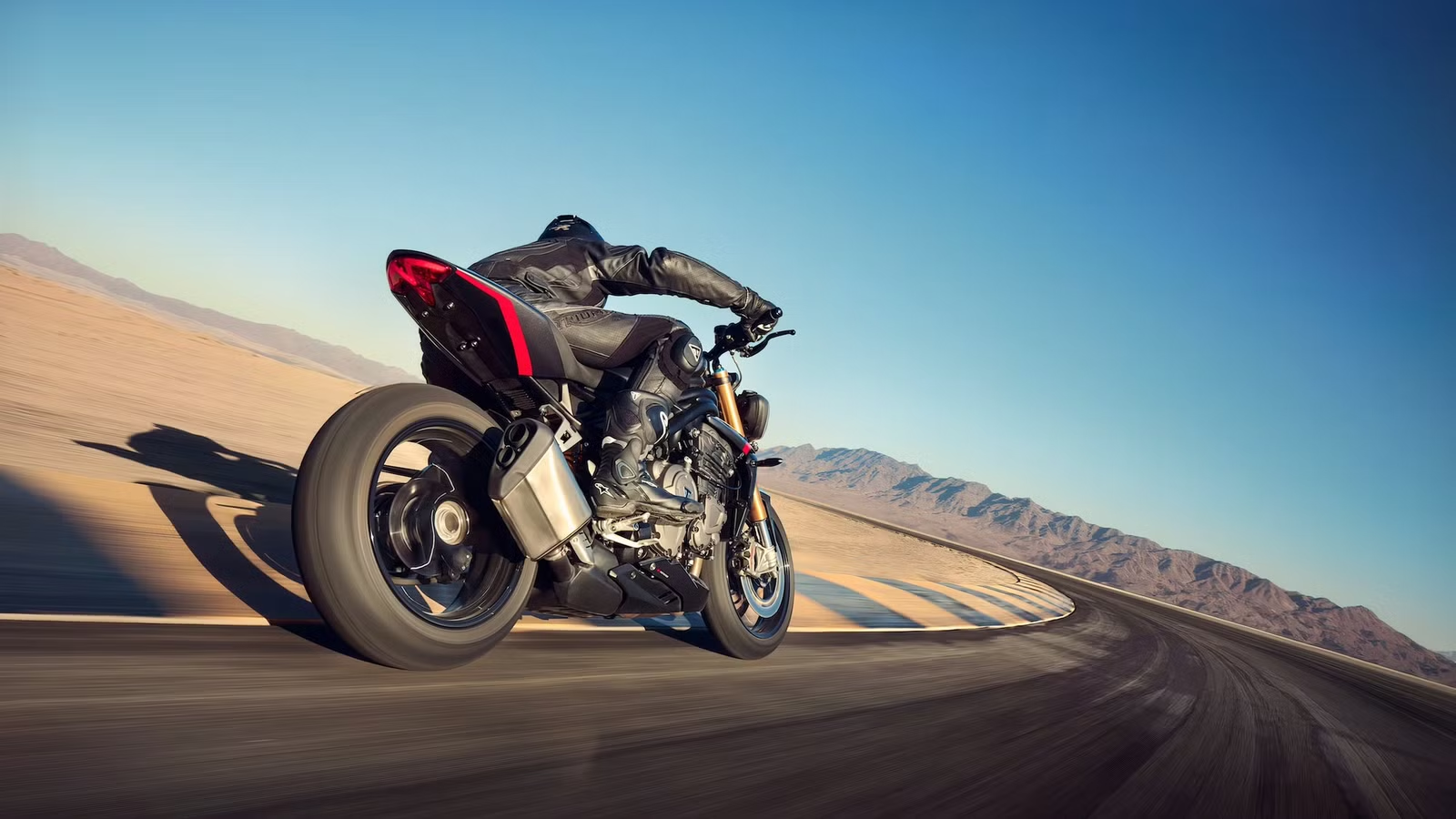
The Triumph Speed Triple 1200 RS is an unusually strong candidate here. It is ferociously powerful, but the character of its three-cylinder engine gives it a broader personality than a machine that is built exclusively around peak horsepower. It has a lightweight frame, premium suspension and brakes, and a sophisticated rider-aid package.
It is also the lightest Speed Triple according to Triumph. But the overall package occupies an interesting middle ground. The Speed Triple can be ridden without constantly hunting for the next gear, but it continues to reward when your confidence rises with the revs.
The Moto2-Derived Triple That Lost 22 Pounds Without Losing Any Character

The centerpiece is Triumph’s 1,160 cc liquid-cooled inline-triple, making a peak of 180 horsepower at 10,750 rpm and a peak torque of 94.4 pound-feet at 8,750 rpm. These figures place the Speed Triple firmly among the heavy hitters, but the cylinder count gives it a distinct personality: a natural middle ground between the punch of a twin and the top-end rush associated with four-cylinder engines.
This new engine has also been developed with lessons learned from Triumph’s Moto2 racing program. It’s lighter and more compact than its predecessor, and the company says that the engine itself contributes to the bike’s 22-pound weight loss when compared to the previous generation. Another highlight of the Triple is its electronic throttle control, slip-and-assist clutch, and quickshifter. The engine’s unique temperament paired with these makes the bike accessible for riders just upgrading to the liter-class segment.

The bike is very forgiving of minor mistakes in throttle or shifting, to the point that the rider does not even feel it. However, this same combination also opens up when your confidence rises: switch to track mode and use the quickshifter to turn a neutral highway cruiser into a proper mountain carver.
The Chassis That Makes 180 HP Feel Controlled, Not Terrifying

Now, the engine may grab headlines, but the Speed Triple’s chassis is more important. Triumph uses an aluminum twin-spar frame with a bolt-on aluminum rear subframe and single-sided swingarm paired with 17-inch rims on both ends. Geometry is equally purposeful with a 23.9-degree rake, 4.1 inches of trail, and a wheelbase of 56.4 inches. Wide handlebars and repositioned footpegs give the rider more leverage and ground clearance in the turns.
Admittedly, this may be a little too intimidating for new riders to the segment, but for someone willing to learn, it’s the opposite. The expensive bits are the reason why the Triple can continue to be exciting long after you swing your leg over for the first time. The RS uses Ohlins SmartEC3 semi-active suspension with a 43 mm front fork and a monoshock at the rear.

Damping for both is electronically managed but can be tuned around the rider’s preferences. Braking comes from two 320 floating discs at the front paired with Brembo Stylema monobloc calipers, and a 220 mm disc bitten down on by a Brembo twin-piston caliper at the rear. Put all this together into a bike that weighs just 438 pounds at the curb.
The Speed Triple Is Designed To Know Exactly What It Wants
A Stripped-Down Look That Hides One Of The Most Advanced Electronics Packages In The Class

The Speed Triple 1200 RS does not need a fairing to announce that it means business. The exposed triple, sculpted fuel tank, and compact tail give it the visual proportions of a machine stripped down to its essential components. The tank provides most of its visual mass, and the twin LED headlights give the Triple its unmistakable face.
Now, the electronics package is extensive, but it serves a straightforward purpose: to make a fast motorcycle easier to control. The RS uses a six-axis IMU to manage cornering ABS, switchable cornering traction control, and front-wheel lift. All of this is very useful to the new Speed Triple rider.

There is cruise control, too, and a five-inch full-color TFT display with smartphone connectivity. For the track, the experienced rider gets brake slide assist, up-and-down quickshifter, and a dedicated track mode among the four preset riding modes. There’s also a configurable Rider mode to tailor things even more minutely.
The Triumph Speed Triple 1200 RS Leaves Room To Grow

The Triumph Speed Triple 1200 RS’s neatest trick is the fact that the rider can start off riding in Rain mode, where the bike is the most forgiving; Road mode for more confidence; Sport mode for when you’re ready to push a little harder; and Track mode for when you want everything it has. The configurable rider mode is everything in between.
The Öhlins suspension keeps pace as the revs rise, and the brakes, combined with the electronics, give you the safety net you need. Even practical details are sensible. Triumph lists a 10,000-mile or 12-month service interval backed by a two-year unlimited-mileage warranty. It remains a focused performance roadster where every ride does not have to become an audition for the track, yet it has the potential to do just that.
Source: Triumph Motorcycles

Related posts



Latest Post


No Comments