The Luxury SUV With 6.5x Fewer Complaints Than Its German Rival
8 minutes reading
Saturday, 29 Aug 2026 14:01 0 5 autotech
The modern luxury SUV market represents a balance of high-performance capabilities, elevated build quality, and everyday versatility. Premium manufacturers design these vehicles to deliver smooth highway cruising, refined interior comfort, and advanced driver-assistance technology without sacrificing dynamic handling.
Whether navigating urban commutes or undertaking long-distance road trips, these midsize luxury crossovers cater to discerning drivers who require practical utility alongside premium prestige, setting the benchmark for what modern executive transport looks like today. One German example excels at this more than others, based on owner reports.
The U.S. luxury SUV market commands strong consumer interest, with affluent buyers continuing to prioritize high-riding utility, advanced cabin technology, and all-weather capability over traditional premium sedans. Despite this baseline demand, automakers face complex structural challenges. Rising material costs and high average transaction prices test buyer price tolerance, encouraging a shift toward certified pre-owned options.
At the same time, manufacturers navigate an awkward powertrain transition. High development costs for battery-electric luxury platforms coincide with cooling EV adoption rates, leaving brands forced to balance heavy electrification investments alongside high-margin, internal-combustion engines to protect profitability. Further complicating the landscape are rapid hardware and software cycles, which accelerate depreciation risks and challenge long-term brand equity as connected technologies quickly age.
The Lexus RX Aces Owner Satisfaction
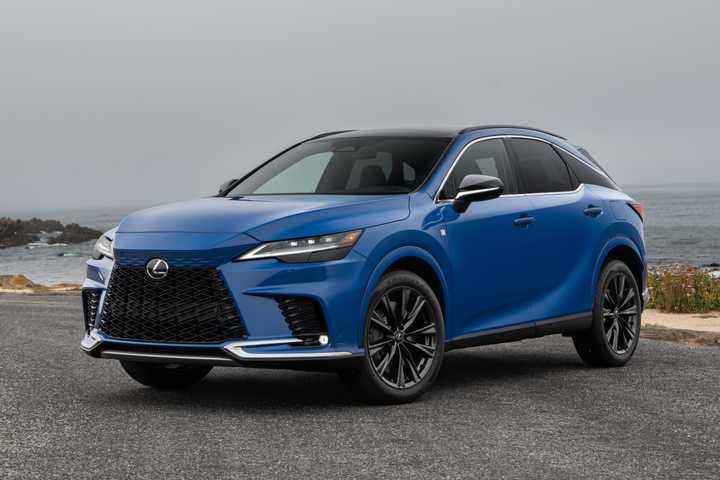
Front 3/4 shot of 2026 Lexus RX parked on roadLexus
A VinItel longitudinal analysis of National Highway Traffic Safety Administration data across more than two million vehicles sold in the U.S. presents a stark reliability gap between two luxury heavyweights. The Lexus RX records just 5.5 complaints per 10,000 units sold, whereas the BMW X5 logs 41.5 complaints per 10,000 units. That gap represents a massive 655 percent difference, calculated from 1,196 complaints across 2,177,155 RX sales compared to 4,362 complaints across 1,051,973 X5 sales. While raw complaint totals fluctuate slightly across secondary databases like RepairSurge due to differing date ranges, the proportional divide between the two models remains remarkably consistent.
The severity of these complaints creates an even wider divide, far beyond the initial volume metrics. VinItel calculates an overall complaint-severity score using a weighted formula that penalizes safety-critical failures by multiplying crashes threefold, fires fivefold, injuries tenfold, and deaths fiftyfold. Under this strict system, the BMW X5 generates a severity score of 76.6, while the Lexus RX sits at 12.7, giving Lexus a 502 percent advantage. This gap stems directly from thermal risks, as the X5 logs a 5.3 percent fire-involvement rate compared to 1.8 percent for the RX. These thermal hazards are not theoretical, as evidenced by the 36 safety recalls issued for the 2019 through 2025 X5 generation alone, heavily concentrated on complex electrical and fuel-system defects.
The RX’s Reliability Is Its Strongest Attribute
Copper-Colored 2026 Lexus RX Rear 3/4 poseLexus
A counterintuitive finding emerges within the accident data that challenges conventional luxury SUV comparisons. Despite its severe electrical defects and high complaint volume, the BMW X5 records a crash-involvement rate of just 4.0 percent, whereas the Lexus RX registers at 11.9 percent. This nearly three-to-one safety disparity introduces a genuine paradox into the analysis. Both vehicles report engine problems as their top failure category, proving that mechanical flaws exist under both hoods, yet their dynamic behavior on the road produces entirely different real-world safety outcomes.
Front 3/4 dynamic shot of Lexus RX 450h+ LuxuryLexus
This crash-rate gap forces a closer look at chassis development and dynamic emergency response. BMW engineers design the X5 with aggressive suspension geometry, firm damping, precise steering ratios, and advanced active stability controls that allow drivers to execute high-speed evasive maneuvers without losing control. When an unexpected hazard appears, the sharp handling characteristics of the X5 help drivers dodge collisions entirely. Conversely, the Lexus RX prioritizes supreme cabin isolation and plush ride quality over rapid directional changes. The softer spring rates and muted steering response that make the RX comfortable on long highway cruises can limit its agility during sudden emergency evasive action, potentially contributing to its higher crash involvement.
What The X5 Struggles With Against The Lexus RX
Front 3/4 shot of 2026 BMW X5 M parkedBMW
Driver demographics, geographic distribution, and driving styles also interact with these vehicle dynamics. Buyers who choose the BMW X5 often seek out an engaging driving experience and may rely more heavily on the dynamic headroom provided by its active safety architecture.
Drivers of the Lexus RX typically seek relaxed personal transport, making the elevated crash rate an unexpected outcome for a vehicle marketed on safety and dependability. While secondary factors like annual mileage and road conditions play a role in accident statistics, the sharp difference in crash avoidance remains a clear point in favor of German chassis engineering.
rear 3/4 shot of Lexus RX 450h+ parked in a drivewayLexus
The core choice for a prospective owner boils down to balancing different types of vehicle risk over time. The BMW X5 delivers exceptional dynamic control and superior crash avoidance capabilities, but it forces owners to manage severe electrical faults, high recall volumes, and an elevated risk of engine bay fires.
The Lexus RX demands a slight compromise in sharp handling agility, but it rewards owners with bulletproof mechanical durability, minimal electrical defects, and complete freedom from constant dealer visits. For buyers seeking genuine peace of mind over a decade of ownership, the Lexus RX easily wins the argument, proving that long-term mechanical reliability ultimately outweighs the brilliant but fragile engineering of its German rival.
The X5’s Rapid Depreciation Hurts Its Long-Term Prospects
Dynamic shot of the 2026 BMW X5 xDrive50eIsaac Atienza | TopSpeed
The 2026 BMW X5 experiences the typical steep depreciation trajectory common to modern luxury SUVs. Industry data indicates that an X5 loses approximately 53 percent to 59 percent of its value over its first five years of ownership, underperforming non-luxury crossovers that tend to retain capital much better. For context on recent valuation trends, the 2025 model year arrived with a base MSRP of $66,300 for the rear-wheel-drive sDrive40i trim, while all-wheel-drive xDrive40i variants started at $68,600 and high-output trims reached up to $127,200.
On the current used market, one-year-old 2025 models typically trade around $49,000 to $50,500 for entry-level trims in good condition, representing an immediate first-year value drop of roughly 25 percent to 38 percent from the original manufacturer pricing, depending on options. High maintenance expectations and rapid initial value loss make pre-owned examples an attractive target for secondary buyers, while original owners absorb the heaviest financial hit early in the vehicle life cycle.
Long-Term Ownership Costs Aren’t Great Either
2026 BMW X5 rearBMW
The 2026 BMW X5 demands substantial long-term financial commitment, as 10-year maintenance and repair costs average roughly $19,460. BMW mitigates initial out-of-pocket expenses by including the Ultimate Care program, which covers standard scheduled factory maintenance for the first three years or 36,000 miles.
Routine service intervals occur every 10,000 miles or 12 months for engine oil and filter changes, while comprehensive 30,000-mile service milestones require complete brake fluid flushes and cabin air filter replacements. Major 60,000-mile services demand spark plug replacements alongside new engine air filters. According to iSeeCars longevity data, the BMW X5 posts an average overall lifespan of 133,273 miles or 11.4 years and holds a 7.9 percent probability of reaching 200,000 miles.
The Lexus RX’s Exemplary Value Retention
2025 Lexus RX350h F Sport Design front shotLyndon Conrad Bell – Photo
iSeeCars highlights that the RX 350 will lose $19,038 or 38.9 percent of its value after five years or 60,000 miles, which is almost 15 percent better than what its main rivals struggle with. According to CarEdge, the Lexus RX Hybrid will cost you $57,867 over five years and 60,000 miles. This includes $25,704 on depreciation, $12,910 on insurance, $6,415 on fuel, $10,246 on financing, and $2,592 on maintenance. In terms of ownership costs, Edmunds suggests that the base 350’s drivetrain is likely to set you back by $75,179 over five years and 60,000 miles, consisting of $10,483 for maintenance, $1,310 for repairs, $24,152 for depreciation, and $16,024 to fuel.
2025 Lexus RX350h F Sport Design EngineLyndon Conrad Bell – Photo
The Lexus RX reached strong success in the U.S. because it creates a smooth blend of comfort, refinement, and everyday usability that American buyers have valued since the Japanese brand introduced it. It delivers quiet rides, reliable build quality, and easy ownership, which encourages long-term loyalty and strong word of mouth. It also offers controlled handling, efficient powertrains, and a cabin that feels upscale without overwhelming controls. Families appreciate its practical size and generous cargo space, and buyers trust its strong reliability record. Lexus dealers back it with consistent service experience, which reinforces confidence and keeps demand steady across multiple generations.
Fans And Critics Love The RX
A front left three-quarter tracking shot of a black 2026 Lexus RXLexus
The Lexus RX is undeniably the best SUV you can consider if you value reliability above everything else. The range achieves impressive ratings across all of its testing thanks to its well-balanced drivetrain and interior design. J.D. Power gives the model with an 85/100 overall score, which consists of 85/100 for quality and reliability, 82/100 for the driving experience, 84/100 for resale, and 87/100 for the dealership experience.
2025 Lexus RX350h F Sport Design rear 3/4 shotLyndon Conrad Bell – Photo
iSeeCars backs this with an 8.3/10 overall score, including 8.6/10 for reliability, 8.2/10 for retained value, and 8.0/10 for safety. The publication also indicates that you can expect the RX 350 to last you 14.7 years or 170,975 miles before you encounter any noteworthy mechanical issues, with a 31.7-percent probability of reaching 200,000 miles.
Base Trim Engine
2.5L I4 Hybrid
Base Trim Transmission
2-speed CVT
Base Trim Drivetrain
All-Wheel Drive
Base Trim Horsepower
183 HP @6000 RPM
Base Trim Torque
233 lb.-ft. @ 4300 RPM
Base Trim Fuel Economy (city/highway/combined)
37/34/36 MPG
Base Trim Battery Type
Nickel metal hydride (NiMH)
Make
Lexus
Model
RX
Sources: OEMs, VinItel, Edmunds, J.D. Power, and iSeeCars.












No Comments