
Toyota Just Trademarked Avalon Again, But There’s A Catch
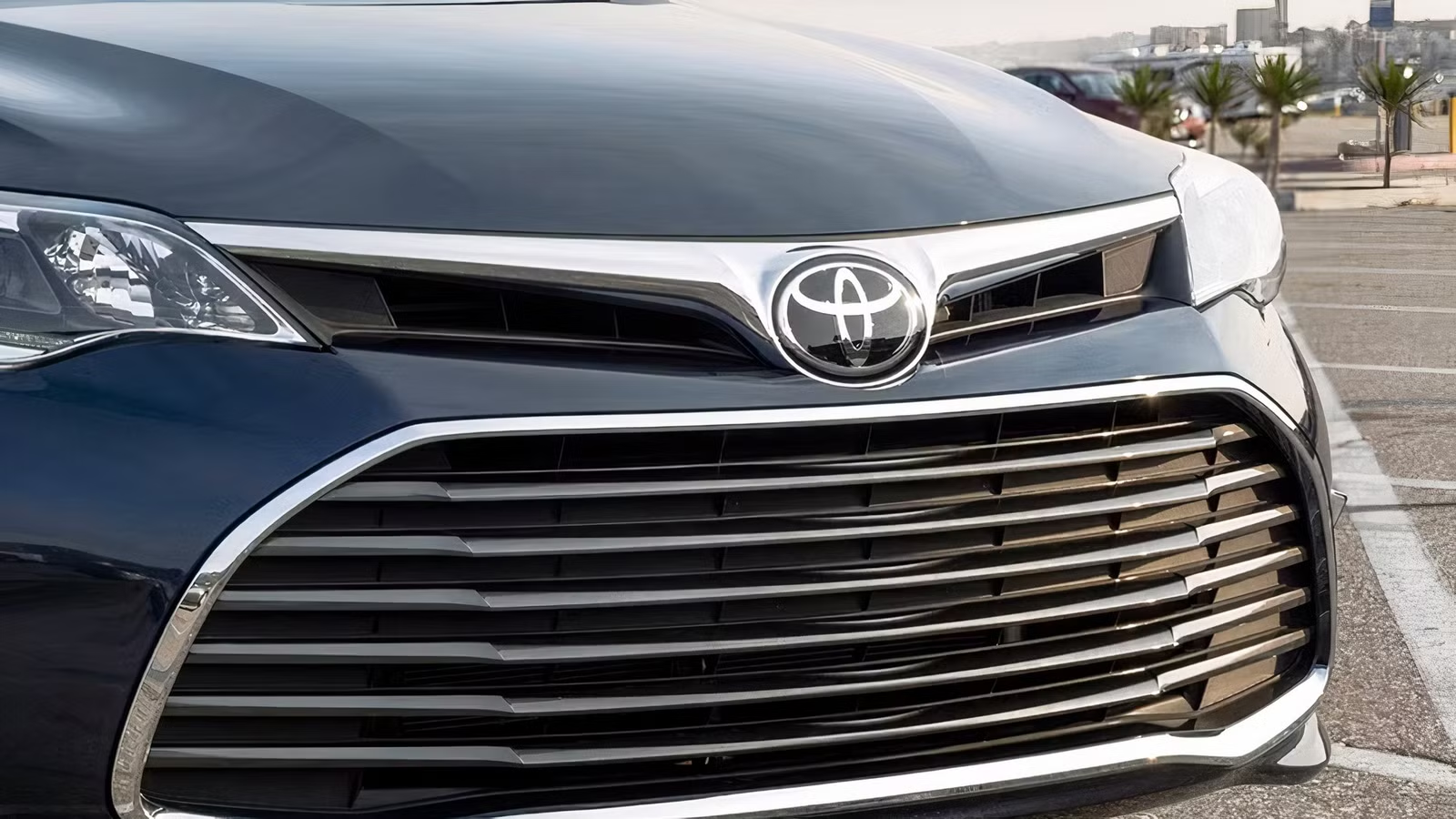
Toyota has filed a fresh trademark application for the Avalon name — nearly four years after the full-size sedan disappeared from U.S. showrooms. The filing, recorded in TMview on August 21, 2026, is the first trademark activity on the Avalon name since Toyota ended U.S. production after the 2022 model year.

Before anyone starts circling revival dates on a calendar, though, the details of this filing tell a more measured story. The application was made in Paraguay, not the United States, and Avalon was one of four Toyota nameplates registered there on the same day. That context changes the read considerably.
Four Names Filed on the Same Day in Paraguay
Toyota Jidosha Kabushiki Kaisha filed trademark applications for four vehicle names in Paraguay on August 21, 2026: Avalon, Mirai, Innova Cross, and Vios. The TMview reference for the Avalon application is PY500M20262678307.

None of those four vehicles currently appears in Toyota Paraguay’s official new-vehicle lineup. The brand’s Paraguayan range runs to models like the Corolla, Hilux, Fortuner, RAV4, Land Cruiser, GR Yaris, and the bZ4X — a mix of regional staples and global sellers. Avalon, Mirai, Innova Cross, and Vios are absent from that list.
Filing four dormant or overseas names in a single batch is a recognizable pattern in automotive IP management. Companies routinely protect established nameplates in markets where they don’t yet sell them, either to block third-party registrations, to lay groundwork for future expansion, or simply to keep their options open. The batch nature of this filing — four applications, one day, one country — points toward routine intellectual-property housekeeping rather than a product announcement.
Why Avalon Still Gets Attention

Of the four names filed, Avalon is the one that resonates most with American readers. Toyota introduced the Avalon in the U.S. market in the 1990s and spent decades positioning it as the brand’s large, upscale sedan — a step above the Camry in both size and refinement.
The final U.S.-market Avalon, offered for the 2022 model year, came with two powertrain choices: a 301-horsepower V6 and a hybrid system rated at up to 44 mpg combined. Toyota was explicit that 2022 was the model’s last year of production in America. Since then, the company has pointed former Avalon shoppers toward the Crown, its electrified sedan-crossover hybrid that now anchors the upper end of Toyota’s U.S. car lineup.
That history gives the Avalon name a level of brand equity the other three filings don’t carry for a North American audience. Mirai is Toyota’s hydrogen fuel-cell sedan, still sold in limited U.S. markets. Innova Cross and Vios are regional nameplates with little presence in the American market. Avalon, by contrast, was a genuine volume seller with a loyal ownership base — which is exactly why a new trademark filing catches the eye.
What the Filing Actually Supports, and What It Doesn’t

A trademark application is a legal instrument, not a product announcement. Filing a name in Paraguay confirms that Toyota wants to protect its rights to the Avalon mark in that country. It does not confirm that a new vehicle carrying that name is in development, that Toyota plans to sell an Avalon in Paraguay, or that any version of the sedan is being considered for a U.S. return.
The plausible explanations for the filing range from the mundane to the slightly more interesting: routine trademark renewal to prevent third-party registration, early groundwork for a potential Latin American product expansion, or straightforward preservation of a nameplate Toyota may want to use in some form down the road. Any of those scenarios is consistent with what the filing actually shows.
What the filing does not support — at all — is a confirmed comeback. There is no evidence in the TMview record of a production model, a powertrain, a launch timeline, or even a firm intention to sell an Avalon in Paraguay. The strongest conclusion the data supports is that Toyota still sees enough value in the Avalon name to protect it. Whether that protection ever translates into a vehicle is a separate question, and one this filing leaves entirely open.
For former Avalon owners and sedan enthusiasts hoping for a revival, the August 21 filing is worth noting — but not worth reading too deeply into. Toyota protecting a nameplate in a South American market is a long way from Toyota building a car. Keep an eye on future filings, particularly in the U.S. or major markets. That would be a different story.

Related posts





Latest Post


No Comments